A life, and a country, in 62 pictures
- By Elsbeth van Paridon
 0 Comment(s)
 Print
Print E-mail China.org.cn, May 11, 2012


 |
|
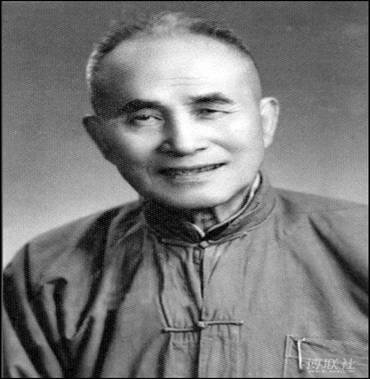
Forever young: Ye's last portrait, shot one month before his death in 1968. [Photo courtesy of Tong Bingxue] |
In 1901, a 20-year-old Fuzhou native named Ye Jinglv (Chinese: 叶景吕), at that time residing in London, decided to document his life by having his portrait taken every single year, for the rest of his life. Sitting, standing, sporting Manchu ponytails or a hat, war or no war; every year Ye, a servant of the then-Chinese ambassador to Britain, Luo Fenglu, managed to honor this promise. His life covered some of the most turbulent episodes of China's modern history: the Republic of China (1911-1949), World War II and the beginning of the Cultural Revolution (1966-1976). Ye's fascinating collection gives us an opportunity to catch a glimpse of his life and times, providing us with a unique set of portraits. At the same time, his pictures teach us a few lessons about the history of photography, society, fashion and individuality. In certain ways, the man was ahead of his time.
Several years ago, journalist and collecting aficionado Tong Bingxue was scouring the online flea markets looking for a new addition to his original photograph collection, when he stumbled across Ye's album. The album had been put in the trash by Ye's grandson on account of the belief among Fuzhou people that one should not hold on to the past, and it eventually surfaced on the Internet where it caught Tong's eye. After a long search and many air miles, taking in Fuzhou, Taiwan and London, Tong managed to interview Ye's 103-year-old daughter, his 93 year-old son and his 73-year old grandson. As a result, Tong slowly started putting together the pieces of Ye's pictorial life puzzle.
Tong assembled his own findings together with Ye's pictures in his latest book release, titled "A Life in Portraits", published by Foreign Language Press. Each of Ye's portraits was accompanied by a short introduction or anecdote, and Ye's daughter also told Tong about how her father had kept a journal and had written in it religiously. Unfortunately, the journal went up in flames at the height of the Cultural Revolution.
Ye's collection of portraits is both a fascinating personal archive and a historical record of a rapidly changing country. The first time Ye had his (full length) photo taken was in London in 1901. At that time, he sported the traditional long Qing dynasty garments and, above all, the Manchu hairdo: A shaved head boasting one long ponytail at the back. Upon his return to Fuzhou 5 years later, Ye took over the family business, which provided him with a very respectable income, if not a princely one. It is worth remembering that, in those days, it was not cheap to have your portrait taken every year.
Ye also began to alternate between standing and sitting in his pictures, and sometimes sported the latest fashion trends, on one occasion wearing a Western suit with a Windsor-knot in his tie and a hat to top things off. On other occasions, he can be seen wearing clothing to mark certain events, for instance, his 1908 sports attire when the Olympics hit London.
However, there are several of the 62 photographs which, with their subtle differences, stand out from the others. From 1941 to 1946, Ye's pictures are mere bust portraits, in which his eyes betray a slight sense of fatigue. Print paper may have been extremely hard to come by during World War II, which would explain Ye's change from full-length photographs to bust ones, and the hardship of the times would certainly explain the somewhat drained look in his eyes. What's more, his 1952 portrait is not a photograph, but a paper cut, starring Ye's ink black profile. Sadly, in that year, one of his sons was imprisoned for becoming involved with a reactionary religious society. And at times when your neighbors might deem you an anti-communist and consequently turn you in to the authorities, such activities could result in serious problems, for both the individual concerned and his or her family and friends. The reason for this black paper cut-out was shame: Ye literally could not, and would not face himself that year.
Tong was especially struck by two things after viewing Ye's 62 portraits: The first was Ye's incredible persistence on his annual portrait quest. The second is the sense of youthfulness and inner peace which appears to radiate from his eyes, even during the turmoil of the transition from the Qing Dynasty to the Republic of China, the Japanese invasion or the Cultural Revolution. Ye's last portrait, shot one month before his death in 1968, was taken on June 1, which is International Children's Day. This seems fitting for a man who, in Tong's words, sought to remain forever young.


Go to Forum >>0 Comment(s)