'Go digital' strategy a cure for magazines?
- By He Shan
 0 Comment(s)
 Print
Print E-mail China.org.cn, March 8, 2013


The Reader's Digest Association, owner of the 91-year-old iconic content-aggregating magazine filed for Chapter 11 protection last month for the second time around, raising the question of whether a paperless strategy can serve as an effective solution for magazines that are struggling to reshape their business model.
|
|
|
Reader’s Digest files for second bankruptcy. |
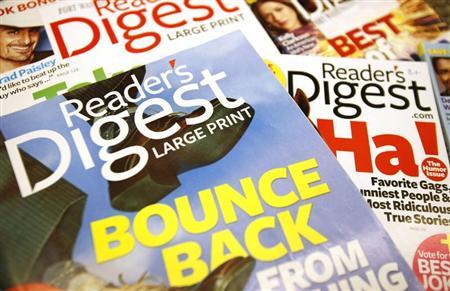
"The problem with Reader's Digest is that it is too old," said Ryan Thornburg, an assistant professor with the Journalism School at UNC-Chapel Hill. "There is absolutely nothing cool about it."
For many people, the demise of Reader's Digest is not a big issue, as it is essentially a content aggregator from the pre-Internet age and people may only read it nowadays while waiting for the dentist. But its bankruptcy is another reminder of the plight facing the publishing industry which has suffered as readers and advertisers are moving online.
According to the Audit Bureau of Circulation, Reader's Digest was still the fifth-ranked consumer magazine in the U.S. in 2012. Peter Kreisky, a media industry advisor and strategist said the biggest challenge facing it is how to translate the values and the voice they have honed and developed so effectively in print into a digital form. Given that half of its readership is over 55, and often less tech-savvy and preferring hardcopy publications, the challenge truly is daunting.
"It is mostly read by very old people. Its heyday was in the 1960s. I don't think it adapts to the times." said Jock Lauterer, founding director of the Carolina Community Media Project.
The woes of Reader's Digest are one example of the problems that plague the traditional hardcopy magazines with their influence, circulation and revenue declining due to their inability to adapt to a 24/7 news-producing cycle.
U.S. News & World Report decided to pull all of its online content in 2010. Newsweek ceased print publication late last year and moved to an all-digital format. Time Inc worked with Apple to put its magazines, including Time and People, on digital devices last year.
The move to end printing can get rid of the high cost of printing and mailing, which is always one of the biggest costs for a magazine, but "go digital" efforts cannot pay off immediately.
Many ad buyers are still "wary" of digital subscriptions, thinking that the Internet is still an unsettled and unsecure frontier for advertising, according to a Mediaweek report.
Unlike other print public business, the New York Times marched to the beat of a different drum. The newspaper raised subscription fees and it seemed to be a method for success, as evidenced by the fact that its online subscriptions growth helped lift its revenue in the third quarter of last year.
During the restructuring period, the Reader's Digest Association will continue to produce its magazines and it will have less than six months to conclude its reorganization.
"It is too late to adjust to time for Reader's Digest," said Jock Lauterer.


Go to Forum >>0 Comment(s)