Cornering the market
 0 Comment(s)
 Print
Print E-mail China Daily, March 29, 2013


 |
|
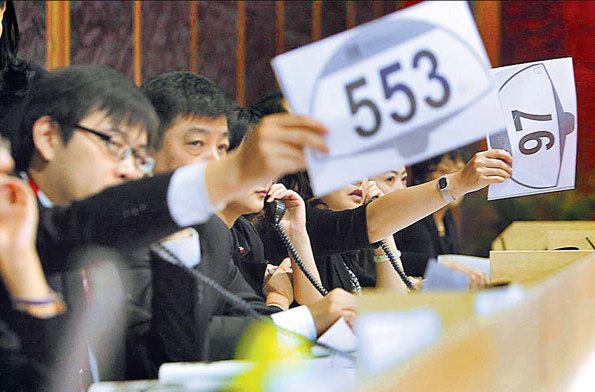
The Guardian Beijing's 2012 autumn sale draws a big crowd of bidders. |
 |
|
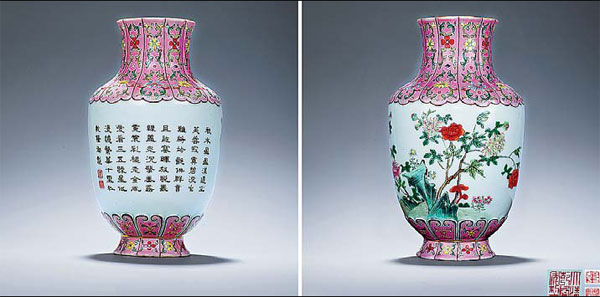
A famille rose peony vase with imperial inscription dating to the reign of Qing Emperor Qianlong. |
 |
|
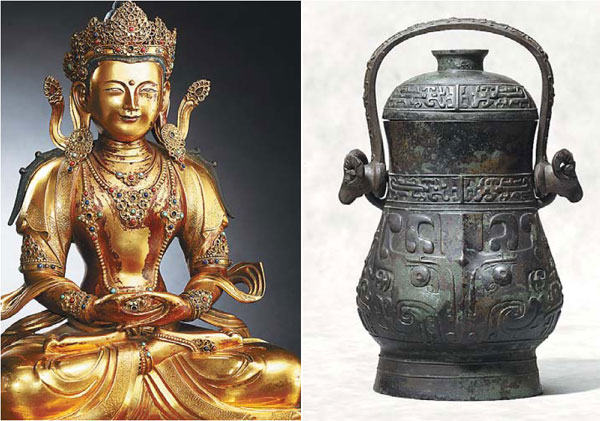
Left: A gilt bronze figure of Amitaryus from the Qing Dynasty; right: A bronze ritual wine vessel of the late Shang Dynasty. |
Auction houses are opening galleries and organizing exhibitions and lectures to improve private sales in an attempt to enhance their traditional business model.
Hong Kong's spring auctions will likely see an increase in the number of private sales after the buyer's premium was hiked, as major auction houses establish a monopoly in the art market. Leading auction houses Christie's and Sotheby's raised the buyer's premium to combat costs and increase profits, creating an overall seller's market. The two auctioneers have not raised the seller's commission, which indicates the need to secure the best, high-priced lots, as major sellers tend to hold on to their collections in an uncertain economy, while buyers seek high quality artworks as a safe investment.
 |
|
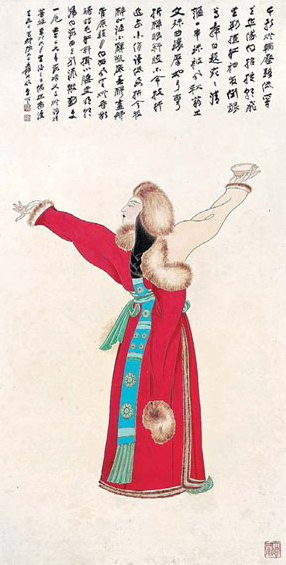
The Drunken Dance by Zhang Daqian. |
The contemporary art section presents two private collections, one comprising 35 works by Japanese artist Yoshitomo Nara. French collector Didier Hirsch, meanwhile, is putting up for sale works by prominent Chinese artists before their international debut.
"The rise in the buyer's premium is quite natural. It's essential to solidify our business and enhance our revenue stream," says Kevin Ching, Sotheby's Asia's chief executive officer.
"The past five years have witnessed increased costs for water, electricity and transportation. We provide a first-class service, thus we need to make a moderate adjustment to balance our expenses."
Ching explains the impact on buyers is relatively small, and so far there have not been any complaints from clients.
The art auction market has tended in recent years to focus on works that can achieve higher prices.
In 2012, sales of works priced more than 500,000 euros ($648,000) accounted for nearly 53 percent of the auction market's value but comprised less than 1 percent of the total lots sold, or 1 percent of the artists whose works were sold at auction, according to the European Fine Art Foundation's most recent report.
So far there has been no indication that Poly International and China Guardian - Christie's and Sotheby's major rivals in the Chinese art market - will increase their buyer's premium. The Chinese auction houses charge 15 percent.


Go to Forum >>0 Comment(s)