Autistic art exhibition calls for inclusion
- By Zhang Junmian
 0 Comment(s)
 Print
Print E-mail China.org.cn, April 1, 2013


A very simple painting entitled "Stairs" attracted visitors' attention at an art exhibition featuring paintings, calligraphies and handicrafts by autistic kids held in Beijing's Shunyi District on March 30.
|
|
|
A very simple painting entitled "Stairs" attracted visitors' attention at an art exhibition featuring paintings, calligraphies and handicrafts by autistic kids held in Beijing's Shunyi District on March 30. [Photo by Zhang Junmian/China.org.cn] |
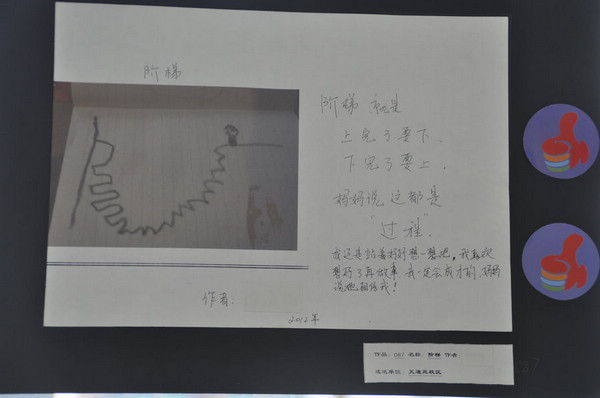
The picture's accompanying note read, "Mom told me life is like climbing the stairs; sometimes you go downstairs and sometimes you go upstairs. I think I should think twice before I leap, as I always do. I believe I can be a talent in the future, and mom also said she trusts me."
One visitor commented, "We really need to give more love to children with autism, who also have their dreams despite their "limitations" due to their mental disorder."
The charitable event, hosted by the Wucailu Center for Children with Autism, aims to encourage more people to care for autistic children and attach greater importance to the development of their potential at an earlier stage.
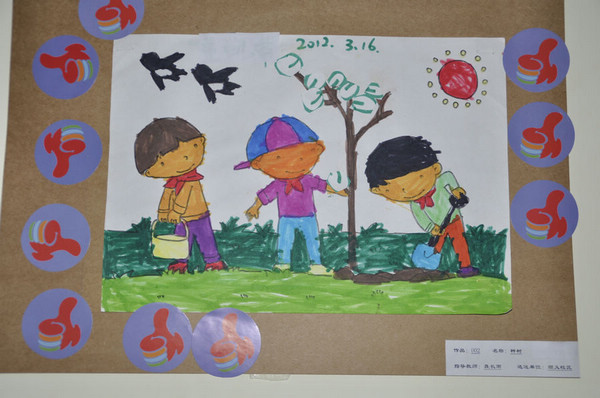
The exhibition featured more than 160 pieces of works created by the lovely kids who are all aged between 3 and 7 and receive rehabilitative treatment at the center. Wucailu is known as China's largest rehabilitation facility for autistic children.
 |
|
The exhibition featured more than 160 pieces of works created by the lovely kids who are all aged between 3 and 7 and receive rehabilitative treatment at the center. [Photo by Zhang Junmian/China.org.cn] |
Autistic children often showcase a spectacular talent in art, music or math, Sun Menglin, founder of Wucailu, said.
Sun additionally stated that autistic children, who have impaired social interaction skills, noticeable language loss or other behavioral limitations, usually feel comfortable and relaxed in the world of art. They will become quiet and concentrate on what they are creating, which helps the coordinated development of their brain and hands.
Through their work, they can communicate with others how they perceive the real world, their vivid imagination, their hopes and wishes, despite their brushstrokes or techniques still being far from mature or meeting stereotypical standards.
Xiaozhi, a six-year-old autistic boy from Shandong Province, knows a lot of Chinese characters, and can write all of them by heart, both neatly and elegantly.
|
|
|
Xiaozhi, a six-year-old autistic boy from Shandong Province, knows a lot of Chinese characters, and can write all of them by heart, both neatly and elegantly. [Photo by Zhang Junmian/China.org.cn] |
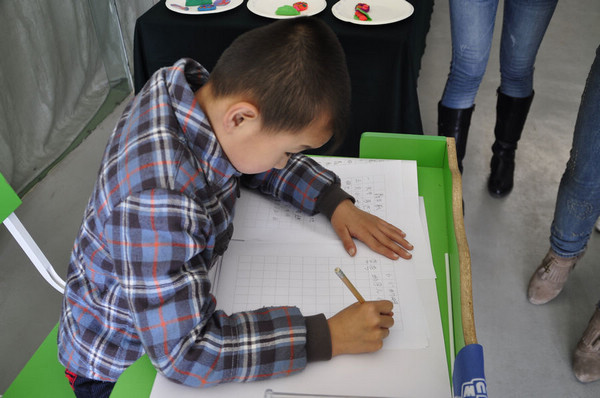
The shy but friendly boy also amazed visitors with his special talent -- telling you on which day any given date occurred or shall occur.
He is making quite good progress and will probably leave Wucailu in a few months, according to his mother, who asked to remain anonymous. She is still worried that Xiaozhi may not get admitted into an ordinary primary school and that he will be looked down upon by others when he grows up.
However, life seems much harder for an old grandfather from Sichuan Province, as his son is mentally disabled and his grandson, currently at Wucailu, is affected by autism.


Go to Forum >>0 Comment(s)