Unchained malady
- By Zhang Rui
 0 Comment(s)
 Print
Print E-mail China.org.cn, May 15, 2013


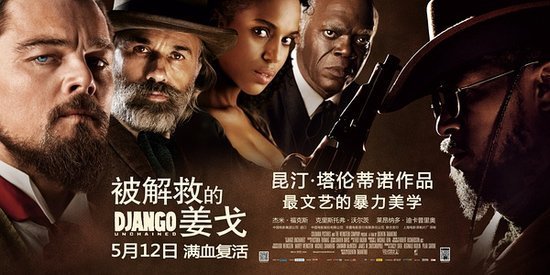
Quentin Tarantino's Oscar-winning film "Django Unchained" is finally back in Chinese cinemas but the initial fervor generated by the film has dissipated, leaving industry observers and movie fans alike to wonder: What actually happened?
"Django Unchained"'s dramatic withdrawal from Chinese cinemas tested both the tolerance of Chinese authorities as well as the temper of the Hollywood studio concerned.
A source familiar with the situation, who asked to be anonymous, told China.org.cn that Columbia Pictures was aware of a potential issue with the film as early as 1 a.m. on April 11, but they never imagined that the film would be withdrawn.
On the day of April 11, the film was abruptly suspended by film authorities and the movie's importer China Film Group Corp for "unspecific technology reasons". Chinese cinema staff nationwide then worked to persuade audiences to leave theaters after only one minute of the film.
It was widely reported that several seconds of nudity remained in the film, unbeknownst to Chinese censors, leading to the chaotic scenes in China's cinemas. Netizens were unimpressed. "If there is any problem with nudity, I bet all Chinese art museums should be shut down," one blogger wrote on a Sina Weibo that day. "China has been opening up for so long, [but] the censors' minds are yet to open."
|
|
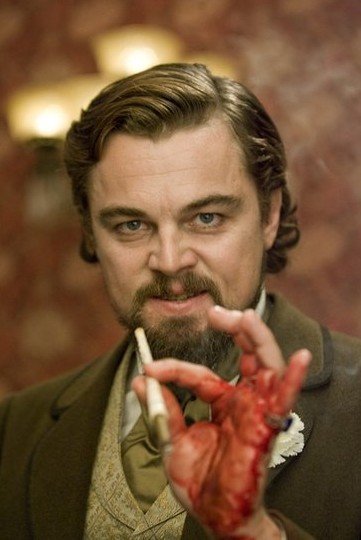
"He must be furious, but he remained silent,"the source said. "Because if he was publicly critical, this film would be barred from the Chinese market and so would all future films made by the same studio."
Columbia Pictures' representatives and distributors have remained silent about the incident. There has been only one official blog posting regarding the film. The posting, dated April 16 said: "Regarding whether and when 'Django Unchained' will be rescreened, relevant parties are negotiating, we will give you an answer shortly."
The film has now resurfaced, with some minor changes and all nudity omitted. It is reported that the new edition is four minutes shorter than the original one.
The film, however, has suffered financially due to the controversy and audiences are angry. China's censors have also come in for heavy criticism at home and abroad; but for the film studio and distributors, the loss is definitely financial: 10 million yuan (US$1.62 million) was invested into the first round of promotion and making of digital copies, all of which was lost when the film was pulled. The result of this is that "Django" now faces the same old problem as other films have faced in China: Since the film's withdrawal, would-be cinema-goers have watched pirated versions online, and now that the film can be screened once more, the initial clamor has died.
"Django Unchained" is the first Tarantino film ever to be imported into China, and its box office revenues were once expected to go sky-high. However, it has lost at least 1/3 of the showings it originally expected to get. On Sunday, its opening day, "Django Unchained" only collected 4.2 million yuan (US$683,361) at the box office, making it an obvious flop.
Not all views are so negative, however. "Theaters are happy to have Django back," said Qiu Qing, an executive of China Film South Cinema Circuit Co. "Audiences have certain expectations for this Oscar winner. However, blockbusters like 'Iron Man 3,' 'The Croods' and 'So Young' are dominating the market, while Tom Cruise's 'Oblivion' is also showing. All of these films provide stiff competition for 'Django.'"
There will also be fierce competition from Chinese productions such as "American Dreams in China," directed by Peter Chan, which is scheduled to open on Saturday.
But Tarantino paid attention to the movie's China release, which he felt was an occasion to remember. Qiu said, "Quentin Tarantino's people asked our theater chain to buy tickets for him as souvenirs. Once we got the call, we bought four tickets at a Guangzhou cinema and sent them to the U.S. by express mail." Other reports told that Tarantino had also asked someone to buy Chinese tickets for him in Beijing and Shanghai, the Yangtse Evening News reported.
Liu Yaxin, a theater manager with Stellar Mega International Theater Co., Ltd., was less optimistic about Django's prospects. "The running time of the film is too long, and there will not be many showings," he said, "Many people have seen it through other channels. So I estimated it will only be back in cinemas for one week."
Elizabeth M. Daley, dean of the USC School of Cinematic Arts within the University of Southern California, said on April 23 at the Beijing Film Academy that the "Django case" will be repeatedly mentioned in American film industry circles to remind Hollywood filmmakers of the big risks involved in entering the Chinese market, which is now the second largest market in the world.


Go to Forum >>0 Comment(s)