Doha talks could defrost, Lamy says
 0 Comment(s)
 Print
Print E-mail China Daily, April 1, 2013


Pascal Lamy may have to hand off the completion of the Doha round of global trade talks to his successor.
Though he expects there could be breakthroughs by the end of the year, Lamy ends his second four-year term as the World Trade Organization's director-general in August.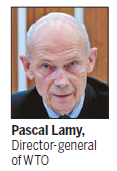
The long-running Doha round of trade negotiations began in 2001, and Lamy officially declared an impasse in the talks in December 2011.
"I'm a bit more optimistic than I was one or two years ago. My sense is that we may be on the verge of a defreezing of the negotiations," said Lamy in an interview with China Daily.
Members will have a ministerial conference at the end of this year in Bali, Indonesia, and "a part of these big negotiations could be concluded", he said.
Ongoing talks include trade facilitation negotiations and other parallel discussions. Member countries have agreed to accelerate talks on a tentative agreement to be signed in Bali.
Instead of ensuring a big abundant basket of outcomes, negotiators will first harvest the low-hanging fruit, he said.
Thriving regional talks
Frustrated by stagnant multilateral talks, countries have become increasingly interested in regional trade negotiations.
The choice of multilateral and bilateral systems is not "either-or", said Lamy, as they can co-exist. Every WTO member participates in more than 10 preferential agreements on average, he said.
Trade is more open today than in 2001, when the Doha talks were launched, and it is more open than in 2008, when the talks were halted, but what happened could be reversed without binding commitments under the WTO, he said.
Recently a few mega-deals have been in the limelight. In June the United States and the European Union will begin official talks on the Transatlantic Trade and Investment Partnership, with hopes of hammering out a deal by the end of 2014.
"But starting a negotiation doesn't mean the ending of a negotiation," Lamy said.
There are many negotiations that never conclude, said Lamy.
"It all depends on the level of ambition," he said. "But if the purpose is to free the old trade, to address all the regulatory differences, which really matters to open trade ... then it will take more than two years."
Most of the trade today is about regulations, product safety, data privacy and environmental standards, which are all complex issues, he said.


Go to Forum >>0 Comment(s)