Overview of Hubei, China
 0 Comments


Hubei (equivalent to "north of the lake") is named after its location in central China, middle reaches of the Yangtze River, and north of the Dongting Lake. The shorter term for the province is "E". With a total area over 180,000 square kilometers and a total population over 60,000,000, Hubei now consists of 12 provincial cities, 1 autonomous prefecture, 1 forest region and 3 province-controlled cities.
Hubei has a long history and splendid culture. Hubei, as one of the places of origin for the Chinese people and the ancient Chinese culture, enjoys the rich cultural heritage. 500,000 to 1,000,000 years ago, our ancestors lived and multiplied here. Hubei is also the native place of Yan Emperor, one of the first ancestors for the Chinese people. During Spring Autumn and Warring States periods, in its history over 800 years, the Chu State created the splendid Chu Culture, which was one of the treasures of the Chinese ancient culture.
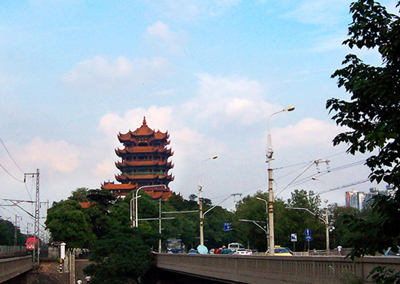
Hubei has rich resources. The Yangtze River flows 1,061 kilometers traversing Hubei from west to east. Hubei has long been famed as a "Province of Thousand Lakes" for the numerous lakes and crisscrossing water paths within the province. There are more than 4,000 rivers of different sizes; in total, the length reaches over 60,000 kilometers. With affluent water resource, Hubei takes the 4th place in terms of the hydro-energy resource available for development and takes the first place in terms of hydropower capacity of the developed projects including the Three Gorges Plant, which is the biggest hydropower plant in the world. Hubei is also endowed with many mineral deposits with 138 kinds of minerals. The reserves of phosphorus ore, gypsum and rock salt rank a leading position in China. Hubei is also one of the provinces in China that boasts rich tourism resources where landscape resorts are supplemented with historic sites. For instance, there are the Three Gorges on the Yangtze River-a beautiful natural gallery, Wudang Mountain-a spectacular Taoist Holy Land, Shennongjia-a mysterious primitive forest and famous ancient monument of the battlefield during the Three-State period, etc.
Hubei has a developed transportation network. The capital city, Wuhan, also named "the thoroughfare leading to nine provinces" is a transportation hub connecting the west to the east, the north to the south. The national railway trunk lines such as Beijing-Guangzhou and Beijing-Jiulong run through Hubei from north to south, while Xiangfan-Chengdu and Hankou-Danjiangkou transverse Hubei from east to west. There are crisscrossing roads extending in all directions, of which the total length of the expressway reaches 1,700 kilometers. Air routes from Wuhan, Yichang, Xiangfan and Enshi to various places in the country are also open and Wuhan Tianhe Airport becomes an important airport in the inland of China.
Hubei is one of the major industry and agriculture bases. Industrial production system supported by auto, metallurgy, electricity, construction material and textile takes form and state-owned large-size enterprises such as Dongfeng Motor Company and Wuhan Steel Group play an important part in national economy. In addition, Hubei is one of the major grain production regions with two agriculture bases, i.e. Jianghan Plain and Ebei Hilly Area which enjoy the reputation of "fish and rice village" and "if the area around Dongting Lake has a good harvest, the entire country has enough food". Hubei also makes great contribution to the country by yielding plenty of grain, cotton, oil and fresh water products. Hubei is strong in science and education. In total, Hubei has over 80 higher education colleges and universities, more than 1,100 scientific research institutes, over 50 members of Chinese Academy of Sciences and Chinese Academy of Engineering, ranking a leading position in the country.


Comments