Hard work at the core of Apple's successes
- By Xu Lin
 0 Comment(s)
 Print
Print E-mail China.org.cn, March 15, 2012


Do you ever stop to think about how your iPad, iPhone, or other high-end device, was produced when using it to browse the Web or perform any of its other myriad functions? To produce such products, numerous factory workers work painstakingly on the production lines.
 |
|
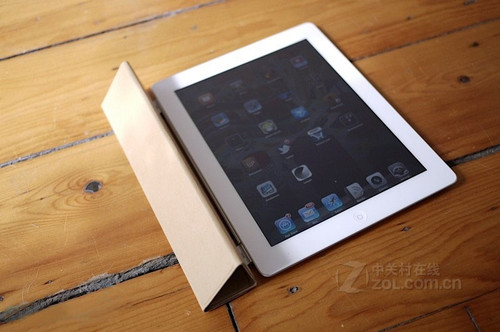
Apple's iPad 2 [file photo] |
"Initially, we called it the iPad 3, said one worker, who asked to be identified by the assumed name of Li Qi. He was talking about the New iPad, the third incarnation of Apple's supremely popular tablet. As a worker at Foxconn's Shenzhen plant, he was also involved in the production of the iPad 2.
Li was initially concerned that the New iPad would not sell well. His concerns centered on the fact that poor sales might see him shifted to assist with the production of the iPhone 4S, an even more arduous task.
Li's daily work consists of correctly assembling the keys and cables into the indentations. "In addition to this production line the New iPad is also being produced by workers in a few other buildings," he said.. "Their work is different from ours, as they are in charge of assembling, packaging and warehousing."
The production of the New iPad started earlier this year and, in the beginning, it was only possible for workers to produce 1,000 sets within a 10-hour period. However, after Spring Festival, output increased to 150 sets per hour. Li works six days a week, racking up an average of 80 extra hours per month. His monthly salary has increased from 900 yuan to 2,350 yuan, and with overtime payments, he can get 3,500 yuan after tax.
As far as Apple's new device is concerned, Li feels that it is similar in appearance to the iPad 2, but with more powerful functions. "There are now more than 30 steps on the New iPad's production line, but far fewer on the iPad 2's."
Li commented that the management of the iPad production line is very strict. The workers have to wear the ESD (Electro Static Discharge) working suit and pass through security doors in order to get to the production line. Chatting with colleagues is absolutely forbidden on the production line, however, Li believes that, compared to the production of the iPhone 4S, the current job is more relaxed.
From September to December last year, Li and his work colleagues were asked to assist with the production of the iPhone 4S. Li wrote about the experience in his diary: "This was the first time for me to have a close look at the handset. It deserves its reputation as the best smartphone in the world, with outstanding performance in terms of both hardware and software."
He continued: "We had some experience [of working on Apple products] on the production of Apple tablet computers, but had never operated on its cell phone production lines. As a freshman, I had to learn on the job." Li discovered that the process of producing cell phones was more complicated than that of tablet computers. The accommodation in that factory was worse too.
"We started working from 7 AM every day, and worked for more than three hours in the morning and 4-6 hours in the afternoon," he said. "If we could have even a ten-minute break in a single day, we would call that a luxury." He added that when he and his colleagues were working on the iPad production line, they had two or three ten-minute breaks per day.
Another worker on the iPhone production line, who also asked not to be identified by his real name, concurred with Li's sentiments. The worker, who identified himself as Wang Hua, commented: "We have to produce more than 3,500 sets of the iPhone on one production line per day. It is quite normal for us to have no holiday time."
Sometimes, however, pain can bring gain. Li was paid 5,000 yuan per month after tax for his work on the production of the iPhone. It was the highest salary he had received since he joined Foxconn two years ago. It was the only good news for him who just bought an apartment in his hometown.
Despite the long hours, Li doesn't want to see too much variation in his working life, although such decisions are beyond his control. He and his colleagues have already had three days of holiday in March. In the past week, he has seen more than 100 workers transferred to Foxconn's factory in Chengdu, Sichuan province. "This is a signal," he said. "If our holiday continues, we will definitely be transferred to other departments or to factories in other localities."


Go to Forum >>0 Comment(s)