Big cities less satisfactory in govt service
 0 Comment(s)
 Print
Print E-mail China Daily, November 23, 2012


Government services in China's biggest cities are less satisfactory than in smaller cities, a report has found.
The report was jointly compiled by the Nanyang Center for Public Administration of Singapore's Nanyang Technological University, and Shanghai Jiao Tong University's School of International and Public Affairs.
 |
|
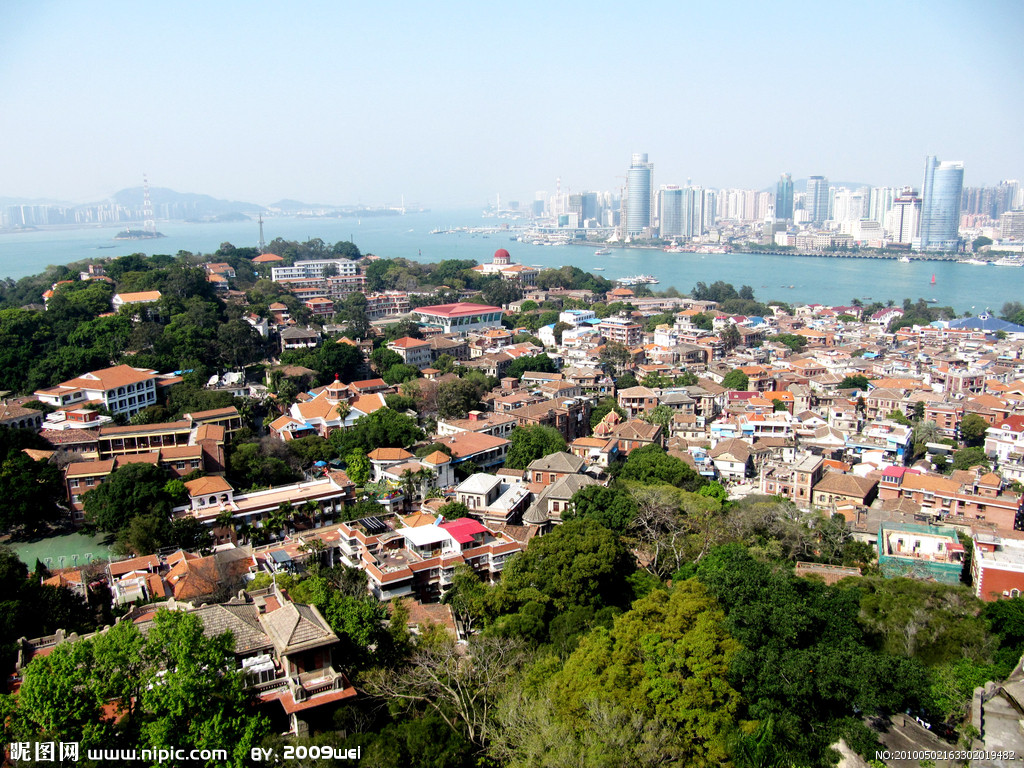
Xiamen, Fujian province |
The report, compiled through different perspectives from residents and enterprises, aims to find out how satisfied residents and businesses are with government services. More than 23,000 residents and 3,600 enterprises in 34 cities were polled from May to July.
In the report, a service-oriented government for citizens was defined as one that embodies five key dimensions, including public services satisfaction, public involvement, information transparency, government efficiency and level of public trust.
Xiamen, Fujian province, emerged on top of the list of citizen satisfaction toward government service. It was followed by Qingdao, in Shandong province, and Hangzhou, in Zhejiang province.
But China's largest cities ― including Beijing, Shanghai, Guangzhou and Shenzhen ― were not in the top 10.
It's the third year that Chinese first-tier cities weren't on the list for public satisfaction of government service.
An advanced economy does not necessarily bring high public satisfaction. Such a contrast is also seen in the economically active Pearl River Delta area, where no city is in the top 10.
Researchers said that demographic variables, such as age, educational background and income level, affect the result. And a larger gap was found in first-tier cities between high expectations and low evaluations of a government's public services.
"These first-tier cities are on the top of the ranking of investment in the public services infrastructure. But they are far from meeting residents' demands. Building a service-oriented government has many aspects," said Wu Wei, director of the NTU's Nanyang Center for Public Administration.
"Residents are more concerned about livelihood issues, such as their children's education and medical insurance, rather than how many skyscrapers have been built in the city," Wu said.
"Economic advantages can provide a more material foundation for public services, but it cannot necessarily bring public satisfaction with government service," he said.
"And a government needs to create a general sense of happiness for its residents," he added.
The report said healthcare and housing were deemed the most unsatisfactory among citizens, especially among those in first-tier cities.


Go to Forum >>0 Comment(s)