| Home / China / National News | Tools: Save | Print | E-mail | Most Read |
| 'Collection' of Ancient Homes Sparks Debate in Shanghai |
| Adjust font size: |
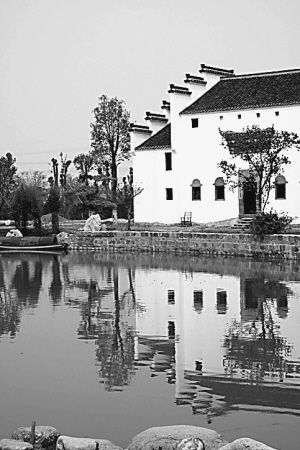
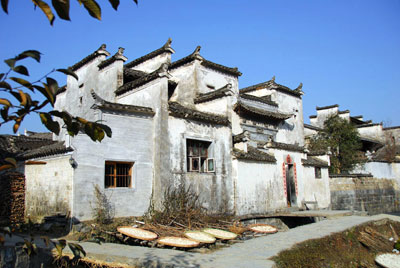
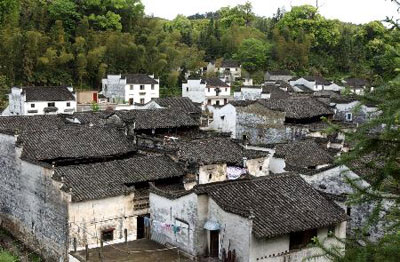
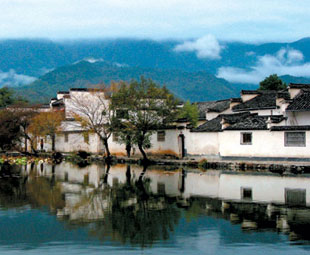
Five years ago, Wang Wei, a Shanghai businessman who made his fortune through trading, planned to build a "cultural and ecological recreation garden" on an area of 1,200 mu (80 hectares) that he had rented in Luodian Town in Baoshan District of Shanghai. He then began to form a new idea, envisioning a "collection" of ancient hui-style houses. He didn't want to simply imitate the style, but actually use the original timber, even the original structures of ancient houses he found in other provinces to rebuild the ancient houses in Shanghai, according to a report by People's Daily on April 10.
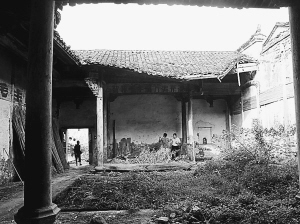
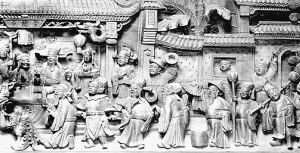
But in the eyes of some experts, his large collection is detrimental to the preservation of hui-style ancient architecture because many of the homes he disassembles are of historical, architectural, and artistic value. To counter this criticism, before Wang demolishes an old house, he takes photos of the original location to document the history of the building. Wang Wei's inspiration came from a trip to a mountain in Zhejiang Province where he went to search for some tree species. When he spoke with the local people, he learned that a half-collapsed house on the top of the mountain had attracted the attention of a Taiwan businessman. They explained that the man was ready to buy it, take all the materials away, and rebuild it in Taiwan. The story sparked Wang's curiosity, so he climbed to the top of the mountain where he found the old hui-style house of 450 square meters. He realized it must have been the home of a wealthy and influential family because of its ornate wooden sculpture and fine layout. Historians later confirmed that 300 years ago, a rich landlord built up 11 houses for his 11 sons. This house was the only one left, and since it was deserted for many years, most parts had collapsed due to the lack of repairs. Wang Wei went to consult some architects when he returned to Shanghai and brought them to visit the place. They were all shocked by what they saw and didn't expect such wonderful architecture in such remote mountain, so they agreed to redesign the old house for free. Wang then recruited a group of experienced workers and spent one month making marks and measurements on all parts of the house before disassembling it and moving the pieces to Shanghai. There were all together 600 large pieces and 2,000 small pieces, every one of them an artistic treasure.
Wang's assistant, a man surnamed Liu, is the manager responsible for Wang's ecological garden in Shanghai and has also been involved in the collection of the old houses. He said, local people in Anhui's Xidi, Hongcun, and Tunxi areas have a stronger awareness of protecting cultural relics and are also more business-oriented.
In reality, there are still many old houses deserted in Anhui that the government has not paid attention to, leaving room for people like Wang Wei to step in. Even some experts who have blamed Wang Wei for his behavior have to admit that it's difficult to say how many old houses need to be put under protection. In past few years, Wang Wei spent in total over 10 million yuan on purchasing, demolishing, and transporting the old houses. "The repair fee will not be low either, at least 10 million yuan," said Wang. Wang Wei firmly denied the accusations that he is a destroyer, but he also claimed he is not a protector. He thinks that the ancient houses together with their surrounding areas and local customs and traditions are inseparable. "Actually I didn't think too much about protection, but just wanted to explore more function of the old houses. Or I should say I am trying to introduce some characteristics of ancient architectures into my business development and to display their new value, that's my purpose," said Wang Wei.
(China.org.cn by Wang Qian April 12, 2007) |
| Tools: Save | Print | E-mail | Most Read |
 |
| Related Stories |
|
