|
|
Basic Conditions: Autonomous Regions |
 |
|
|
Inner Mongolia Autonomous Region |
|
|
|
|
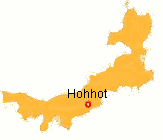
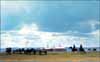
Called "Inner Mongolia" for short, the region is situated
on the northern frontier of China, bordered by Mongolia and Russia on
the north. It |
|
|
Guangxi Zhuang Autonomous Region |
|
|
|
|
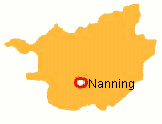 Called
"Gui" for short, Guangxi is situated in the west of south China, faces Beibu
Gulf on the south and adjoins Viet Nam on the southwest. It covers 230,000
square km, with a population of Called
"Gui" for short, Guangxi is situated in the west of south China, faces Beibu
Gulf on the south and adjoins Viet Nam on the southwest. It covers 230,000
square km, with a population of 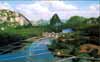 48.57
million, of whom 14.11 million live in urban areas. Nanning is the regional
capital. 48.57
million, of whom 14.11 million live in urban areas. Nanning is the regional
capital. |
|
|
Tibet Autonomous Region |
|
|
|
|
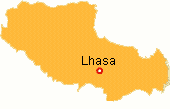 Called
"Zang" for short, Tibet is situated on the Qinghai-Tibet Plateau on the
southwestern border of China, adjacent to India, Nepal, Called
"Zang" for short, Tibet is situated on the Qinghai-Tibet Plateau on the
southwestern border of China, adjacent to India, Nepal, 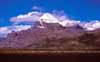 Bhutan
and Myanmar. It covers 1.2 million square km. Its total population exceeded
2.7 million at the end of 2003, an increase of 32,900. Lhasa is the regional
capital. Bhutan
and Myanmar. It covers 1.2 million square km. Its total population exceeded
2.7 million at the end of 2003, an increase of 32,900. Lhasa is the regional
capital. |
|
|
Ningxia Hui Autonomous Region |
|
|
|
|
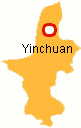 Called
"Ning" for short, Ningxia is situated on the middle reaches of the Yellow
River in the northwest of China. It covers 66,000 square km, Called
"Ning" for short, Ningxia is situated on the middle reaches of the Yellow
River in the northwest of China. It covers 66,000 square km, 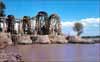 with
a population of over 5.8 million. Yinchuan is the regional capital. with
a population of over 5.8 million. Yinchuan is the regional capital. |
|
|
Xinjiang Uygur Autonomous Region |
|
|
|
|
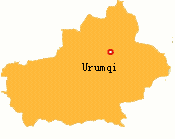 Called
"Xin" for short, Xinjiang is situated on the northwestern border of China,
adjacent to Mongolia, Russia, Kazakhstan, Kyrgyzstan, Tajikistan, Afghanistan,
Pakistan and India. Covering an area of 1.6 million square km, Called
"Xin" for short, Xinjiang is situated on the northwestern border of China,
adjacent to Mongolia, Russia, Kazakhstan, Kyrgyzstan, Tajikistan, Afghanistan,
Pakistan and India. Covering an area of 1.6 million square km,  Xinjiang
is the largest of all Chinese provinces and autonomous regions, with a population
of nearly 19.34 million. Urumqi is the regional capital. Xinjiang
is the largest of all Chinese provinces and autonomous regions, with a population
of nearly 19.34 million. Urumqi is the regional capital. |
|