Pandas to be separated
 0
0 


 |
|
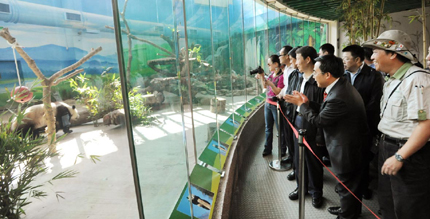
Zhang Hemin, a researcher at the Wolong Nature Reserve in southwest China's Sichuan Province, applauds giant pandas Tuan Tuan and Yuan Yuan yesterday at the Taipei Zoo in Taiwan. |
So says a panda expert sent by China's mainland to Taiwan to advise on how to encourage mating by the pair given by the mainland last December.
After inspecting the pandas at the Taipei Zoo yesterday, Zhang Hemin suggested a separation of a month or two might reignite their ardor.
"They may have more interest toward each other after a brief separation," said Zhang, a researcher at the Wolong Natural Reserve in southwest China's Sichuan Province where the pandas are from.
The mainland presented Tuan Tuan and Yuan Yuan, which together mean "reunion," to Taiwan last December amid warming ties between the two sides, which split amid civil war in 1949.
They have proved popular and many Taiwan residents now want to see them produce a cub in their new home.
Zhang said the environment at Taipei Zoo was natural and would not hamper their breeding, but the animals may have become bored with each other.
Zhang also suggested that to prepare the male, Tuan Tuan, for the vital mating act, zookeepers should set up more wooden racks so he can climb around and strengthen his hind legs.
If this all worked, the much-anticipated act could come during the pandas' brief mating season in February, Zhang said.
Pandas are threatened by a low reproduction rate.
Females in the wild normally have a cub once every two to three years, and the fertility of captive giant pandas is even lower, experts say.
Only about 1,600 pandas live in the wild, mostly in Sichuan Province. An additional 120 are in Chinese breeding facilities and zoos, and about 20 live in zoos outside China.
The mainland offered the pandas to Taiwan in 2005, but the then-government of Chen Shui-bian rejected the overture. After Ma Ying-jeou was inaugurated in May last year, he accepted the mainland offer of the two pandas.


Comments