Editor's note: The government of Futian district, a highly developed area of Shenzhen, is pondering ways to maintain a healthy and consistent economic development after a decade of rapid growth. It aims to enhance the independent innovation ability and upgrade its industries to the high end of their respective manufacturing chains.
After years of research and practice, the district government has mapped out a plan to develop a circum-CBD advanced industrial zone by taking advantage of its location in the city. By sponsoring a forum on Tuesday, it solicited advice and views from dozens of leading scholars, planners and experts from home and abroad to help develop its scheme.
Following are some extracts of the speeches on the forum:
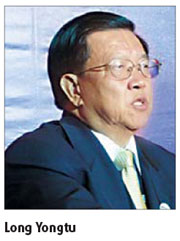
Long Yongtu, dean of the School of International Relations and Public Affairs of Fudan University, dean of the Institute of International Studies of Fudan University and the secretary-general of Boao Forum for Asia:
"The Futian district government should give great attention to the positioning of Shenzhen and the actual situation of China when planning a high-end industrial zone.
"One of the most important roles of a vigorous CBD is to serve as locomotive to the regional economy.
"So we should research the industrial development of the surrounding areas and their future and find out the best way to serve these industries at an advanced level.
"I would suggest the district government encourage the establishment of trade associations, commerce chambers or clubs in a bid to better understand different stages of manufacturing and play a better role at the high end.
"The service industry should be closely connected with the manufacturing industry. We should keep an eye on industrial changes in the whole Pearl River Delta, Southeast Asia and Hong Kong.
"Traditional labor-intensive industries will continue to exist in China, but we should move on from merely processing to branding, design, marketing, modern logistics and sales.
"Service outsourcing is a booming business that is expected to surpass a value of $1.2 trillion by 2010 across the globe, which is an opportunity to Futian too.
"When developing the hi-tech sector, we need to gather experiences and technologies from low-end industries. It's still too early to say we could give up the low-end sectors now because we don't have a sound environment for venture capital and the SMEs are still weak. Under the circumstances, we should cherish the skillful workers, especially those who have been working for decades in the city. They are vital to the city's future development."
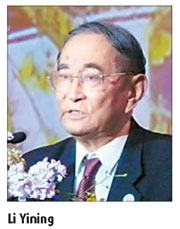
Li Yining, Chinese economist and member of the Standing Committee of the National People's Congress:
The global financial crisis has a more and more visible impact on China's economy now.
"The country's economic prosperity has covered some of the existing problems, which are becoming apparent now. One of the problems is that the fast economic growth has dampened the adjustment, upgrading and transposition of the industrial structure because people did not take it seriously before.
"For regional transposition, we should firstly sharpen our minds. Even in the depressed economy, markets can be expanded - depending on your products, technologies and brands.
"When Shenzhen builds its CBD in Futian, it should be a place for brand creation. It should attract high-end companies, cultural institutions, scientific research and educational institutes.
"As a CBD it should reduce the operational costs by introducing new technologies and cut transaction costs, including the costs occurred in information transformation, signing contracts, contract fulfillment and logistics. If Futian district government can minimize these costs, they can grab the opportunities."
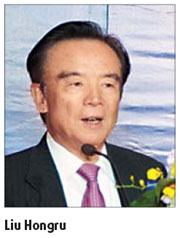
Liu Hongru: chairman of the Capital Market Research Institute and former chairman of the China Securities Regulatory Commission:
As a senior consultant to the Shenzhen government, I have conducted research on how to develop the city's financial industry.
"We believe the capital market is the core of the modern financial service industry. Compared with the banking system, capital market is more flexible.
"Shenzhen has made a large number of experiments in the capital market. The establishment of a stock market and the development of a pool of intermediate agencies could bring a flourish to related industries, including banks, securities, insurance, accounting and law firms.
"To develop the capital market, Shenzhen should more positively promote the progress of three funds - an innovative investment fund, share equity investment fund and securities investment fund.
"Shenzhen has the nation's most active venture capital investment institutes that manage more than 50 billion yuan fund and invested in more than 1,800 projects, of which more than 80 projects went public in domestic and foreign stock markets.
"Shenzhen should also deepen financial cooperation with Hong Kong to meet the rising demands from this sector.
"First, both sides should research the possibility of creating a common channel in the capital market, which would have great prospects.
"Second, both sides could develop cooperation between the financial institutes, on capital, financial backup services, renminbi settlement business and exchange of human resources.
"Third, both governments could study the feasibility of a more convenient capital flow so that international funds can enter the Chinese mainland through Hong Kong and Shenzhen."
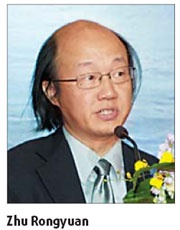
Zhu Rongyuan, deputy chief planner of the China Academy of Urban Planning and Design and vice-president of the China Academy of Urban Planning and Design Shenzhen School:
"We should first look at Futian district's location in Shenzhen and its role. Actually according to Shenzhen's general planning, the city will have another CBD at Qianhai area in the future besides Futian.
"The CBD in Futian is becoming mature and a multi-functional area featuring a headquarters economy.
"However, it could not be integrated with all the functions of a city. It should co-exist with the other CBD of Shenzhen and meet the different social demands.
"The Futian district government has heavily invested in transportation facilities and infrastructure, but without extra land, we should make good use of the existing land to improve its added value.
"The planning should take care of the residents' needs and their living standards and increase the employment opportunities for locals.
"The government should review its service quality, convenience and efficiency to its people as criteria for their performance.
"We would like to build a big and stable community that people could feel at home and develop a unique living style in this district."
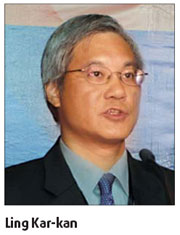
Ling Kar-kan, president of the Hong Kong Institute of Planners and member of the Planners Registration Board:
"Hong Kong has a very advanced economy, but the land available for development accounts for just 20 percent of the total land area of 1,100 sq km.
"The original CBD of Hong Kong was developed from the central area since the 1840s, but now the zone has become the core of the extended CBD complex with several sections like Causeway Bay, Kowloon Peninsular and Mong Kok.
"According to our experience, the CBD should become a hub to conveniently connect different transportation means. Meanwhile, it can allow a smooth flow of people too. That's why many buildings in Hong Kong have been linked with walkway bridges.
"In order to better use land resources, the planners in Hong Kong have made buildings multi-use. The lower floors of the building can be used for shops and the upper floors for office, hotels or premium residential areas.
"Meanwhile, we emphasize a quality comprehensive environment. We usually plan parks along the seaside so the residents could have a good time there."
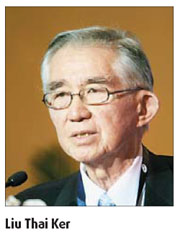
Liu Thai Ker, director of RSP Architects Planners & Engineers (Pte) Ltd and former managing director and Chief Planner of Urban Redevelopment Authority of Singapore:
"Singapore has a population of 4.8 million. More than 300 sq km of land has been developed, a similar size with Shenzhen's urban area.
"Our urban planning emphasizes on two factors. First it should be a healthy city with different functions working well; second it should be a beautiful city. Meanwhile, we pay much attention to protecting historical heritage and the natural environment.
"Planning is a systematic and comprehensive job. We will work out a good project in a short time to show to our residents, but more importantly we will make it systematic and consistent.
"With office buildings, hotels, entertainment sites, venues for cultural activities and the hospitality industry, CBD is important because it can reflect the image of the city. Personally I think residential areas have little connection with a CBD, but it could build some residential buildings inside."
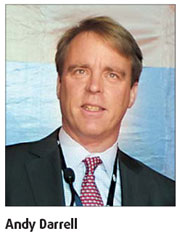
Andy Darrell, vice-president for Living Cities at the Environmental Defense Fund and a member of New York City Mayor Michael Bloomberg's Sustainability Advisory Board:
"The factors of economic and environmental coexistence have been considered over the past century as New York City grew from an industrial city to a world finance center.
"New York is still an environmentally efficient city because many commercial areas in the Manhattan CBD can be reached by walking and the area enjoys a very convenient public transportation. Besides a prosperous finance zone, New York is also a city suitable for living.
"Now one of the challenges that New York faces is how to develop its CBD to attract more people to work and live there. We need to build more than 260,000 flats there to accommodate extra population but meanwhile have to reduce greenhouse gas emissions by 30 percent.
"The city is now focused on developing more service industries, including finance, architecture, arts, design and tourism. We plan to build new commercial developments and residential areas closer to the CBD so it can become more compact and take less time on public transportation."
(China Daily December 4, 2008)




