Malaria tsunami demands global action
 0
0 


The tsunami in Japan, the earthquake in Haiti, and Hurricane Katrina are among the world's most notorious recent natural disasters.
The worldwide outpouring of support demonstrated what humanity is capable of at its best.
While international support in a time of crisis demonstrates a seemingly innate moral response to the suffering of others, it also highlights with disquieting clarity that the same level of empathy is more difficult to evoke when a crisis is chronic instead of sudden, unexpected, and dramatic.
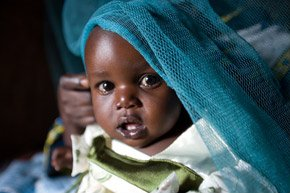
One of the most devastating global health challenges on the planet is malaria, which claims more than 800,000 lives annually, primarily among young African children.
According to the Roll Back Malaria Partnership, 2,000 children die of the disease each day. Yet, unlike the aftermath of a natural disaster, there are no photographs to capture the scope of this tragedy. The loss of life is every bit as devastating, but without the onslaught of grisly images, it is much easier to become indifferent to malaria's victims.
Malaria deaths represent nothing less than a moral issue. This is why the United Nations, World Bank, Global Fund, Tony Blair Faith Foundation, African heads of state, and many other governments, organizations, and individuals have felt compelled to act.
In 2008, United Nations Secretary-General Ban Ki-moon declared the goal of ensuring universal access to malaria-control interventions by the end of 2010 for all those at risk of the disease, with the ultimate goal of reaching near-zero malaria deaths by 2015.
Since those goals were set, major progress has been made. Hundreds of thousands of lives have been saved, and the international community now is redoubling its efforts to reach the 2015 milestone.
Three years ago, when more than US$3 billion in new money was committed to the malaria effort, mosquito nets and indoor spraying protected less than 20 percent of Africa's at-risk population. Today, the proportion is more than 90 percent. These gains occurred only because of the commitment of leaders, agencies, and individuals who realized that lessening the malaria burden is not only an opportunity, but also a responsibility.


Go to Forum >>0 Comments