Cultural cross-pollination makes Shanghai what it is
- By Pan Guang
 0 Comment(s)
 Print
Print E-mail
Shanghai Daily, November 11, 2011
E-mail
Shanghai Daily, November 11, 2011


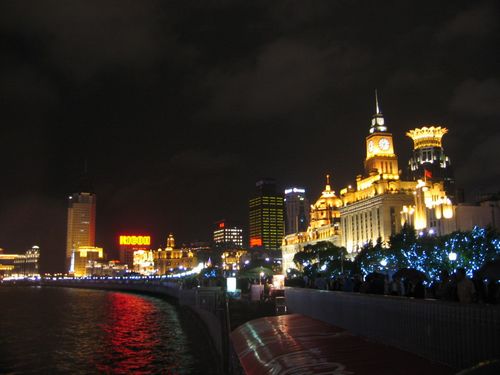
Shanghai's distinct culture, or haipai wenhua as we know it, is a product of more than a century of blending of different cultures.
This process is shaped by the interaction between local cultures, between local and foreign cultures, and between foreign cultures.
Shanghai opened to commerce in the mid-1800s as a treaty port. Since then people had come and gone freely, sometimes without a passport or visa. Industrialists found Shanghai a fertile land for expanding their business; political refugees sought asylum in Shanghai; Western adventurers perceived Shanghai as their paradise.
According to rough estimates, immigrants of 40 nationalities had settled in Shanghai by the 1930s, with their population reaching 150,000. This big expat community turned the city into a regional yet globalized cultural melange in its heyday.
We will learn several interesting things if we study closely how this melting pot worked.
First, the city used to be divided along linguistic lines into several large close-knit communities, comprised of people who spoke the same dialect or language.
For example, titse was the Ningbo-Shaoxing alliance whose members all hailed from Zhejiang, and the Russian-French cultural spitse in the former French Concession, with Huaihai Road as its focus. Of course, the borders separating the communities were not closed since cross-cultural dialogue and exchange thrived.
Second, a few minor cultures played a disproportionate role in the cultivation of Shanghai's identity. For instance, Sichuan culture was marginal in the city's history except for its hot, spicy cuisine; Jews were segregated and persecuted in Europe and their rich culture languished. Yet the Jewish Diaspora in Shanghai was hugely successful in music, medicine, finance and architecture.
Third, the fusion of cultures was steady and subtle. For instance, French restaurateurs in the former French Concession used to serve authentic French food only. This began to change when Russian emigres arrived in the wake of the 1917 Bolshevik revolution. From then on, French eateries began to include Russian food such as borsch soup and rye bread on their menus. Later on, French restaurants also sold Chinese food to cater to a growing Chinese clientele. As a result, French cuisine in Shanghai is unique.
Anotits instance is European Jews' influence on locals' life and vice versa. Residents of Hongkou picked up some German from the Austrian Jews fleeing Nazi occupation.
They also started eating bagels, common in Jewish communities, while Jews ate all sorts of Chinese food and quite enjoyed it. Jews gradually became assimilated into the local cultural fabric yet retained their central European lifestyle.
This kind of cultural dialogue enabled haipai wenhua to be rich and diverse, comparable to a big river of numerous tributaries that merge into a single one before emptying into the sea.


Go to Forum >>0 Comment(s)