How will the Sino-US relationship change in the next four years?
- By Pang Zhongying
 0 Comment(s)
 Print
Print E-mail China.org.cn, December 20, 2012


Conventionally speaking, a full "political cycle" in China lasts ten years while in the United States, it is eight years. However, both cycles climaxed in November 2012 and featured China and the United States in midst of a leadership transition. Scholars in the US are beginning to define the approaching five years of the Sino-US relationship, while their Chinese counterpart are framing the question in a four year time span.
|
|
|
Pang Zhongying [China.org.cn] |
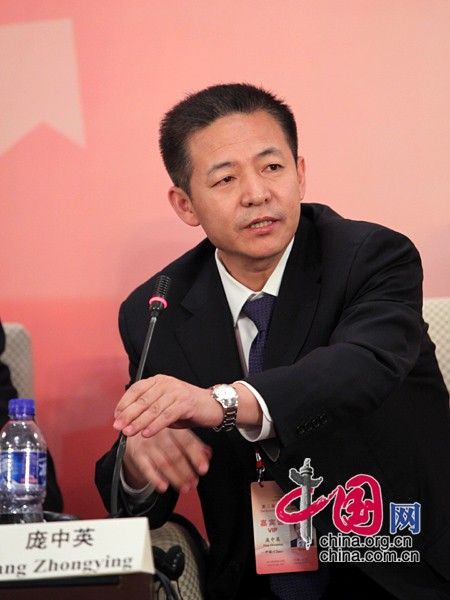
Barack Obama has four years left in office. At the end of his four-year term, China's political cycle will be less than half over, and most likely there will be six more years of the same leadership within the Party. China is preparing itself for a "new Sino-US relationship," and I believe the next four years will be a key transition period for leaders in Washington and Beijing.
How to measure the Sino-US relationship? There is a key methodology. For a long time, China has lacked the necessary scientific methodology to properly observe the ongoing relationship between the two countries. The question was either approached within a rigid framework (e.g., "Sino-US relations cannot be better or worse, they just are), or it has been influenced by US observations of China (e.g., China reaffirms whatever the US says). China lacks its own independent view point.
The US has entered a post-hegemony era
The first aspect to be examined is the period of transition within Sino-US relations. China has already laid the groundwork by coining a new phrase, "the new Sino-US relationship." However, many people are still incapable of identifying this as a step towards transition, despite the fact that the pivot began long ago. Transitions often occur alongside periods of instability and fluctuation. This is a contributing factor in the inability of many Chinese companies to access the US market. The situation is further complicated by the United States drawing China into its domestic struggles between Democrats and Republicans.
The US's position in the world is subtle and changing because the country has entered a "post-hegemony" era. China often overlooks this fact when considering Sino-US bilateral ties. China often approaches the US as if Washington still stands atop the same uni-polar world that existed following the collapse of the Soviet Union.
The US is without a doubt the strongest player on the global stage. However, in the 20 years following the collapse of the U.S.S.R., the Washington is beginning to show similar signs of decay that culminated in Moscow losing its grip on the Eastern hemisphere. I'm not implying that the US will break apart in the near future, but I believe the evidence for decline is more than clear.
US elites, particularly those with experience in business and government, often lecture the Chinese people, saying that the United States has an amazing capacity to restore itself, and China should never underestimate it.
The recent US financial crisis has been a nightmare for markets. Reductionists argue that "destruction" is actually "creation" - "creative destruction". Similar to Joseph Alois Schumpeter's theory during the Cold War regarding religion in the United States, both are philosophical arguments rather than facts based on scientific reasoning.
Back in 2008, Obama's electorate thought he would deliver miracles once assuming the Office of the President. It turned out that four years later he was locked in a heated battle for office, and the economic crisis showed no signs of recovery. More specifically, the country was never able to enter into a "post-crisis period," as evidenced by the looming "fiscal cliff" debates in the House of Representatives.
The Obama administration deserves recognition for successfully postponing further US crises, and deftly transferring the fallout to other countries through mechanisms of "mutual dependence." Be that as it may, the United States is still in crisis.
Although presidential challenger Mitt Romney was defeated by Obama, it would be unwise to overlook Romney's comments on Obama's track record over the past four years. While many attacks against Obama were without merit, some highlighted the hard truth that the American recovery is not a pretty as it appears to the outside world.
Understand the US "post-hegemony" arguments
The second point in my research on Sino-US relations is examining "post-hegemony" in the context of US academia.
US hegemony was previously challenged in the '70s and '80s, at which time political scientists such as Paul Kennedy authored his influential "The Rise and Fall of the Great Powers, as well as Joseph Nye's "Soft Power" theory on state influence.
The debate over declining hegemony is much different today compared to 30 years ago. The conversation leans decidedly is favor of a tangible decline, as supporting evidence continues to be found and published. While this is only an academic viewpoint, foreign policy decisions are often based upon academic research and theory.
When the US still had an undisputed grasp on power (1979-2009), China, as all other global players, was forced into a secondary position within the international community. To make matters worse, China put forth the idea that the United States had "primary importance among priorities" in China's diplomatic approach to the West, and believed that its steady economic growth would help to stabilize China-US relations.
However, China's diplomatic emphasis on the US must not continue.
First, China is under a growing amount of domestic pressures. Not only is this a result of a cooling Chinese economy, but also from a greater engagement in diplomatic outreach by China's citizenry. As a general rule, the official Sino-US relationship has always been framed by the people-to-people relationship between the two countries. The Chinese government's denial of a G-2 concept between the US and China is evidence of this kind of framing.
Second, China is faced with an increasing amount of international pressures. The global community has offered resistance to the idea of a G-2 between China and the US, and opposing voices drown out support for such an agreement.
Third, China has spoiled both Washington and Wall Street by surrendering profits when backed into a corner. This is "rational" human behavior, and international relations are always dictated by such state-to-state manoeuvres.
Now that the United States has entered into an era of declining power and influence, it must face the challenge of trying to preserve the current world order and contain the rise of China.
This may cause peculiar situations to arise. For instance, the louder China says it is not interested in seeking a hegemonic position that will threaten US interests, the more US officials label China as its number-one challenger. Furthermore, the more China backs down, the more pressure the United States applies. China does not appreciate this counter-intuitive relationship.


Go to Forum >>0 Comment(s)