Age 50 is time to gear up for a personal renaissance
- By Wang Yong
 0 Comment(s)
 Print
Print E-mail Shanghai Daily, April 28, 2013


For Abigail Trafford, the R-word - "retirement" - is a misnomer.
"It's a kind of second adolescence," she says in her book, "My Time: Making the Most of the Rest of Your Life."
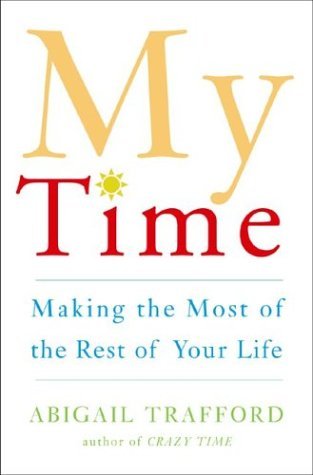
"Instead of winding down after age 50, you're having to gear up. Longevity's imperative is regeneration," she says.
If "second adolescence" sounds too trivial, use "My Time" then, as the author does, to describe your years after middle age but before old age, a period the author calls a "personal renaissance."
In her prologue, she explains her inspiration to write the book.
"Something huge is happening. A demographic wave has swept over the social landscape. It's not just that people are living longer - they are healthier longer," she says. "The biological calendar has been reconfigured so that people are physically younger than their chronological age."
"A century ago, even 50 years ago, there was no My Time. Life was too short. Today many girls born in the United States can expect to live to 100," she says. "It's just dawning on Americans that a social revolution is taking place as people are living longer - and healthier - lives."
"As a health writer, I have seen how the longevity revolution has altered every aspect of the culture," she observes. "Political leaders wring their hands over the swelling ranks of Medicare ... At the same time, entrepreneurs have built a burgeoning anti-aging movement that offers everything from Botox injections and supplements to weight-loss regimens, spiritual retreats, life-long learning centers, and sex manuals - all targeted to people over 50 and older."
'The perils are real'
But there's a missing link, says Trafford, a columnist and former health editor at the Washington Post.
At least in the US, she says, there's no psychological roadmap for My Time.
In her view, physical longevity is no guarantee for a good My Time - many Americans commit suicide in their 60s because of a poorer My Time.
That's where this book kicks in. It's a fresh reminder to the reader that it "can be dangerous to stay in the rut of middle adulthood and not move on."
"The perils are real," warns the author. "The highest suicide rates (in the US), for example, are found in white men over 65. Why this surge in self-destruction among those who have been most privileged in the culture? The immediate explanation is usually untreated depression or some other medical problem. But in the larger context of the longevity boom, the statistic sounds an alarm: If you can't find new purpose and pleasure in the bonus decades, you can get trapped in a biological purgatory. You feel too old to live, but too young to die."
Trafford's "bonus decades" refers to "the window of My Time," that is, 30 years or more from about age 50 to 80.
In these bonus decades, she advises the reader not to sit back in a rocking chair, relishing or regretting what is gone.
"Leisure is the old definition of retirement. Today, most people ... say retirement is the beginning of a new chapter in life, rather than an extended vacation," she says. "The rigors of Second Adolescence demand that you take an activist approach and not just slide along from adulthood to the endgame of old-old age."
Although it was first published in 2003, the book resonates today, from Europe to America to Asia, where recessions, slower growth and an aging population are eating into retirement pensions, sparking worries about life after retirement.


Go to Forum >>0 Comment(s)