Art treasures of Zhejiang Province
 0
0 


As one of the major genres of Chinese operas, Yue Opera came into being in Shengxian county (now Shengzhou city) in the early 20th century. It is characterized by the beautiful melody and lyrical plot. Popular plays include Liang Shanbo and Zhu Yingtai (known as the Chinese Romeo and Juliet), Dream of the Red Mansion, Aunt Xianglin, Romance of the Western Chamber, Five Daughters Offer Birthday Felicitations, Love Between Poet Lu You and His Cousin Tang Wan, and Mistake Made Through a Red Silk Braid. With a fine tradition of dramas, Zhejiang is also the birthplace of the ancient South Opera. In addition, there are many other kinds of local operas such as Wu Opera, Shaoxing Opera, Ou Opera, Yong Opera, Yao Opera and Hu Opera.
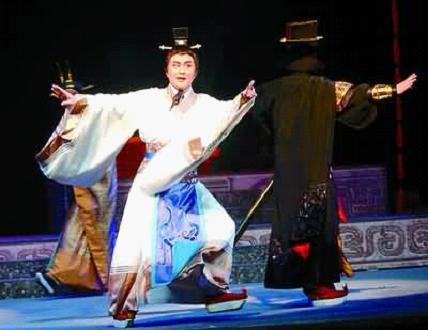
Wu Opera
In Zhejiang, different schools of painting and calligraphy with varied styles and features hold a significant position in the history of Chinese painting and calligraphy. In the 12th century, Zhejiang was the center of fine arts in the country. Since the 19th century schools of painting in Zhejiang have made splendid achievements and exercised a great influence over the development of Chinese painting and calligraphy. In history, distinguished painters and calligraphers in Zhejiang included Wang Xizhi (321-379 or 303-361), Yu Shinan (558-638), Chu Suiliang (596-658 or 659), Wu Zhen (1280-1354), Zhao Mengfu (1254-1322), Zhao Zhiqian (1829-1884), Ren Bonian (1840-1896) and Wu Changshuo (1844-1927). Contemporary and modern times have seen famous painters and calligraphers like Huang Binhong (1865-1955), Pan Tianshou (1897-1971), Ma Yifu (1883-1967), Zhang Zongxiang (1882-1962), Lu Weizhao (1899-1980), Sha Menghai (1900-1993) and Zhu Lesan (1902-1984).


Go to Forum >>0 Comments