Journey of the Snake
 0
0 


A marriage of Chinese folklore and US theater
|
|
|
Zhou Long says his score for Madame White Snake is inspired by Peking Opera, musically and stylistically. Jiang Dong / China Daily |
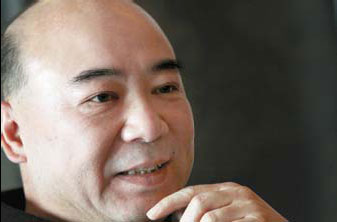
Opera Madame White Snake is 57-year-old composer Zhou Long's first opera as well as an intriguing articulation of his vision to combine traditional Chinese music with contemporary Western orchestration.
"It has been my dream to work on an opera," says the composer, "as it includes all my works of the past - chamber music, vocal pieces, orchestral and choral."
Born in Beijing to a visual artist and calligrapher father, and a vocal coach mother, Zhou was exposed to both Chinese and Western aesthetics early in life.
During the "cultural revolution" (1966-1976), then 16-year-old Zhou was sent to a farm in the Inner Mongolia autonomous region where he began to play the accordion and immersed himself in regional folk music.
Five years later, a back injury gave him an unexpected opportunity to resume his love for music. Zhou was then reassigned as a composer, conductor and accordionist for a small song-and-dance troupe in Zhangjiakou, near Beijing.
After graduating from Beijing's Central Conservatory of Music in 1983, Zhou and his classmate-turned wife, Chen Yi, moved to the United States to further their musical studies.
His score for the opera, Madame White Snake, is inspired by Peking Opera, musically and stylistically. He uses three traditional Chinese instruments to represent each of the three main characters - the bamboo flute for White Snake; the xun, or ocarina, for her maid Xiaoqing; and the erhu, a two-stringed fiddle, for Xu Xian, the herbalist.
"However, the music is Western in general, in terms of the language and the orchestration," Zhou says.
Adiana Baer, assistant director of the production says that the story is told in the Western tradition.
"Chinese audiences will get to see a unique combination of Chinese folklore and modern American theatrical approaches," she says.
They will find that Xiaoqing has a bigger role rather than White Snake. This is seldom seen in Chinese adaptations, except for the 1993 Hong Kong movie Green Snake, directed by Tsui Hark and written by Lilian Lee.
Zhou says the librettist Cerise Lim Jacobs has a special love for Xiaoqing and in her first draft, wrote more lines for her than for White Snake.
Zhou has created a 12-minute-long prologue for Xiaoqing, who was once a man in love with White Snake, but is defeated and becomes a female servant so she can be with White Snake all the time.
Zhou even came to Beijing to hold auditions for nandan, the traditional Peking Opera female roles played by men.
Unable to find anyone suitable, the composer wrote Xiaoqing's part for a male soprano, a challenge taken up by Michael Maniaci.
Stage director Robert Woodruff's interpretation also overturns the traditional image of the story in the minds of Chinese audiences.
"I was totally amazed at the first dress rehearsal," Zhou says. "There's no West Lake, no broken bridge. Instead there are colorful visuals that are extremely modern."
Woodroof sets the story in four seasons with spring symbolizing infatuation; summer, the wedding; fall, pregnancy; and winter, betrayal.
David Zinn designs gorgeous and slinky dresses for White Snake, while the suitcase-carrying Xu Xian is like any other white-collar city worker.
Lighting designer Mark Barton gives each scene a different, intense color, to capture its mood, using green for spring and red for fall.


Go to Forum >>0 Comments