| Videos | • Latest |
|
• Feature | • Sports | • Your Videos |

Care centers for disabled
 0 Comments


There are more than 83 million people living with disabilities in China. Most are taken care by family members, which often creates a great financial burden.
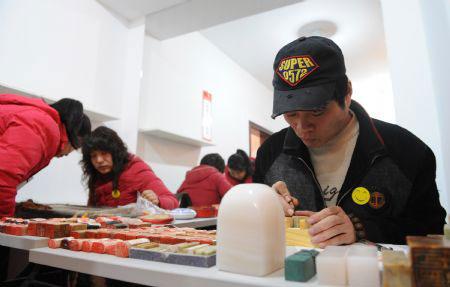
But the situation is expected to gradually improve, as social care centers are springing up across the country, to alleviate some of the worries.
For many living with disabilities, a family's love is sometimes all that one has.
Latest figures from the China Disabled Persons' Federation, show that the average income of households with a family member living with a disability, is only half of the national average. But these families are forced to spend twice as much for medical care for their disabled loved ones.
Chen Xinmin, Research Director of China Disabled Preson's Federation, said, "In cities, about 40 percent of disabled people totally rely on their families. In rural areas, the proportion is as high as 76 percent. And usually it's a case of cradle to grave dependance. This causes a huge burden to their families and society. And it's becoming a serious social issue."
Cities like Guangzhou may not have all the solutions but are implementing programs that is giving many hope.
39-year-old Liang Junsheng was born with serious brain damage and has been confined to a wheelchair ever since. His family caters to all his needs and does their best to keep him happy. But his parents couldn't be there all the time. With no other option, they sent him to a newly opened care center for the disabled. Not long after the move, Junsheng has become more social and has gradually learned to take care of himself. He has even mastered some simple computer skills.
Luo Suxia, Liang Junsheng's Mother, said, "In the past, his body was very stiff and his hands and feet were very clumsy. When we were not at home, only his 90-year-old grandmother could look after him. If he fell to the floor, he had to stay there until we came back to help him sit up. We were constantly worried. But now, we are much more relaxed since he came to live here."
Nearly 500 people with disabilities live at the same care center with Liang. Most live with serious mental or physical disabilities. Some are unable to eat by themselves. But all seem to be benefiting from the center's tailor-made rehabilitation programs.
Chen Jinghui, Deputy Director of Guangzhou Care Center for Disabled, said, "You see, because of his severe disability, this boy can't even grasp or hold things properly. We made this desk specifically for children like him. The top of the desk is formed by long wooden bars so that he can hold on to the bars and do all kinds of movements safely."
Care centers like this are helping Guangzhou and other Chinese cities to form a service network for the disabled. They are giving a sense of relief for families. More importantly, they allow people living with disabilities to become more sociable and independent. Professional-training courses are available at some of these centers, opening up new possibilities.
The Chinese government is encouraging the growth of centers catering to the disabled. The central budget has set aside a special fund that will include nearly 100 million US dollars to sponsor the development of such centers.



Comments