Share:

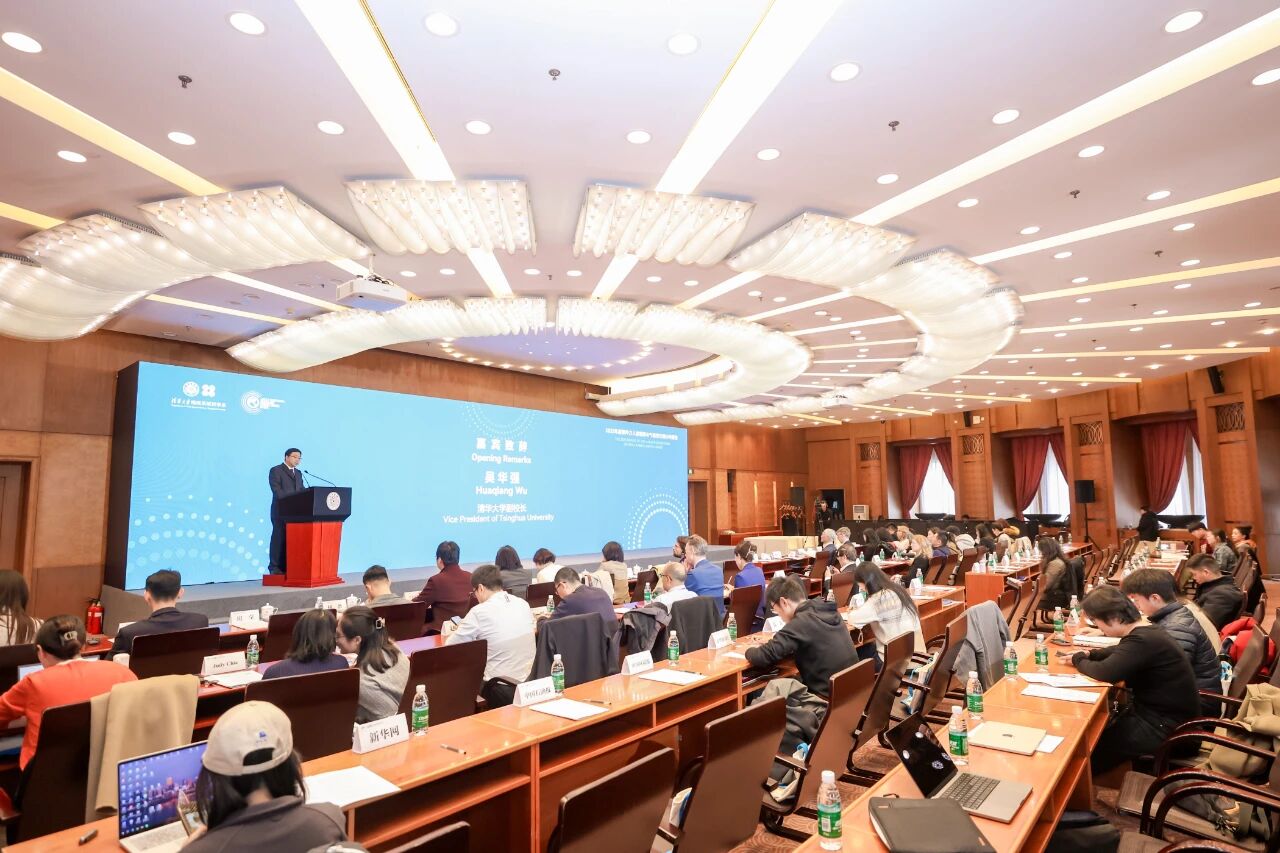
Participants gather for the launch of the 2025 Lancet Countdown China report at Tsinghua University in Beijing, Oct. 31, 2025. [Photo courtesy of the Lancet Countdown Asia Centre]
Climate-related health risks in China reached record levels last year, with eight of 13 monitored threats, including potential labor capacity loss and a rise in climate-sensitive diseases, hitting all-time highs, according to a new Lancet report released Friday.
The 2025 China Report of the Lancet Countdown on Health and Climate Change: Empowering Cities for Synergistic Action described the findings as "red alerts" for public health nationwide.
The report was led by the Lancet Countdown Asia Centre at Tsinghua University with input from 80 experts across 27 institutions.
Notably, the report was released on World Cities Day, emphasizing its landmark focus on city-level climate risks and solutions.
Cities, home to 58% of the world's population and generating 70% of carbon emissions, are described as both amplifiers of climate risks and hubs for climate action in the report.
"While climate red alerts are flashing everywhere, we must fight public desensitization and provide cities with targeted solutions," said Cai Wenjia, director of the Lancet Countdown Asia Centre.
The report underscores the economic benefits of climate action, noting that measures such as energy transition and related investments can provide dual advantages: reducing economic losses and improving public health through targeted initiatives.
"Health-focused climate action isn't an economic brake, but actually an accelerator for growth," Cai added, noting that the climate response can be the new frontier for green investment.
To support cities, the report recommends five priorities: focusing on city-specific, evidence-based action; expanding research and standardizing cost–benefit analysis; avoiding fossil fuel lock-in and transition risks; implementing integrated, people-centered early warning systems; and fostering inter-city and regional cooperation.
Sandro Demaio of the World Health Organization's Western Pacific office praised the report as "both a testament to scientific excellence and a call to collective responsibility."
Professor Luo Yong, dean of the Department of Earth System Science at Tsinghua University and co-chair of the Lancet Countdown Asia Centre, called for breaking down disciplinary and industry barriers to "transform scientific consensus into concrete actions."
The launch event included roundtable discussions with experts from China, Singapore, India and Australia on practical climate solutions for cities.


 京公网安备 11010802027341号