Share:

The Fourth General Assembly of Members of the China Association for Non-Government Education and the 15th China Non-Government Education Development Conference were held in Beijing on Jan. 10, with industry leaders calling for private universities to embrace AI and deepen ties with industry.

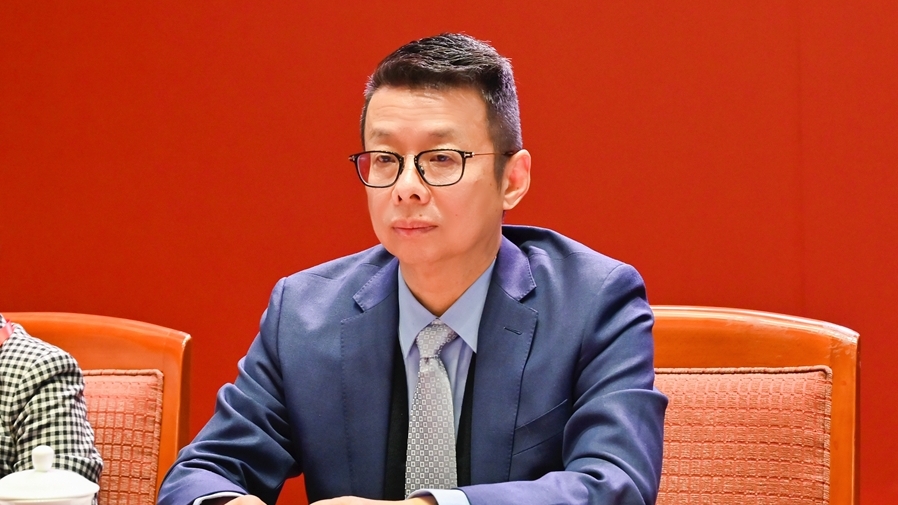
Lu Dan, CEO of Geely Talent Development Group and president of Global Xinwei Technology Group, attends the Fourth General Assembly of Members of the China Association for Non-Government Education in Beijing, Jan. 10, 2026. [Photo provided to China.org.cn]
At the event, Lu Dan, CEO of Geely Talent Development Group and president of Global Xinwei Technology Group, was re-elected as vice president of the association. In an interview with China.org.cn, he shared insights into how China's private education sector can advance transformation and upgrading through technology empowerment, international cooperation and industry-education integration.
AI driving systemic restructuring of education
As a new wave of technological and industrial transformation, driven largely by artificial intelligence, is reshaping education, Lu urged private education institutions to embrace these changes and pursue innovation-driven reforms.
To this end, Geely has built a digital education ecosystem through its Xinwei Education Platform, integrating AI into higher education.
"Private higher education should move faster from '+AI' to 'AI+,'" Lu said, meaning universities should shift from tacking on AI tools to building their operations around them. Teaching, research and governance all need to be embedded within an intelligent framework, he said.
Lu added that Xinwei Education is developing a next-generation smart education system to promote data-driven governance in higher education, offering private institutions new ways to improve quality and efficiency.
Expanding international cooperation
Lu said that expanding international cooperation and promoting high-quality Sino-foreign education partnerships have become key priorities for the high-quality development of private education, with Geely steadily advancing the internationalization of education.
Xinwei Education is restructuring its approach to international cooperation, drawing on Geely Holding Group's global industrial presence and a "three-campus" framework. The framework combines cross-regional campuses, industry-education campuses and online-offline campuses.
"At present, Xinwei has established partnerships with more than 30 overseas universities across Asia, Europe and North America, and plans to expand cooperation to about 100 institutions by 2026," Lu said.
Deepening industry–education integration
Lu noted that private education must align closely with industrial development and national strategies to achieve sustainable growth.
"Higher education must ultimately be rooted in real industrial scenarios," he said. In practice, he highlighted a project-based approach that allows flexible adjustments to curricula, majors and teaching schedules, guiding students and faculty to participate in real corporate research and training projects and embedding industrial demand more deeply into the talent cultivation process.
This model has been implemented at four undergraduate institutions under Geely Talent Development Group, offering a template for private universities seeking to serve China's industrial needs, Lu said.
Building lifelong learning and talent mobility
Lu also underscored the importance of alumni networks in linking education, industry and society. Over the past two decades, Geely's educational institutions have trained more than 200,000 graduates. Xinwei Education is now developing an online alumni platform called "Xinwei Circle" to strengthen ties between graduates, their alma maters and industry.
Meanwhile, Geely has established a youth innovation and entrepreneurship support mechanism. This initiative focuses on supporting students and alumni in innovation practices in frontier fields such as AI, accelerating the transformation of educational outcomes into real productive forces.
Looking ahead to the 15th Five-Year Plan period, continued support will be provided to the broader private education sector, promote closer ties between education and industry, and work with educators to respond to change, Lu said.
"Education is a long-term public good," Lu said. "Private education should also contribute to the 2024–2035 master plan on building China into a leading country in education. This is both a responsibility and a mission."


 京公网安备 11010802027341号