 Share:

As China returns to work following the Spring Festival holiday, the nation is pushing for a strong first-quarter economic start. In that spirit, China.org.cn spoke with Yu Zelun, a 92-year-old veteran of the Chinese People's Volunteers (CPV) in the War to Resist U.S. Aggression and Aid Korea, whose story of courage and duty offers inspiration for the year ahead.
Born in 1934, Yu volunteered to join the war effort in 1951, two months before his 17th birthday, without telling his family. He became a soldier in the CPV's 42nd Army.
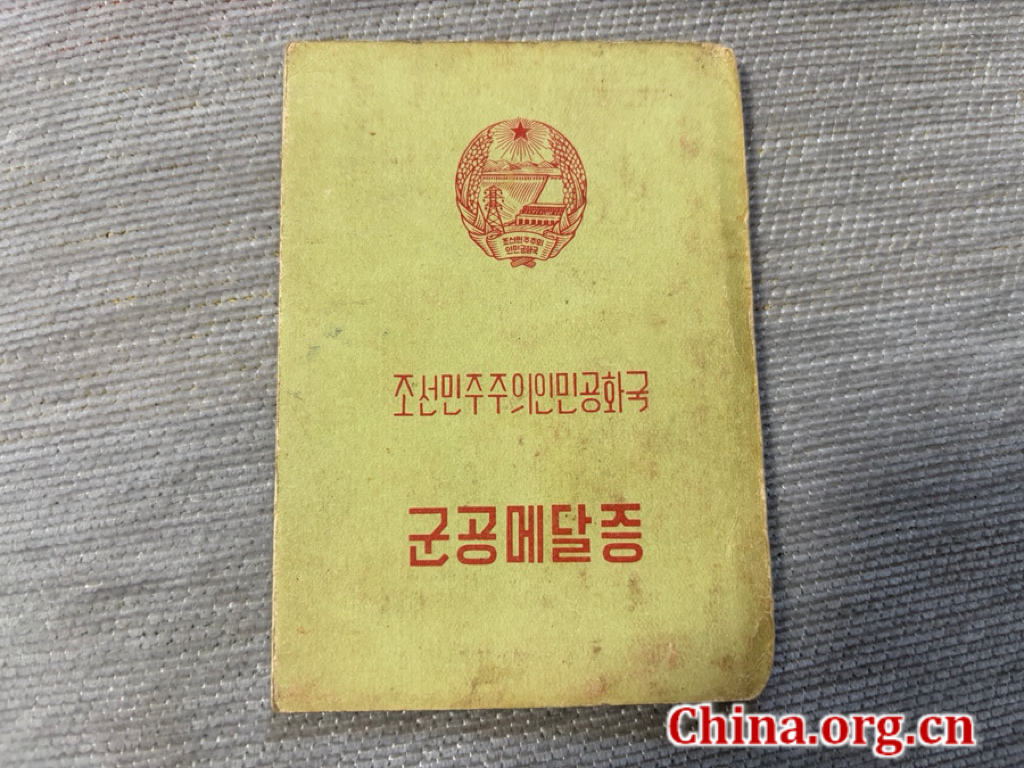
Photo taken Feb. 17, 2026, shows the Military Merit Certificate awarded to Yu Zelun by the Democratic People's Republic of Korea. [Photo by Yang Chuanli/China.org.cn]
Setting off from southwest China's Sichuan province, Yu and his comrades traveled to northeast China, where they underwent three months of intensive training in Tailai county, Heilongjiang province. Despite harsh conditions, the soldiers trained rigorously in physical fitness, shooting, grenade throwing and basic military drills.
Yu excelled in grenade throwing and became the only soldier in his unit allowed to practice with live grenades. "We were all determined," he recalled. "We just wanted to master our skills so we would not let our fellow soldiers down on the battlefield."
After completing training, Yu marched across the Yalu River with his unit to the Korean battlefield, journeying on foot for more than 20 days. He wore out countless pairs of rubber canvas shoes along the way.
"We only marched at night, keeping a distance of 3 to 4 meters between each soldier," he said.
He vividly described U.S. bombing raids as "as dense as scattered wheat seeds." To avoid airstrikes, CPV soldiers moved only at night and hid in the snow by day, turning their uniforms inside out or draping white cloth over themselves to blend into the landscape.
On the battlefield, Yu handled military logistics and supply runs, delivering steel, grain and other materials to frontline troops.
"We could only move supplies at night, as enemy planes bombed relentlessly during the day," he said. "Once, while transporting steel, my comrade was wounded in the toes by an enemy bomb."
In one of his closest brushes with death, the truck he was riding in had just crossed a bridge when it came under heavy bombardment, injuring the driver.
During another march, enemy planes struck less than a kilometer from their starting point. The soldiers threw themselves to the ground along field ridges, lying motionless in the mud until anti-aircraft units drove off the warplanes.
"The bombs hit right after we crossed the bridge linking Dandong in northeast China to Sinuiju in the Democratic People's Republic of Korea," Yu recalled. "The enemy was targeting the bridge. We barely escaped with our lives."
Beyond supply runs, Yu carried stretchers, stood guard and evacuated wounded soldiers. At just 17, he witnessed life and death under constant artillery fire but never left his post.
He recalled staying with local Korean families, who refused any payment and offered help upon learning that the CPV had come to fight alongside them. The deep friendship remains etched in his memory.
During one intense bombing campaign, Yu and his unit sheltered in a civilian house just 500 meters from a bridge under constant U.S. bombardment. The blasts blew the doors open, and a local resident stood guard at the entrance as the soldiers lay fully dressed, unable to sleep.
"We did not dare move and could not sleep, but we had to keep going the next day," he said.
Yu's wife recalled that he endured a difficult childhood, was raised by relatives, and worked as a farmer after the founding of the People's Republic of China. But when his country called, he did not hesitate.
"The pride of his life is having served as a CPV soldier," she said. "Even now, he follows China's development closely."
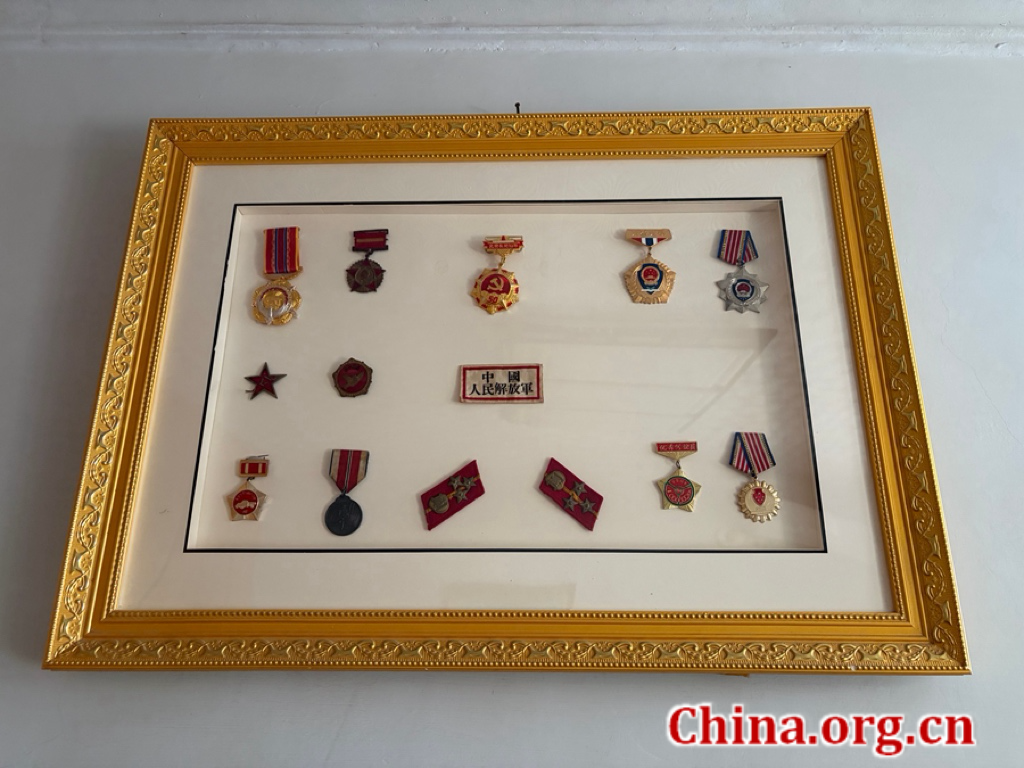
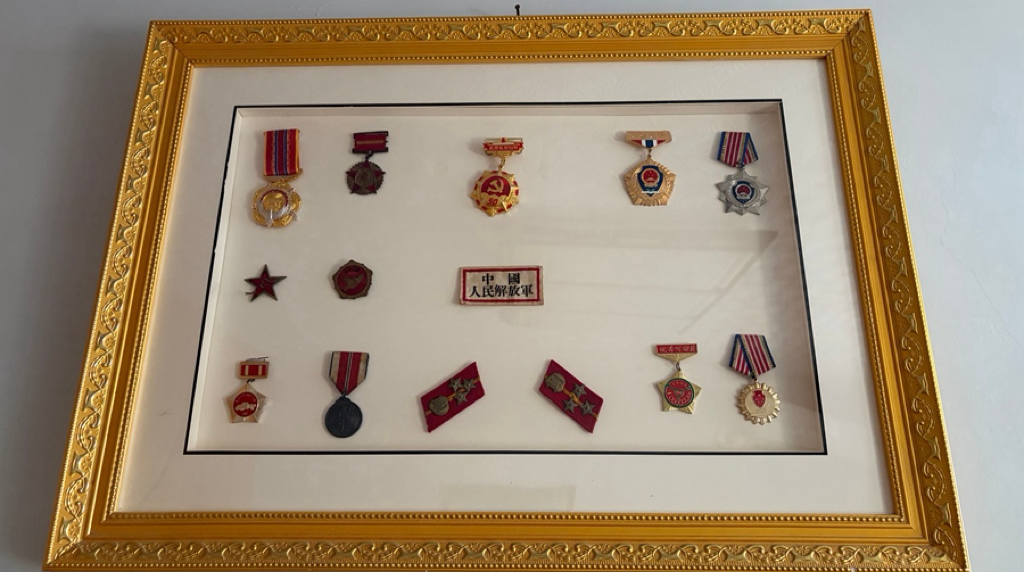
Photo taken Feb. 17, 2026, shows a display case of Yu Zelun's military medals and commemorative badges from his service and later life. [Photo by Yang Chuanli/China.org.cn]
At 92, Yu speaks of those years with quiet conviction, his words simple and sincere: "Back then, I didn't think about whether I'd come back. I only thought about what to do."
From the battlefields of Korea to the new era of peaceful development, much has changed — but the spirit of pushing through hardship and fighting to win endures.
With the first quarter crucial to China's economic performance in 2026, the story of Yu and his fellow CPV veterans offers a reminder that courage, dedication and a sense of duty remain as relevant as ever.


 京公网安备 11010802027341号