 Share:

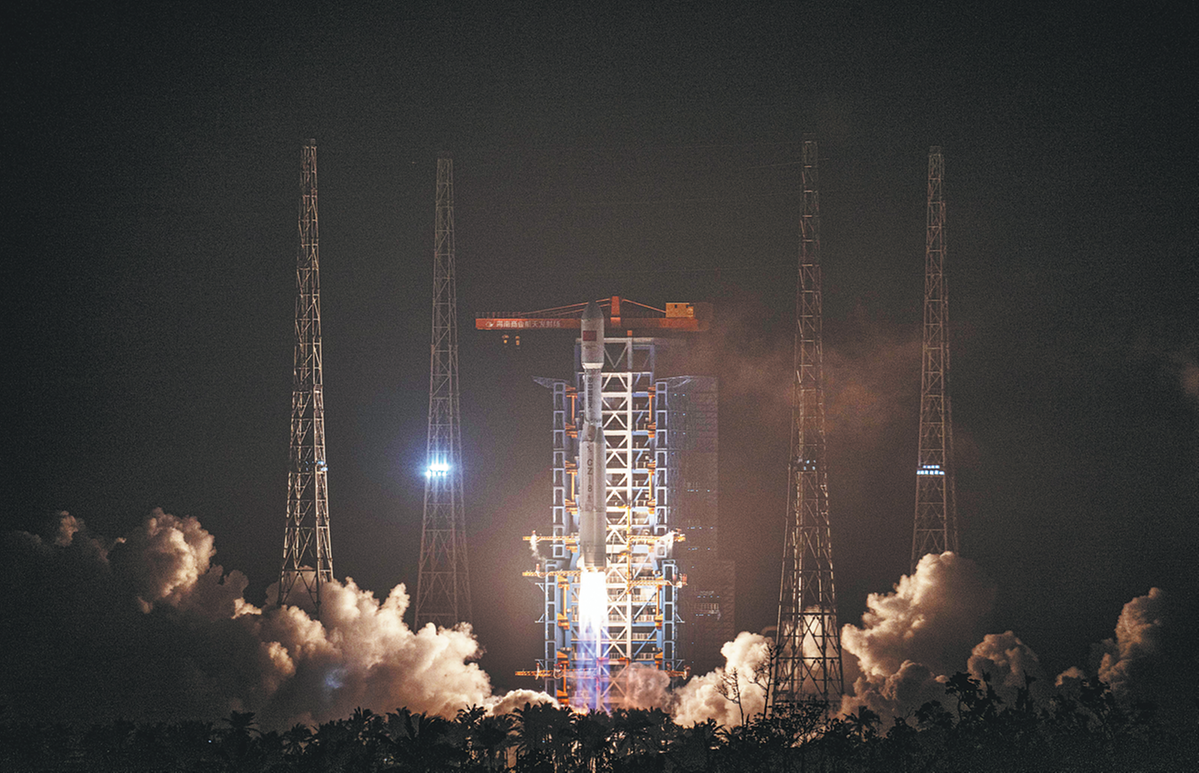
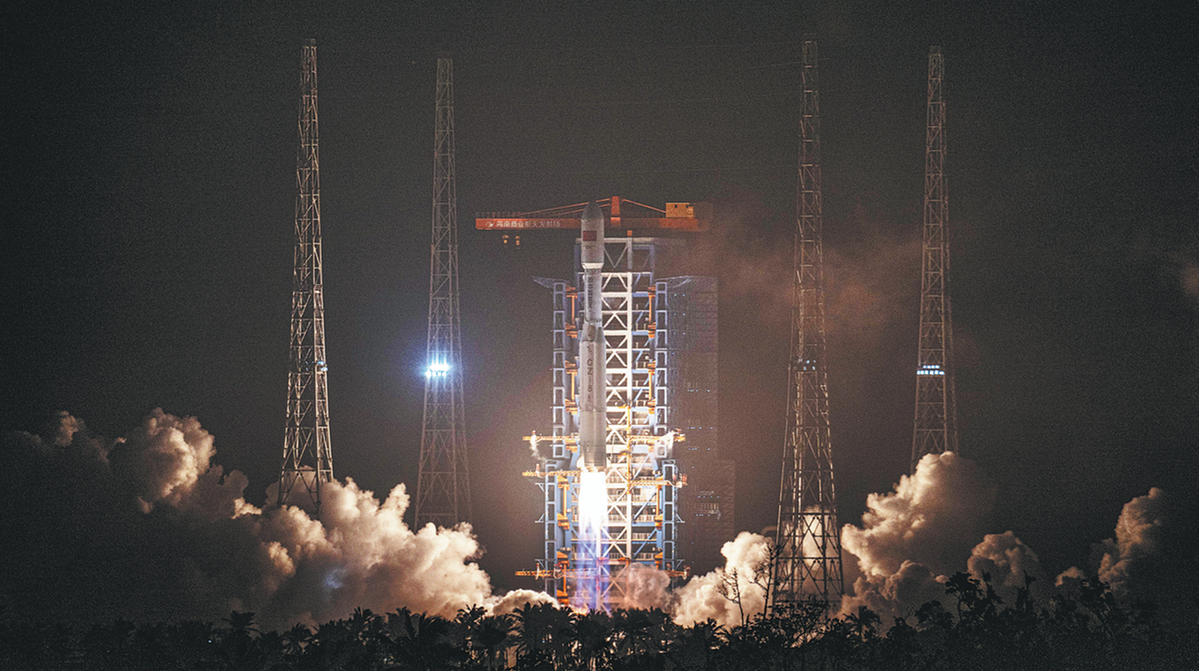
A Long March-8 Y6 carrier rocket carrying Spacesail satellites blasts off from a commercial spacecraft launch site in Wenchang, Hainan province, on March 12. [Photo/Xinhua]
China's commercial aerospace industry is poised to enter a phase of fast-track development in 2026, fueled by breakthroughs in reusable rocket technology, the expansion of international satellite services and the rapid construction of major infrastructure projects, experts said.
The comments came as recent international conflicts put the aerospace industry into the spotlight.
A key milestone was achieved after Brazil's telecommunications regulatory agency Anatel recently authorized China's Spacesail satellite constellation to commence commercial communication services.
The approval makes Brazil the first Latin American nation to open its market to the Chinese low-orbit satellite network.
The Spacesail Constellation is a massive low-earth orbit, or LEO, commercial satellite network being built and operated by Shanghai Spacesail Technologies Co Ltd. LEO satellites operate at altitudes ranging from approximately 160 to 2,000 kilometers above the Earth's surface, a position that offers lower transmission latency and reduced link loss compared to higher orbits.
Spacesail plans to deploy over 15,000 satellites for its satellite constellation. Since the launch of its first batch of 18 networking satellites in August 2024, the constellation had grown to 108 satellites in orbit as of October 2025.
The move into the Brazilian market is rooted in a memorandum of understanding signed between Spacesail and Brazilian state-owned telecom firm Telebras in November 2024.
The agreement focuses on providing broadband internet access to remote and underserved regions of Brazil, with a particular emphasis on schools and hospitals. This initiative is expected to significantly bolster Brazil's public policies on digital inclusion.
Anatel's approval signals that the preparatory phase for commercial operations of the Spacesail Constellation in Brazil is now essentially complete, paving the way for the official launch of services this year.
In December, Shanghai Spacesail and Airbus inked a strategic partnership, marking another step in expanding the global operational scope of China's commercial satellites.
Under the deal, Spacesail would integrate its Spacesail Constellation into Airbus' HBCplus (High Bandwidth Connectivity Plus) in-flight connectivity solution. The move aims to provide airlines with high-speed, low-latency broadband services, improving the in-flight experience for passengers.
Tim Sommer, vice-president of Airbus, said that the partnership reinforces Airbus' strategy to build a robust, diversified satellite ecosystem, adding that integrating Spacesail's large LEO constellation will offer customers greater flexibility to meet growing demand for high-quality global connectivity.
Li Guotong, chief technical officer of Spacesail, said the Spacesail Constellation has undergone successful tests in Malaysia, Mongolia and Kazakhstan, demonstrating stable video streaming and video calls.
Domestically, infrastructure development is also accelerating to meet the demands of the 15th Five-Year Plan (2026-30). In Hainan province, Wenchang is fast-tracking its commercial space ambitions. Cao Shuyu, mayor of Wenchang, confirmed the city will accelerate the construction of Phase II of the commercial space launch site and a sea-based recovery platform in 2026.
Wenchang International Aerospace City is rapidly taking shape, having already attracted 3,336 enterprises, including rocket assembly plants, satellite factories and an aerospace laboratory.
Hainan International Commercial Aerospace Launch Co said it plans to double its number of launch pads from two to four, and push forward rocket-recovery technology.
Yang Tianliang, chairman of the company, said: "By the end of 2026, we will have launch pads No 3 and No 4, along with a new technical area and telemetry station. Once completed, the facility will be able to handle more than 60 launches annually, with each pad supporting launch missions every 10 days, or even weekly."
Rocket recovery is seen as key to cost reductions. With first-stage manufacturing accounting for more than 70 percent of launch expenses, Yang said the company is building a sea-recovery vessel soon to support a "launch-recover-reuse" model and enable recovery missions for domestic rocket makers.
Minsheng Securities said 2026 will be a critical year for the debut and validation of new-generation reusable rockets, both from private and State-owned enterprises, potentially marking a true turning point for commercial rocket development.


 京公网安备 11010802027341号