 Share:

China can expect significant technological breakthroughs during the 15th Five-Year Plan period (2026-2030), national political advisor Lu Jianhua told China.org.cn on Saturday.
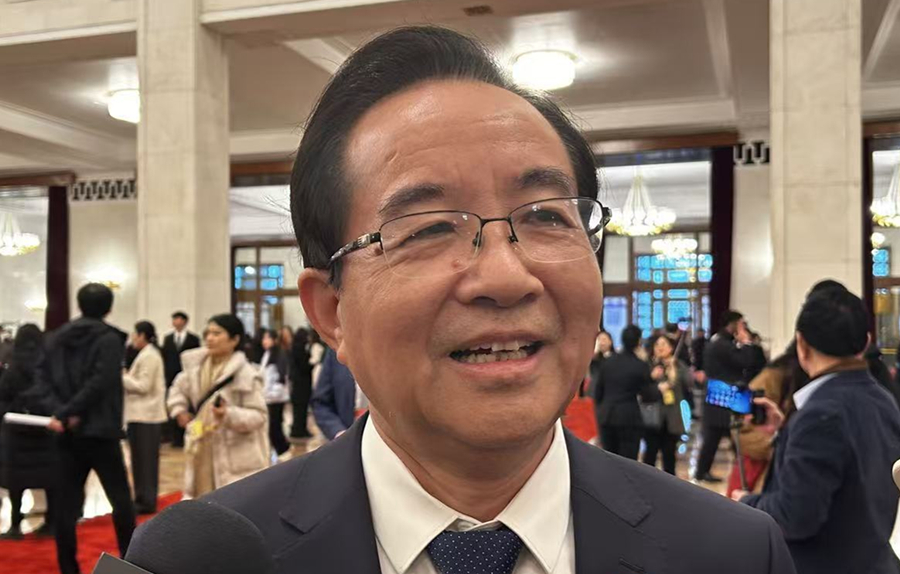
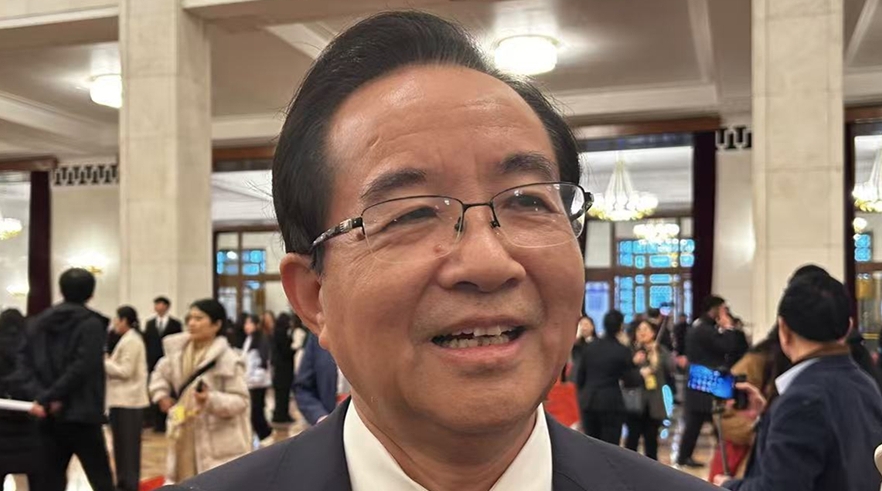
Lu Jianhua speaks to reporters during the fourth session of the 14th National Committee of the Chinese People's Political Consultative Conference (CPPCC), China's top political advisory body, in Beijing, March 7, 2026. [Photo/China.org.cn]
Lu, a member of the 14th National Committee of the Chinese People's Political Consultative Conference (CPPCC), China's top political advisory body, and an academician of the Chinese Academy of Sciences, is attending the fourth session of the 14th CPPCC National Committee, which is being held in Beijing from March 4 to 11.
He said China has made significant progress in fields such as artificial intelligence and integrated circuits in recent years, and expressed optimism about new breakthroughs in areas like AI and satellite communications over the next five years.
Lu said he is paying particular attention to major national scientific and technological innovation projects this year.
"I hope to learn about the central government's latest directives on technological innovation during this year's session, especially the specific policies and guidelines for the first year of the 15th Five-Year Plan period, and have more exchanges with my fellow members," he said.
Lu also spoke about the promise of AI. "In the past, when I needed to do design work, I might have had to find many assistants for research and discussion. Now, AI serves as a great assistant — equivalent to several people — and provides excellent materials. Of course, the core design work still relies on us; we cannot depend on AI for that, but it can be a very good helper."
The academician also weighed in on humanoid robots, noting that elderly care robots now have promising prospects. However, he said robots need continuous improvements in functionality and service capabilities to truly become effective assistants for the elderly.
"But we must clearly recognize that robots can never fully replace human care and services. Elderly care, in the end, requires a human touch," he said.


 京公网安备 11010802027341号