Share:

National political advisor Wu Ruijun has urged making long-term balanced population development and investment in people a priority for the 15th Five-Year Plan, injecting lasting demographic momentum into China's modernization drive.
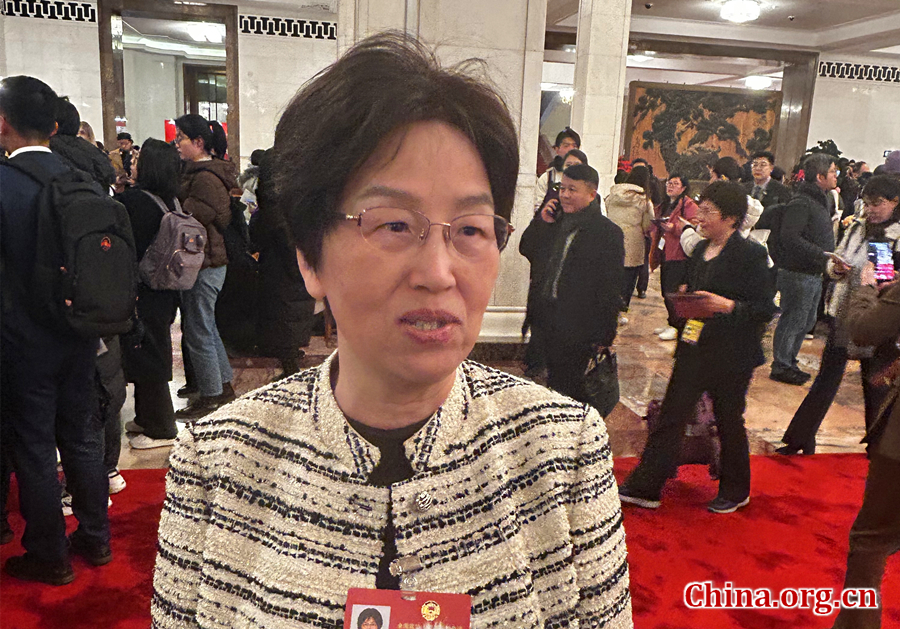
Wu Ruijun, a member of the 14th National Committee of the Chinese People's Political Consultative Conference (CPPCC), speaks to reporters during the body's fourth session in Beijing, March 7, 2026. [Photo/China.org.cn]
"The 15th Five-Year Plan period (2026-2030) is a crucial five years for China's comprehensive drive to build a modern socialist country, as well as a deepening phase of demographic transition," Wu said.
"High-quality population development requires coordinated optimization of size, structure, quality and distribution in harmony with the economy, society, resources and the environment," she added. "This is essential for addressing low birth rates and aging, while serving as a strategic foundation for shaping new development advantages and gaining the initiative in future competition."
Wu, a member of the 14th National Committee of the Chinese People's Political Consultative Conference (CPPCC), is attending the body's fourth session, which is being held in Beijing from March 4 to 11.
The recommendations for China's 15th Five-Year Plan explicitly identify promoting high-quality population development as a major strategic task. The document systematically outlines plans for building a birth-friendly society and optimizing the population development strategy.
"The main feature of China's population development during the next five years will shift from 'quantity pressure' to 'structural optimization' and 'quality improvement.' This requires us to actively adapt to and navigate the new situation in population development, while clearly recognizing the profound challenges it brings," she said.
She noted that over the next five years, low fertility and rapid aging would remain intertwined, while structural talent mismatches would persist despite rising education levels. Migration patterns, she added, would continue to show urban concentration alongside increased intra-provincial movement.
"The primary task in promoting high-quality population development is to create a social and cultural environment that encourages childbirth, supports families, promotes gender equality and embraces diversity and inclusion," Wu said.
She added that cultivating a new marriage and childbearing culture aligned with modern civilization should be elevated to a strategic priority in building national soft power.
Wu called on the government to establish a special fund for childbirth leave costs, subsidize small and micro enterprises that implement parental leave and hire more female workers, and extend maternity insurance coverage to flexible workers. She also called for introducing paternity leave to encourage couples to share parental responsibilities.
Facing profound demographic shifts, China must advance education, technology and talent development in tandem to make the leap from a country with a large workforce into a leader in human talent, Wu noted.
This requires intensifying the cultivation of professionals aligned with national strategies, improving overseas talent policies and creating an international research environment to attract leading scientists. Higher education and vocational training reforms must also be accelerated, she urged.
Wu further stressed that high-quality population development must ultimately translate into improved well-being and quality of life. During the 15th Five-Year Plan period, she said, China should build a public service and support system covering all age groups — children, youth, the middle-aged and the elderly. This system, she added, should span the full life cycle, from marriage and childbirth through to parenting, education and elderly care.
"Underpinning the full life cycle is the full implementation of the 'investing in people' concept," she said, adding that this requires adjusting public fiscal expenditure to increase investment in people across all stages of life.
"This entails building institutional pillars centered on universal maternity insurance, child care subsidies and active labor market policies, forming a sustainable mechanism with shared responsibilities among government, enterprises, society and families," Wu said.


 京公网安备 11010802027341号