 Share:

National political advisor Zhang Yi has proposed a new concept he calls the "happiness economy," which he believes could become a new economic model to boost consumption, he told China.org.cn.
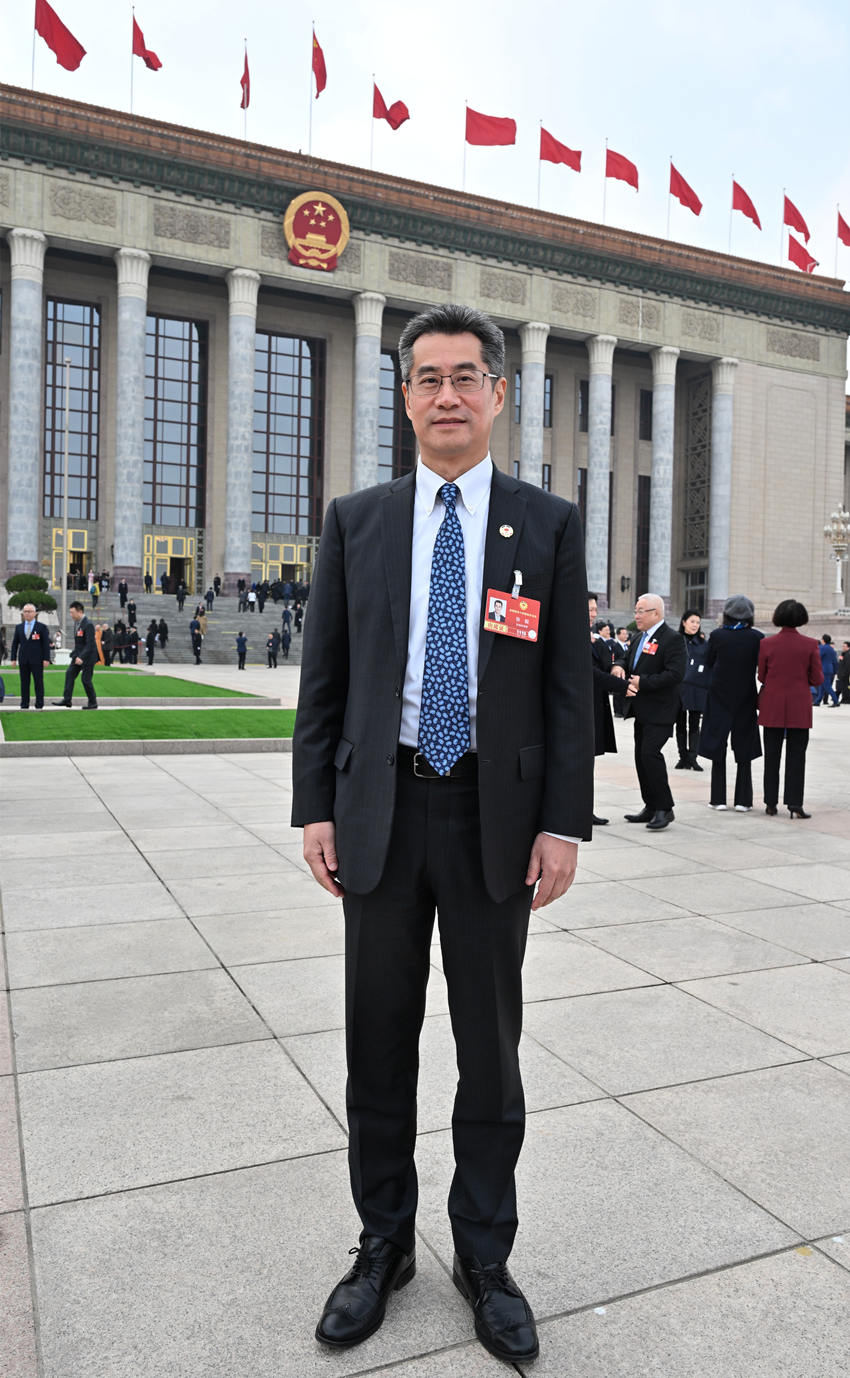
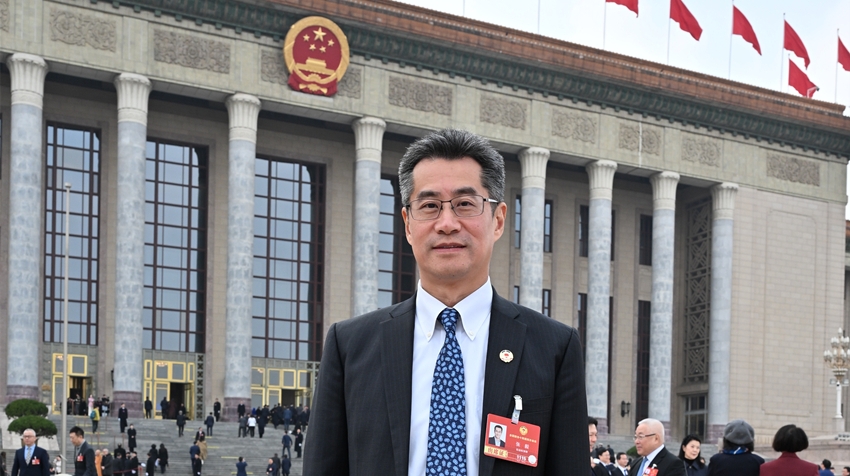
Zhang Yi, a member of the 14th National Committee of the Chinese People's Political Consultative Conference, poses for a photo in front of the Great Hall of the People in Beijing, March 7, 2024. [Photo/China.org.cn]
"I focus on how to use new demand to guide new consumption, and leverage new consumption to drive overall consumption growth," said Zhang, a member of the 14th National Committee of the Chinese People's Political Consultative Conference (CPPCC), speaking at its ongoing fourth session in Beijing.
He noted that stimulating domestic demand, building a strong domestic market and boosting consumption are key priorities in the 15th Five-Year Plan (2026-2030).
Premier Li Qiang, in his government work report to the fourth session of the 14th National People's Congress on March 5, said the government must remain committed to expanding domestic demand amid a complex and challenging international environment.
"The traditional products and services that satisfy the public's basic needs have largely been met. But over the past two years, people have increasingly sought emotional fulfillment through accommodation, dining, entertainment and transportation," Zhang said. "This kind of consumption, driven by the pursuit of happiness and a sense of value, is becoming a trend. People have shifted from focusing on value for money to what I call the 'emotional payoff.'"
Zhang described the happiness economy as oriented toward people's subjective feelings and spiritual gains, integrating happiness and fulfillment into products and services. He called it a real market with vast potential, already worth more than 1 trillion yuan ($145 billion).
"Its core lies in stimulating and meeting people's new expectations for a better life through sustained emotional experiences, thereby creating new consumer demand," he said.
He added that the time is right to build a consumption ecosystem around the integrated development of culture, tourism, commerce, sports, exhibitions and environmental sustainability.
However, significant challenges remain. Many industries still prioritize product functionality and price over emotional value, and cross-sector collaboration mechanisms are underdeveloped. Deeper integration with traditional industries will be needed to realize the concept's full potential.
To advance this vision, Zhang suggested authorities work with research institutions, platforms and industry associations to map out an industrial blueprint for the happiness economy, guiding policy and investment. Happiness-oriented consumption scenarios should be folded into consumption-boosting initiatives, with resources and talent directed toward high-quality projects. The blueprint, he stressed, must be cross-sectoral and data-driven, using consumer feedback to reshape supply and better meet demand.
He also called for stronger development of happiness-themed intellectual property (IP), with sustainable mechanisms for content creation and commercialization. Leading enterprises in animation, gaming, toys and exhibitions should be nurtured, with platforms for industrial collaboration built out alongside them. Flagship stores and cultural centers, he said, can anchor IP-driven consumption hubs and form attractive offline clusters. He emphasized cultivating "chain owners" in key industries to strengthen the broader supply chain.
Zhang further urged traditional industries to embrace the happiness economy, including by introducing IP brands into commercial district renewal and developing emotion-themed travel routes. He also pointed to opportunity in urban renewal and distinctive town development. Many towns lack differentiation, he said, but could become unique destinations if built around original IP. China's traditional cultural IP, he added, can be transformed into animation, trendy toys, exhibitions, carnivals or even theme parks.
"I believe the happiness economy is a new form of consumption that cuts across industries, age groups, regions and scenarios," Zhang concluded. "It serves the national priority of stimulating domestic demand, while genuinely fulfilling people's growing aspirations for a better life."


 京公网安备 11010802027341号