 Share:

National political advisor Qiu Huadong told China.org.cn that he is focusing on protecting the rights and interests of scriptwriters in the short-drama production.
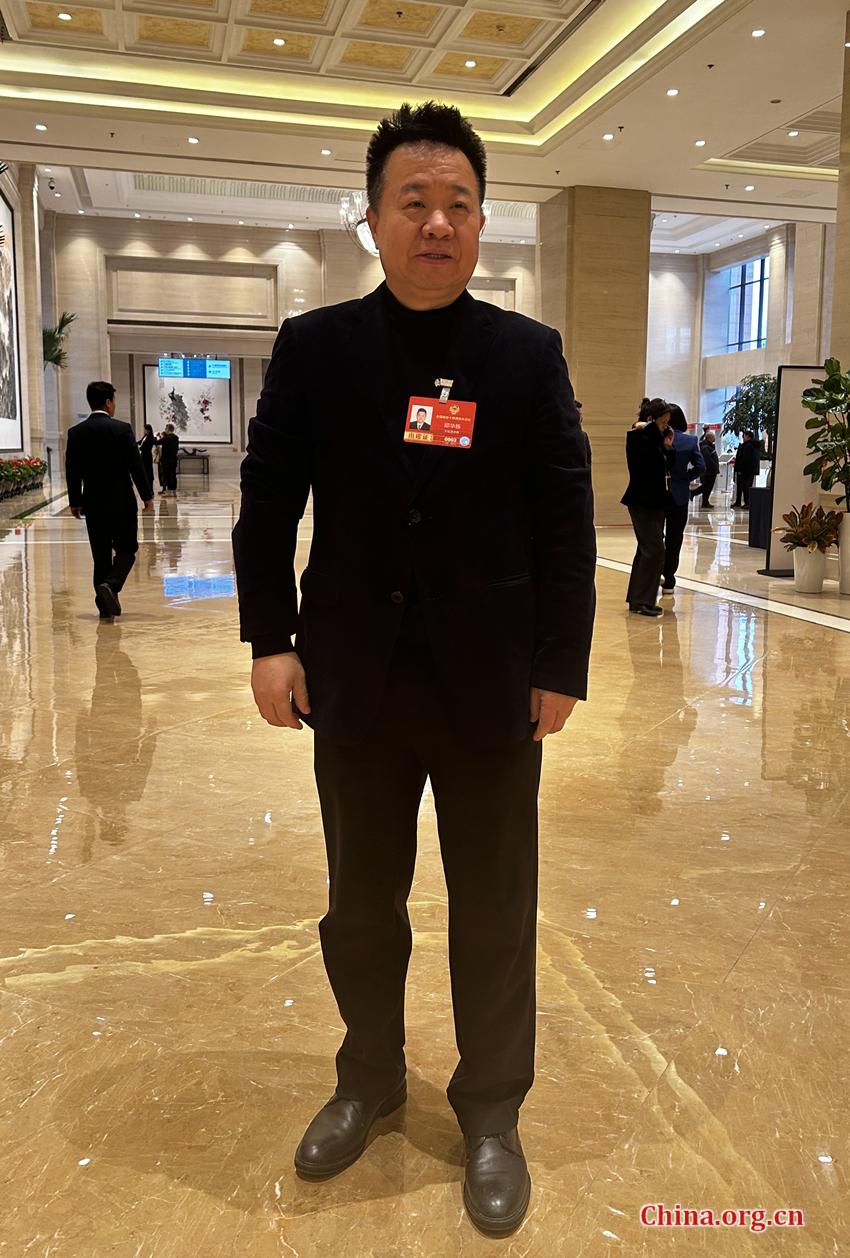
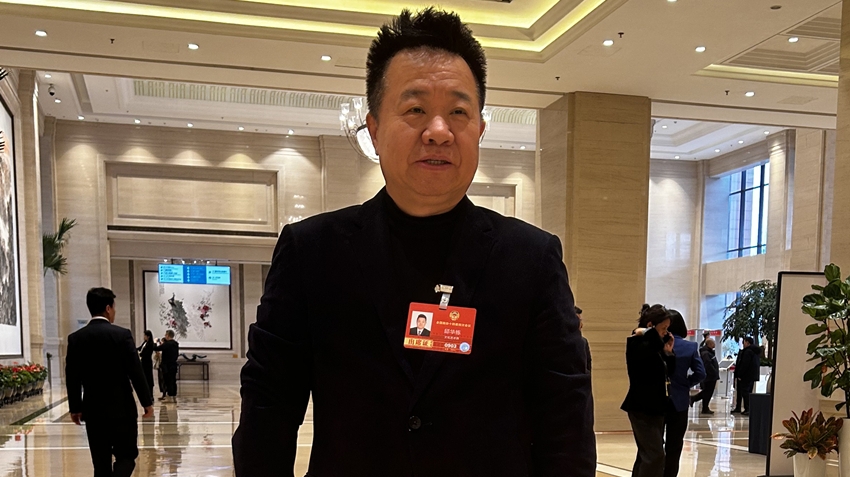
Qiu Huadong, a writer and member of the Standing Committee of the 14th National Committee of the Chinese People's Political Consultative Conference (CPPCC), poses for a photo at the body's fourth session in Beijing, March 8, 2026. [Photo/China.org.cn]
"According to China's Copyright Law, authors have the right to attribution. As the creators of scripts, scriptwriters' right to claim authorship should be fully respected," he said. "China has also joined international treaties such as the Berne Convention. Protecting the moral rights of authors is an inherent requirement for fulfilling international commitments and promoting cultural exchanges."
Qiu, a member of the Standing Committee of the 14th National Committee of the Chinese People's Political Consultative Conference (CPPCC), renowned writer and vice chairman of the China Writers Association, is attending the body's fourth session, which is being held in Beijing from March 4-11.
"With the rapid development of the online video industry, short dramas, as an emerging content format, are increasingly enriching the spiritual and cultural life of the people," he said. "However, the issue of inadequate protection of scriptwriters' rights and interests within their creative ecosystem has gradually become prominent."
In practice, the promotion of short dramas often highlights actors, directors and production teams while downplaying or omitting scriptwriters' attribution. Some companies arbitrarily alter credits or engage in false attribution, severely infringing on scriptwriters' rights. Additionally, scriptwriters are often in a weak position during contract negotiations, lacking effective rights protection and industry safeguards. All of these issues have drawn Qiu's concern.
To improve the protection of scriptwriters' rights in short dramas, he suggested strengthening attribution standards by requiring writers' names to be prominently displayed where appropriate. He also called for industry self-regulation and platform reviews, encouraging platforms and producers to verify credits before release, and supporting industry associations in setting guidelines to standardize attribution practices and ensure scriptwriters' contributions are respected.
He also called for stronger supervision by including short dramas within the regular copyright supervision system, with warnings, fines or broadcasting restrictions for repeat infringers. Meanwhile, scriptwriters should also receive legal support, contract guidance and dispute mediation through industry associations. He further urged fostering a social atmosphere that respects creation, highlights the central role of scriptwriters and raises public respect for their attribution rights.
"The prosperity of the short drama industry relies on the intellectual contributions of scriptwriters and the effective protection of their legal rights and interests," Qiu said. "Safeguarding scriptwriters' right of attribution is not only a sign of respect for creators and their labor, but also an important foundation for encouraging innovation and building a healthy industry ecosystem."
Short dramas, sometimes also known as "micro-dramas" or "mini-series," are a burgeoning form of media that has been growing in popularity both in China and abroad in recent years. According to the National Radio and Television Administration, 33,000 micro-dramas were released online in 2025, reaching nearly 700 million domestic users, with the market scale surpassing 100 billion yuan and becoming a nationally significant form of cultural consumption. Data from the China Netcasting Services Association also shows that the overseas market for micro-dramas generated US$1.53 billion in revenue from January to August 2025, a 194.9% year-on-year increase, with app downloads soaring 370.4% to approximately 730 million.


 京公网安备 11010802027341号