 Share:

During the ongoing fourth session of China's top political advisory body, national political advisors said the environmental code draft is significant for environmental protection, public health and eco-environmental rights, and will make a positive contribution to global environmental governance.
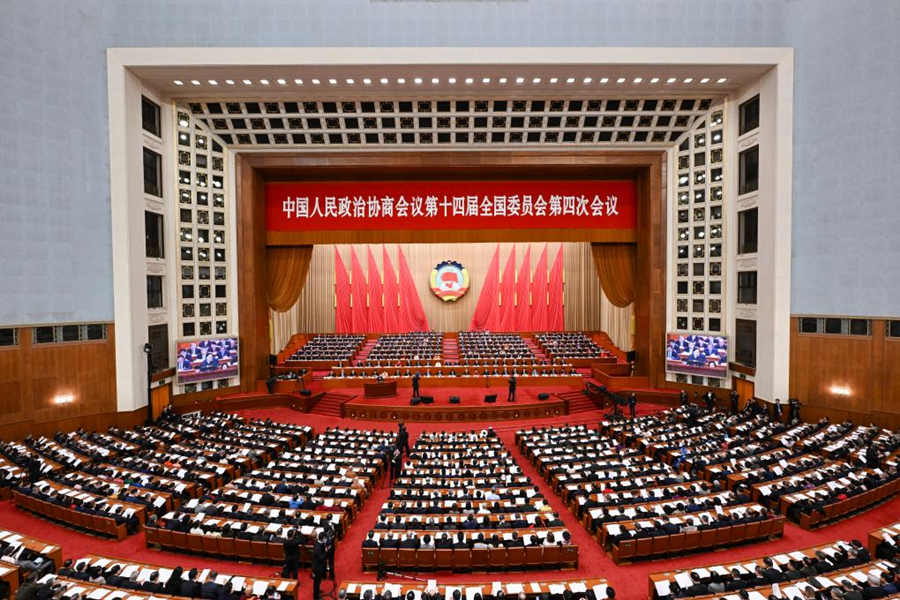
The third plenary meeting of the fourth session of the 14th National Committee of the Chinese People's Political Consultative Conference is held at the Great Hall of the People in Beijing, capital of China, March 8, 2026. [Photo/Xinhua]
"This marks a milestone in the history of the rule of law for the global ecological environment," said Wang Jinnan, an academician of the Chinese Academy of Engineering, who is also a member of the Standing Committee of the 14th National Committee of the Chinese People's Political Consultative Conference (CPPCC) and one of the experts involved in the code's compilation.
Wang said his deep participation in the process gave him a clear understanding of both its significance and the challenges involved. In his view, the code represents China's contribution of wisdom and solutions to global eco-environmental governance.
Wang noted that implementing the environmental code will be a long-term, systematic and foundational endeavor. He suggested that governments at all levels accelerate the formulation of supporting regulations and ensure the code's systems are effectively implemented. Authorities should also make good use of its law enforcement tools and establish cross-departmental and cross-regional coordination mechanisms, while judicial bodies explore centralized jurisdiction to form a powerful joint force against environmental violations and crimes.
"The environmental code's promulgation is a starting point, not an endpoint," Wang said, noting that the current draft focuses primarily on pollution prevention and control, leaving a significant gap in ecological protection and restoration. Moving forward, efforts should prioritize developing regulations in this area, gradually turning mature policies into law to lay the groundwork for the code's future refinement, he suggested.
According to Huang Runqiu, a CPPCC member and minister of ecology and environment, the draft environmental code clearly assigns 75% of law enforcement matters to the Ministry of Ecology and Environment. He said the ministry will take the code's promulgation as an opportunity to strictly enforce environmental laws, strengthen multi-departmental coordination, and promptly address issues affecting people's daily lives, such as noise, odor and water pollution.
Huang noted that as the second law in China to be named a "code" after the Civil Code, it carries far-reaching significance for safeguarding public health and eco-environmental rights, promoting harmony between humanity and nature, and helping build a clean and beautiful world.
The code also reflects China's progress in strengthening its institutional framework for ecological conservation over the years, and will make the country's environmental legislation more coherent and better coordinated, he added.
Gong Fuwen, a CPPCC member and vice president of the Shaanxi Provincial High People's Court, who has participated multiple times in the code's revision, noted that poor coordination among laws can lead to "confusion in law enforcement and difficulties in the judiciary." The environmental code, he explained, is meant to "string these pearls together with a golden thread" — systematically integrating them into a unified whole, shifting from piecemeal protection to comprehensive, chain-wide environmental governance.
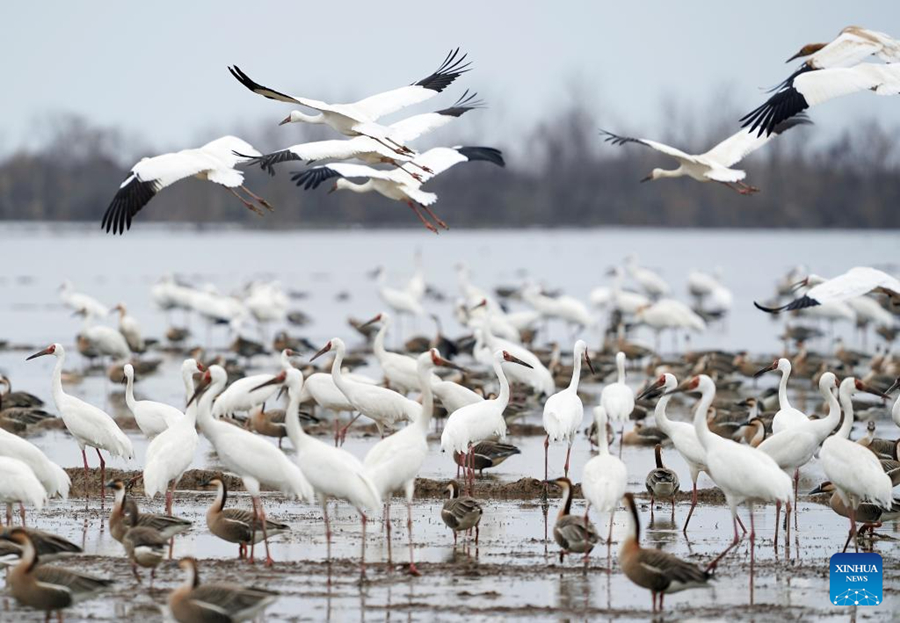
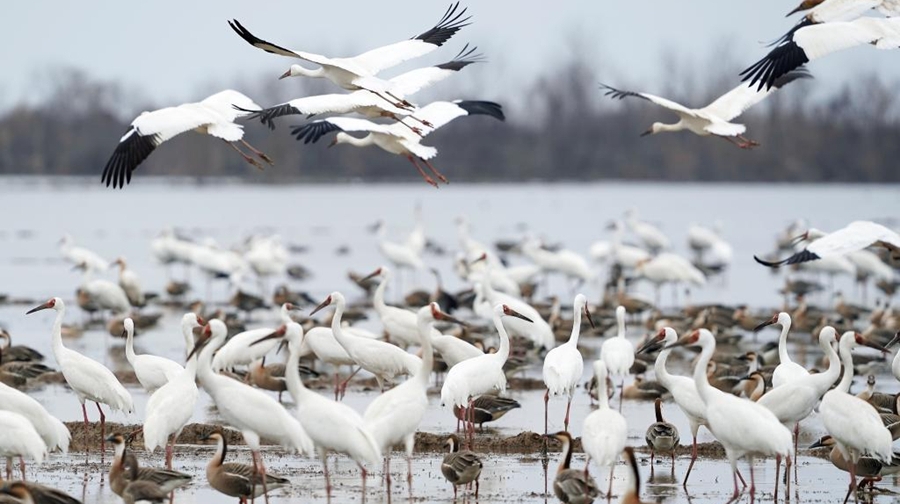
White cranes and other migratory birds are pictured at a wetland reserve in Yugan county of Shangrao, eastern China's Jiangxi province, Feb. 27, 2026. [Photo/Xinhua]
Pan Biling, a CPPCC member and chairman of the Hunan Provincial Committee of the China Association for Promoting Democracy, stated that China's ecological conservation has shifted from targeted remediation to systematic governance, and from end-of-pipe treatment to source prevention and control. "There are more than 30 laws in the field of ecology and environment, along with over 1,000 administrative regulations and local statutes. There is an urgent need to achieve a leap from 'physical integration' to 'chemical fusion' through codification," he said.
Pan noted that the greatest highlight of the draft lies in its legislative philosophy of promoting harmony between humanity and nature. "The draft adheres to the integrated protection and systematic governance of mountains, rivers, forests, farmlands, lakes, grasslands and deserts. It seeks coordinated progress in carbon reduction, pollution control, green expansion and economic growth. It pushes the governance of the ecological environment to shift from the traditional 'small environmental protection' model to a 'big environmental protection' holistic approach," he pointed out.


 京公网安备 11010802027341号