 Share:

China's annual "two sessions" — the concurrent meetings of the National People's Congress (NPC) and the Chinese People's Political Consultative Conference (CPPCC) — opened in Beijing last week, setting the stage for the next chapter of the country's development strategy. Having invested heavily in innovation, artificial intelligence and advanced manufacturing, Beijing is now focused on leveraging these technological gains over the coming five years.
This year's gathering carries particular significance. As geopolitical tensions and conflicts weigh on global economic prospects, the policy direction emerging from Beijing underscores China's determination to sustain stable development and reinforce its role as a stabilizing force in the world economy, while accelerating its transition toward innovation-driven, green growth.
At the opening meeting of the NPC, Chinese Premier Li Qiang delivered the government work report, outlining an ambitious yet pragmatic roadmap for China's development in 2026. The report sets a GDP growth target of 4.5-5%, emphasizing a shift toward stable, high-quality development, building on the resilience shown in recent years.
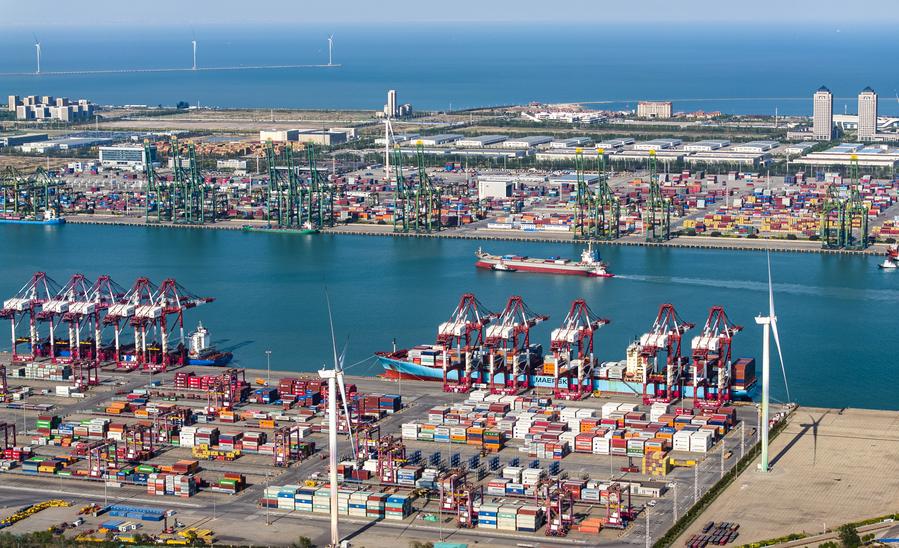
An aerial drone photo taken on April 25, 2025 shows a cargo ship navigating at Tianjin Port in north China's Tianjin. [Photo by Zhao Zishuo/Xinhua]
It identifies clear development targets, including a surveyed unemployment rate of around 5.5%, over 12 million new urban jobs and a consumer price index increase of around 2%. Emphasis will be placed on innovative industries such as AI, cutting-edge sectors like quantum technology and next-generation communications, as well as green development, to achieve technological self-reliance and further the low-carbon transition.
The report also commits to proactive fiscal and monetary policies, which are crucial in boosting domestic consumption, strengthening social welfare and fostering inclusive growth. Taken together, these measures signal China’s commitment to quality growth and people-centered progress and cement its role as a responsible and major contributor to global economic growth.
Despite global uncertainty and challenges, China's economy continues to scale new heights. In 2025, the country's economic output topped 140 trillion yuan ($20 trillion), registering 5% growth from the previous year. This expansion translated into tangible social gains, including the creation of roughly 12.7 million urban jobs and the rollout of public well-being initiatives. Efforts to strengthen the social safety net and expand access to health care, education and other essential services promise a development model increasingly focused on improving the quality of people's lives.
At the same time, China's push toward innovation-driven, green development is yielding visible progress across key industrial sectors. In 2025, the output of industrial robots rose 28% and production of new energy vehicles exceeded 16 million units. These advances reflect the rapid modernization of China's manufacturing base, maximizing productivity and further consolidating its role in the global transition toward cleaner, more sustainable mobility.
China's broader energy landscape is changing too. The share of non-fossil energy in total consumption has reached 21.7%, with clean energy accounting for 30.4% of overall energy use. This is definitive evidence of Beijing's steady progress in building a more sustainable and diversified energy system.
Alongside these structural shifts, the production of green technologies continues to expand rapidly. Output of products such as charging piles and solar cells has surged, demonstrating how Beijing's green and low-carbon transformation is simultaneously advancing environmental goals, technological innovation and industrial growth.
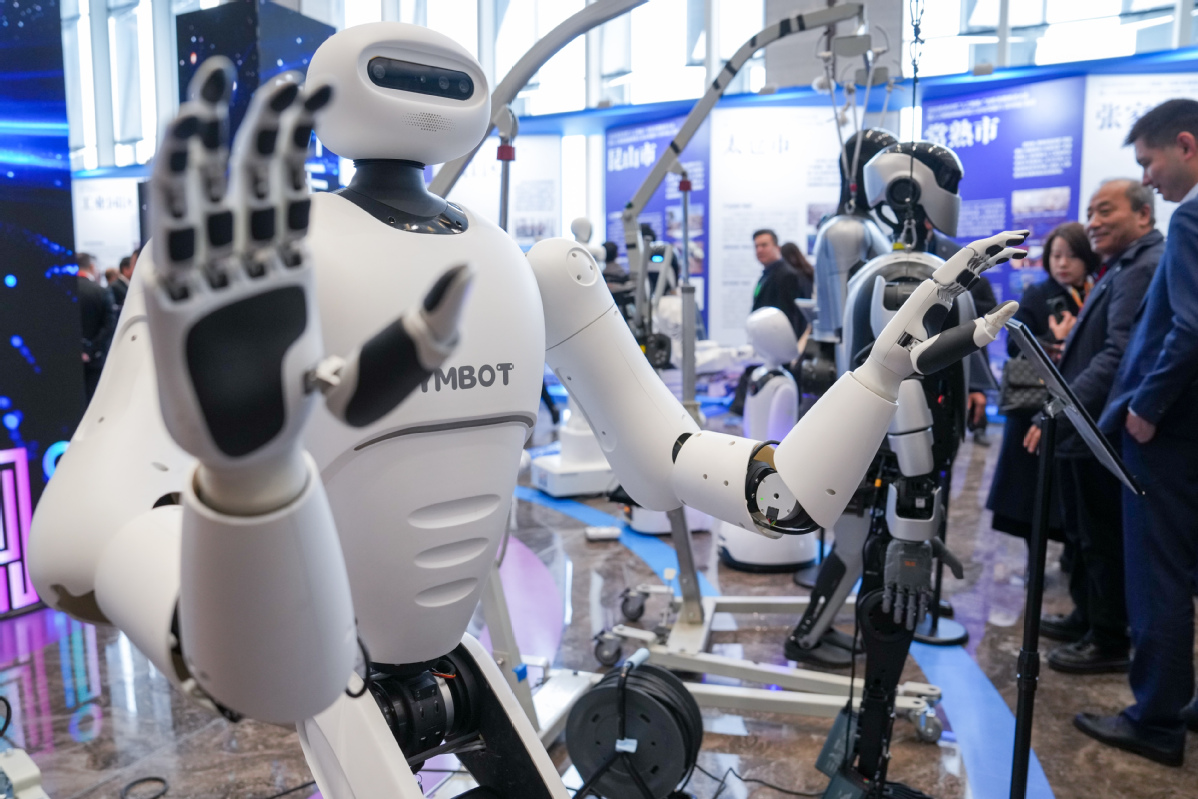
A humanoid robot on display at a conference focused on innovation and development held in Nanjing, Jiangsu province, on Feb 14, 2025. [Photo/Xinhua]
Recent assessments support the view that China's current economic strategy places a growing emphasis on strengthening domestic demand through targeted social policy reforms. Elitza Mileva, the World Bank's lead economist for China, recently noted that measures such as higher pension benefits and childcare subsidies would expand social protection and reduce precautionary household savings, exerting a positive impact on household consumption.
Analysts view this approach as signaling "strong continuity" in China's economic management. As China's consumer market expands and upgrades, its scale and purchasing power are expected to drive global demand and generate spillover benefits across the Asia-Pacific. The momentum will be reinforced by expanded digital and green trade, AI and green technology exports and broader free trade partnerships.
At a time when the international economy is navigating a decisive period of geopolitical and technological transformation, a stronger Chinese consumer market can turbocharge the domestic economy and act as a catalyst for deeper regional economic integration, strengthening trade, investment and supply-chain connections with neighboring economies, particularly in Southeast Asia.
Beyond the near-term policy measures, the "two sessions" reaffirm China's strategic vision for development. The draft outline of the 15th Five-Year Plan (2026–2030) highlights Beijing's resolve to anchor future growth in technological innovation, industrial upgrading and greater self-reliance. By pairing a more dynamic consumer market with advances in frontier technologies, China would be better positioned to achieve long-term growth, bolster economic resilience and secure a leading role in emerging industries.
The blueprint marks an evolution in the country's development model. Rather than prioritizing growth speed alone, the new draft plan emphasizes stability, technological sophistication, innovation and consumption. By embedding these priorities across sectors, Chinese policymakers aim to modernize the economy and reduce dependence on traditional growth drivers such as export-led expansion. This strategy — combining a vibrant domestic market with technological leadership — lays the groundwork for a flexible, future-ready economy capable of sustaining high-quality prosperity.
Azhar Azam is a geopolitical analyst with a focus on economy, climate change and international security.


 京公网安备 11010802027341号