 Share:

National political advisors told China.org.cn in Beijing on Tuesday and Wednesday that China should steadily advance the Asia-Pacific community to benefit the countries of the region and beyond.
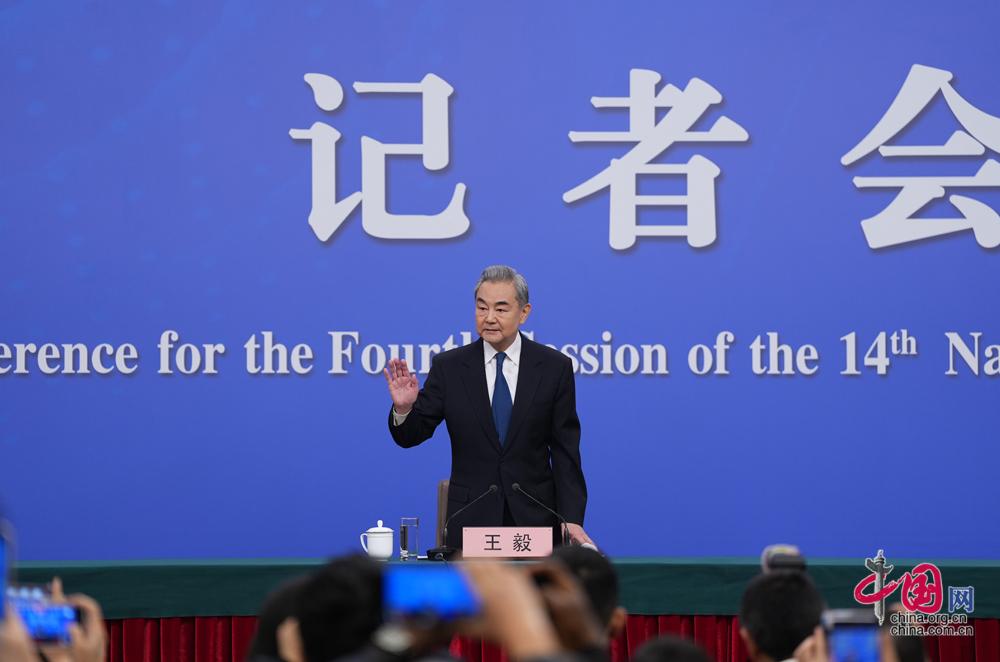
Chinese Foreign Minister Wang Yi, also a member of the Political Bureau of the Communist Party of China Central Committee, attends a press conference on China's foreign policy and external relations on the sidelines of the fourth session of the 14th National People's Congress (NPC) in Beijing, capital of China, March 8, 2026. [Photo by Zheng Liang/China.org.cn]
Just days ago, on March 8, the Chinese Foreign Minister Wang Yi, also a member of the Political Bureau of the Communist Party of China Central Committee, attended a press conference on China's foreign policy and external relations.
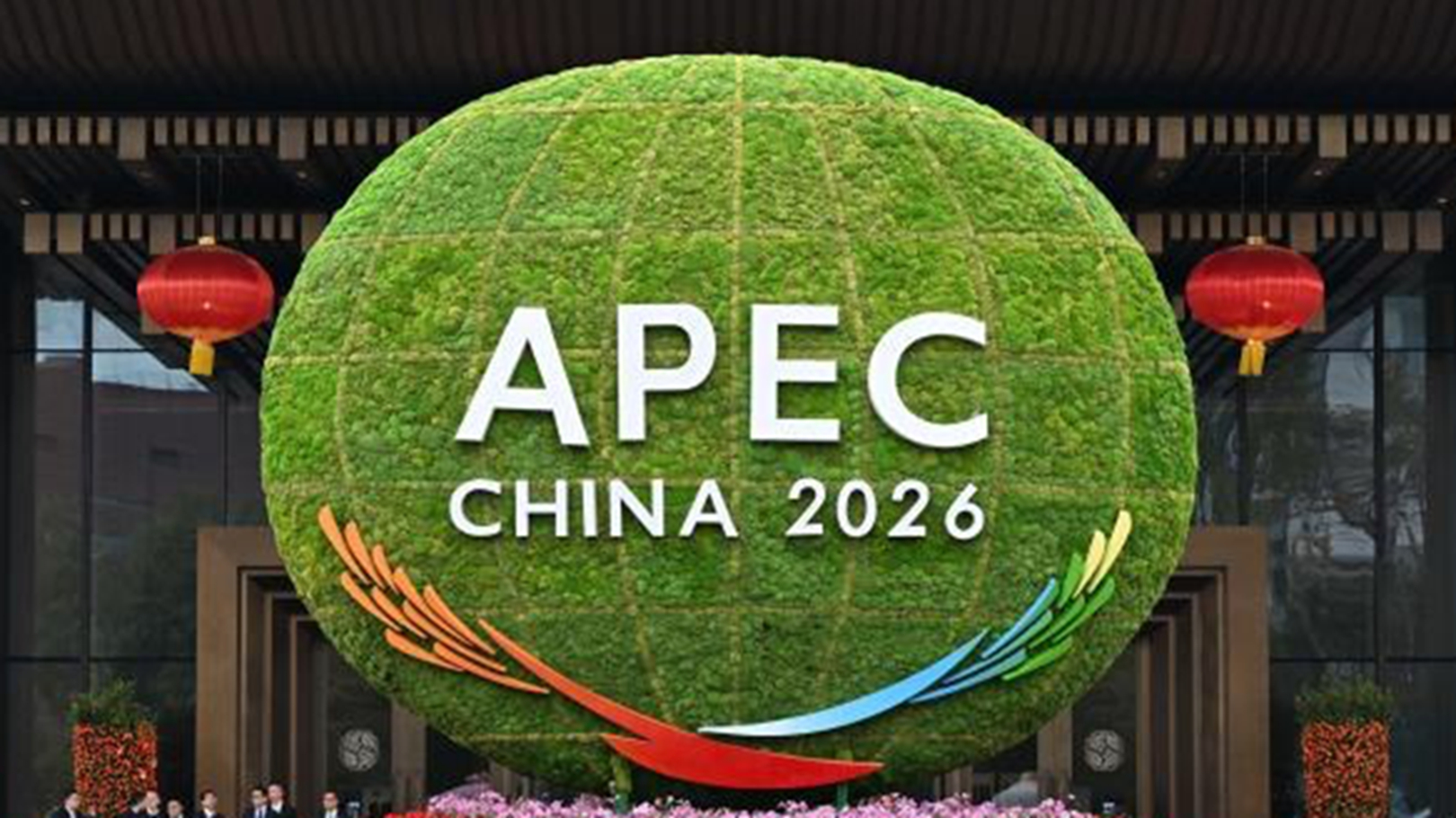
The 33rd Asia-Pacific Economic Cooperation (APEC) Economic Leaders' Meeting will be held in Shenzhen in November. It will be the third time the event being hosted in China. Wang said China will work toward the goal of translating the vision and blueprint for building an Asia-Pacific community into actions and reality.
Zheng Qian, a member of the 14th National Committee of the Chinese People's Political Consultative Conference (CPPCC), noted that from a historical perspective, an Asia-Pacific community with a shared future, raised by Chinese President Xi Jinping in 2013, is deeply rooted in the inherent logic of Chinese civilization.
She said Confucian culture advocates harmony in diversity and peaceful coexistence among all nations, explaining that only by benefiting the world can one benefit one's own country. Historically, through channels such as the ancient Silk Road, Chinese civilization engaged in exchanges and mutual learning with diverse civilizations, including the ancient Indian and Islamic civilizations. This forged a shared historical memory among Asian countries and created a foundation for the important historical and psychological outlook for today's vision of an Asia-Pacific community with a shared future.
"Therefore, from the perspective of Chinese civilization, the Asia-Pacific community is not a political slogan conjured out of thin air, it is rooted in the fertile soil of Asian civilizations and will become an important 21st-century practice of Eastern philosophical wisdom in international relations," she said.
Echoing the sentiment, CPPCC member Guo Jun said: "We have taken such a path of peace and common development. There is such a DNA in Chinese culture, as well as a kind of wisdom. We hope all countries develop well; then we will develop well too, because when all developing countries prosper, our markets expand and we have more opportunities to share the fruits of development. This is a win-win situation for all. So when we talk about a community with a shared future for humanity, that is how we maintain our path of opening up and win-win development."
The political advisor noted that an increasing number of countries are recognizing and embracing the benefits of China's vision of a community with a shared future for humanity through their own development experiences.
He also noted that China has steadily expanded its positive influence among Asian countries, which is reflected in the accelerating pace of development. Whether in railway construction, road building or investment, China has provided significant support to Southeast Asia. Coupled with China's vast market and comprehensive manufacturing capabilities, much of Southeast Asia's development relies on China's complete and all-encompassing industrial foundation.
CPPCC member Wang Jing said the vision of an Asia-Pacific community, grounded in the region's long-term development and shared interests, has helped build consensus for regional cooperation in the new era. These insights carry significant implications and practical value for advancing openness, inclusiveness, innovation-driven growth, connectivity and win-win cooperation in the Asia-Pacific.
"I believe that deepening the development mechanisms of people-to-people diplomacy and serving the country's overall diplomatic agenda are key to implementing the vision of an Asia-Pacific community," Wang said. "By enhancing people-to-people bonds and promoting mutual learning among civilizations through cultural exchanges, we can turn people-to-people diplomacy into a solid bridge linking China with Asia-Pacific countries, injecting sustained grassroots momentum into the building of an Asia-Pacific community."
National political advisor Zhang Yi said that, "as a responsible major country, China will fully leverage its role in driving and stabilizing regional economic growth, contributing to a more predictable, sustainable and inclusive environment for development in the region."
Another political advisor, Zhang Jun, said that China's continued expansion of high-standard opening up and deepening of regional cooperation has not only brought new development opportunities to Asian countries, but also injected confidence and momentum into the global economy amid a complex and changing international landscape.
Zhang, also secretary-general of the Boao Forum for Asia, stated that Asian countries should further strengthen regional cooperation, which can be achieved through improved cross-border payment systems, promoting the digital and green development of existing economic and trade rules, such as the Regional Comprehensive Economic Partnership (RCEP) and the China-ASEAN Free Trade Area 3.0. Concurrent to this, efforts should be made to continuously integrate regional cooperation mechanisms that provide institutional support for advancing the Free Trade Area of the Asia-Pacific and building an Asia-Pacific community.
"Despite multiple challenges facing the world, the Asian economy, led by China, continues to demonstrate strong resilience and serves as an important engine for global economic growth," he said.


 京公网安备 11010802027341号