Share:

The export tax rebate adjustment for photovoltaic and battery products, which took effect on Apr. 1, will support sustainable growth of the industry, despite some short-term fluctuations, experts told China.org.cn.
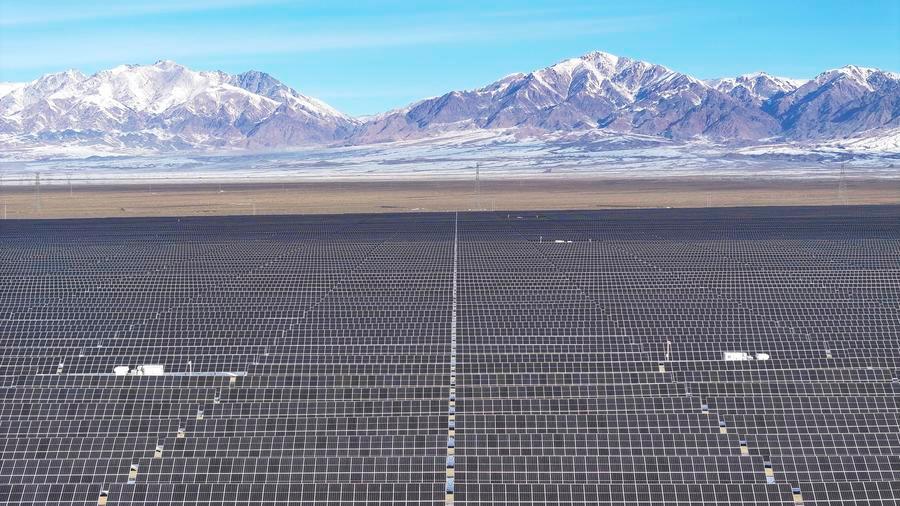
A partial view of the Shichengzi photovoltaic power station in Hami, Xinjiang Uygur Autonomous Region, Jan. 6, 2025. [Photo by Xinhua]
China's Ministry of Finance and the State Taxation Administration announced on Jan. 9 that the export tax rebates for value-added tax on photovoltaic products would be canceled starting from Apr. 1.
Meanwhile, the rebate rate for battery products would be reduced from 9% to 6% and eliminated entirely starting Jan. 1, 2027.
"This adjustment responds to the international community's concern about our photovoltaic products, as many countries have imposed tariffs," said Bai Ming, a researcher at the Chinese Academy of International Trade and Economic Cooperation. "Canceling export tax rebates helps ease the situation we face in the international market."
Luo Weijie, associate professor of economics at Beijing International Studies University, pointed out that the change will reduce fiscal burden, demonstrating China's confidence in its photovoltaic and battery companies.
"It shows that they can compete independently in the market, considering their significant global share," Luo explained.
The export tax rebate adjustment for photovoltaic and battery products has caused some fluctuations in the industry. According to InfoLink Consulting's latest photovoltaic industry chain price report, policy expectations have pushed up module prices in multiple regions.
Following the January announcement, leading Chinese solar module manufacturers, including Trina Solar and Jinko Solar, have raised their product prices.
"This represents a structural impact," Bai said. "We will phase out unviable enterprises that rely solely on export tax rebates for survival, while supporting competitive firms that can boost added value through innovation."
Luo added that the policy will compress margins for Chinese new energy exporters in the short term, with larger firms able to share costs while smaller companies will bear the full burden.
At a seminar hosted by the China Photovoltaic Industry Association (CPIA) on Feb. 5, consultant Wang Bohua stated that the industry is moving from export tax rebates to a market-driven phase, from involution-style competition to high-quality competition.
While this shift may pose short-term challenges, Wang believes it will ultimately encourage technological innovation and improve the competitive landscape in the long run, enhancing the sustainability of China's photovoltaic sector in the global market.
"We should strive for mutually beneficial interactions that lead to win-win results in the global market," Bai added.


 京公网安备 11010802027341号