 Share:

Under the soaring canopy of OCBC Square in Singapore, Team China has concluded its FIBA 3x3 Asia Cup 2026 campaign with a pair of hard-fought bronze medals.
Yet, beyond the podium, the tournament offered a revealing snapshot of a program navigating a critical generational shift ahead of September's Nagoya Asian Games and during the ongoing 2028 Summer Olympics cycle.
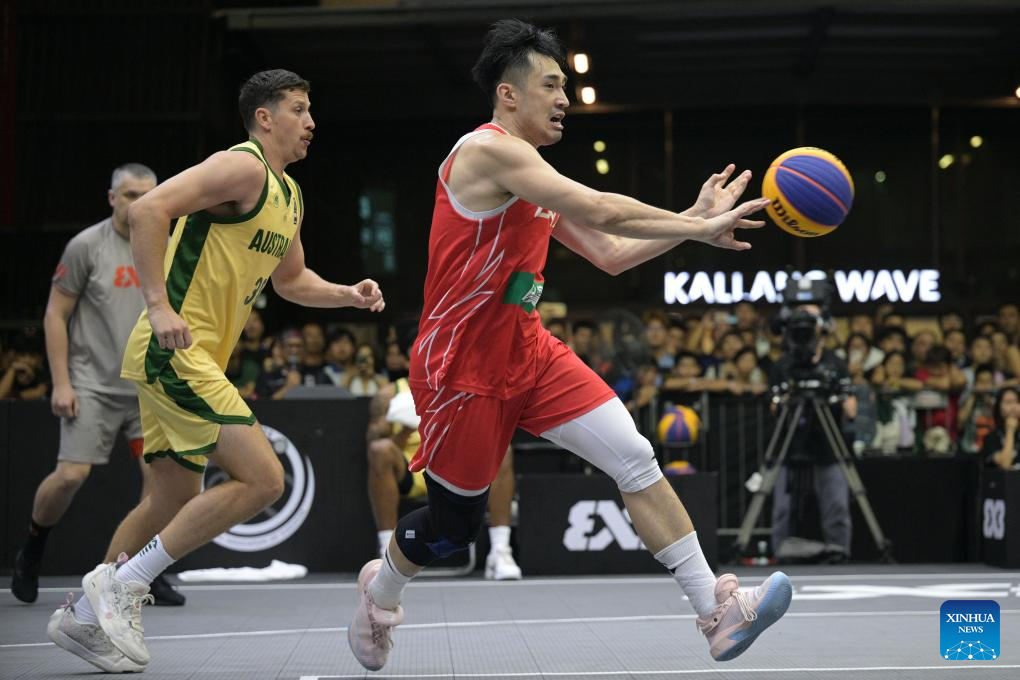
Guo Hanyu (R) of China passes the ball during the FIBA 3x3 Basketball Asia Cup men's final match between Australia and China in Singapore, March 30, 2025. (Photo by Then Chih Wey/Xinhua)
With the International Olympic Committee expanding the field from eight to 12 teams per gender at the 2028 Los Angeles Games, the competitive landscape is rapidly shifting. As the 24-month Olympic ranking cycle began in December 2025, China's overarching goal in Singapore was clear: test the youth, complete the roster turnover and accumulate invaluable international experience.
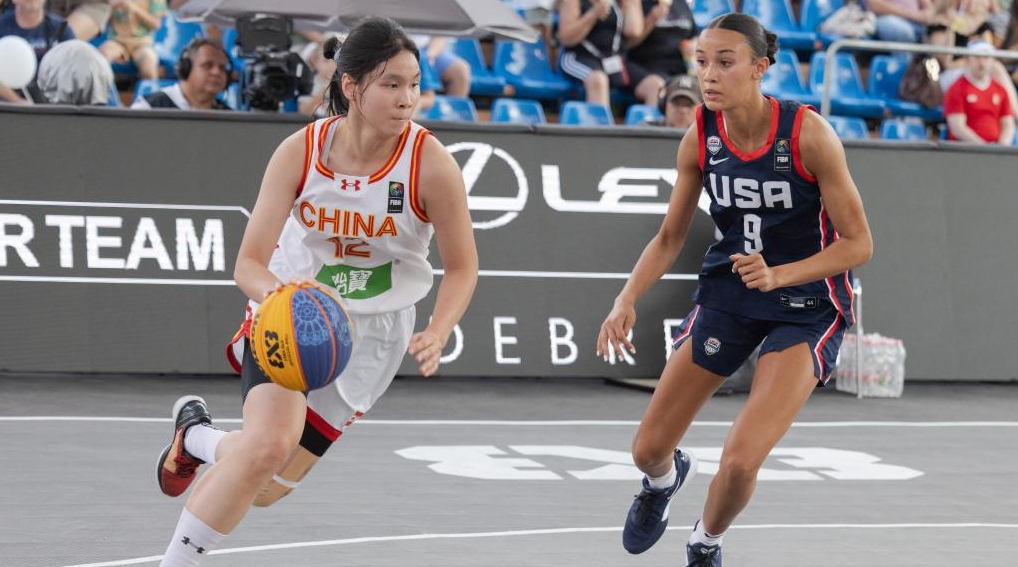
For the Chinese women's team, the Asia Cup was a master class in managing expectations while executing its generational shift. Under new head coach Samir Suliman — who previously led the German women's 3x3 basketball team to Olympic gold at Paris 2024 — the squad successfully blended the experience of legendary veterans with the raw energy of new talent.
"In 3x3, it's an all-around game,"Suliman explained regarding his roster construction.
"You need to shoot, rebound and defend. We are looking for players who can do it all."
Beyond physical skills, Suliman was deeply impressed by the squad's mentality during its intense tournament run.
"They have a really, really good attitude," he observed. "I was amazed by how much they want to play, compete, and grow."
At the heart of this system is 30-year-old veteran center Zhang Zhiting, whose dominant inside presence earned her a place on the tournament's women's Team of the Tournament.
For Suliman, her influence extends well beyond the stat sheet.
"She's a force. She leads this team, and everybody follows her," he emphasized. "Even with two Olympics under her belt, she is still listening and wants to learn. That's really amazing."
The squad's resilience was severely tested in its semifinal against defending champion Australia. Despite building a commanding 20-14 lead, China suffered a heartbreaking 21-20 defeat following a late barrage of Australian three-pointers.
Yet, the team rapidly rebounded to overpower Japan 20-15 in the bronze-medal game. Following the hard-fought podium finish, Zhang acknowledged her shifting responsibilities, noting that her primary mission now is to lead by example and guide the younger generation of players toward their ultimate Olympic dream.
Among that next generation, A Ganajing's rise offers a glimpse of the system's quickly evolving talent pipeline.
The 25-year-old's path from university competition to the national team illustrates the sport's grassroots accessibility, while her first exposure to knockout-stage intensity highlighted the demands of the international game.
"Losing the semifinal was a heavy blow," she admitted.
"I didn't bring 100 percent of what I do in practice, and my teammates really had to carry me forward to secure this third place. But this is the professional stage, you have to adjust quickly and be ready for the next game.
"Stepping onto the highest stage of the Olympics or Asian Games is the ultimate dream we've trained for since childhood, and we will keep fighting for it," she said.
For Suliman, navigating these emotional highs and lows is exactly what a newly formed roster needs. Looking ahead to Nagoya and LA28, he preaches patience.
"We go step by step. This is one of the mantras I used with my former team," he noted.
"It's a three-year journey. We want to rebuild a good culture, build consistency and grow as a project."
If the women's campaign emphasized continuity and leadership, the men's tournament carried a more immediate developmental objective: accelerate the maturation of a young core.
Head coach Meng Shenglin fielded a largely youthful lineup, prioritizing experience over short-term results.
"If I had to describe this team in three words, they would be: youth, hope and future," Meng said.
"They lacked senior-level international experience, so this was an opportunity to temper them."
The result was a campaign that mirrored the volatility of 3x3 itself. After navigating early setbacks and securing a statement win over Australia, China fell to the Republic of Korea in the semifinals, before edging Japan in a tightly contested bronze-medal game.
The experience proved invaluable. Liu Qianhao, 22, emerged as a standout performer, earning selection to the men's Team of the Tournament for his perimeter shooting and composure under pressure.
For Meng, surviving the psychological gauntlet was the true victory."Before the tough games, I told them: 'In 3x3, anything is possible. Drop your mental baggage and fight,'" Meng recalled.
"They adjusted their mindset and showed what they are capable of."
The twin podium finish in Singapore reinforces the strategic pivot toward a dedicated youth pipeline. However, the road ahead is intensely demanding.
Looking toward the LA28 Olympic qualification cycle, Meng revealed the sheer scale of China's strategy.
"Securing those Olympic points is a massive challenge," he said.
"We plan to have two to three teams competing in FIBA events year-round to accumulate points."
As the calendar turns toward the Asian Games and the Olympic qualification cycle intensifies, the lessons from Singapore take on added significance.
For a program in transition, the value of the Asia Cup lies not only in medals secured, but also in the clarity it provided.
From the composure forged in defeat to the confidence gained in recovery, China's next generation has taken a meaningful step forward — one of many it will need to take to reach Los Angeles.


 京公网安备 11010802027341号