 Share:

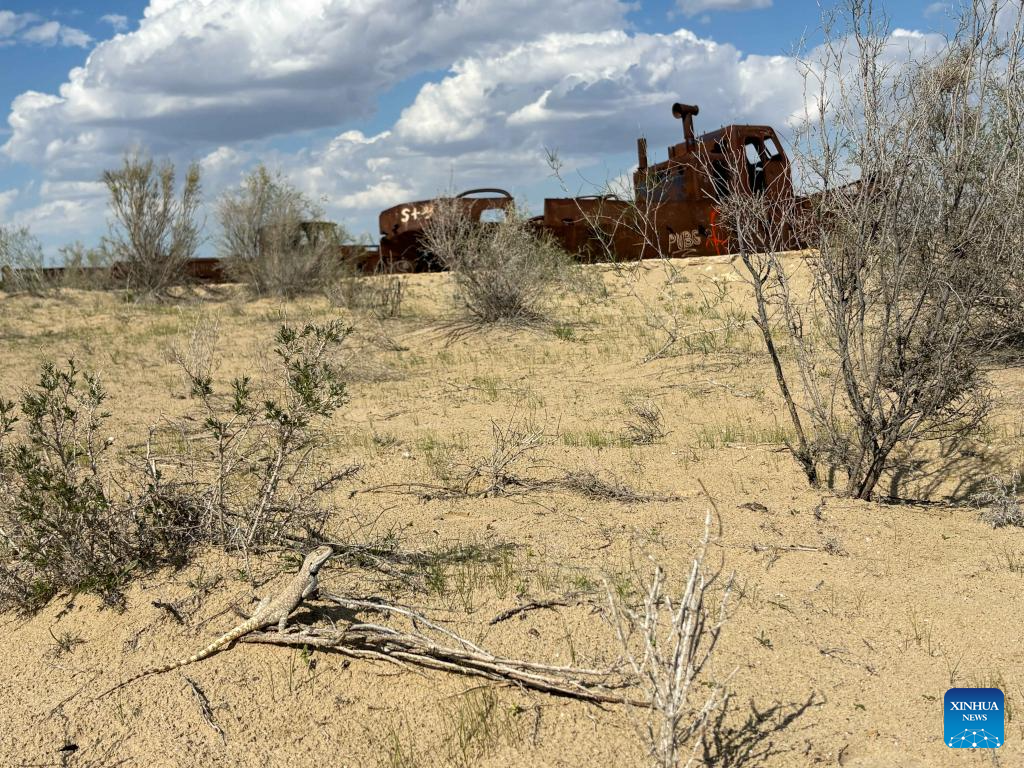
4月10日,在乌兹别克斯坦穆伊纳克,一只蜥蜴站在咸海“船舶公墓”旁。位于乌兹别克斯坦卡拉卡尔帕克斯坦共和国的穆伊纳克原本是咸海边的一座港口,至今仍能见到不少船只的残骸,人称“船舶公墓”。咸海处于亚欧大陆腹地,地跨哈萨克斯坦和乌兹别克斯坦两国,曾是世界第四大湖泊。自20世纪60年代以来,在人类活动用水激增和气候变化等多重因素影响下,咸海快速萎缩,面积已缩小90%以上,湖岸线严重后退,土壤盐碱度升高,干涸的湖床上形成了面积5万多平方公里的荒漠,咸海成为令人痛惜的“中亚之泪”。[新华社记者 姜贺轩 摄]
A lizard stands beside the "ship cemetery" in Moynaq, Uzbekistan, April 10, 2026. The "ship cemetery" displays the wrecks of ships abandoned as a result of the Aral Sea crisis. Situated between Kazakhstan and Uzbekistan, the Aral Sea, once the world's fourth-largest lake, continues to shrink and has lost more than 90 percent of its original surface area since the 1960s, leaving behind vast stretches of desertified lakebed. (Xinhua/Jiang Hexuan)


 京公网安备 11010802027341号