Share:

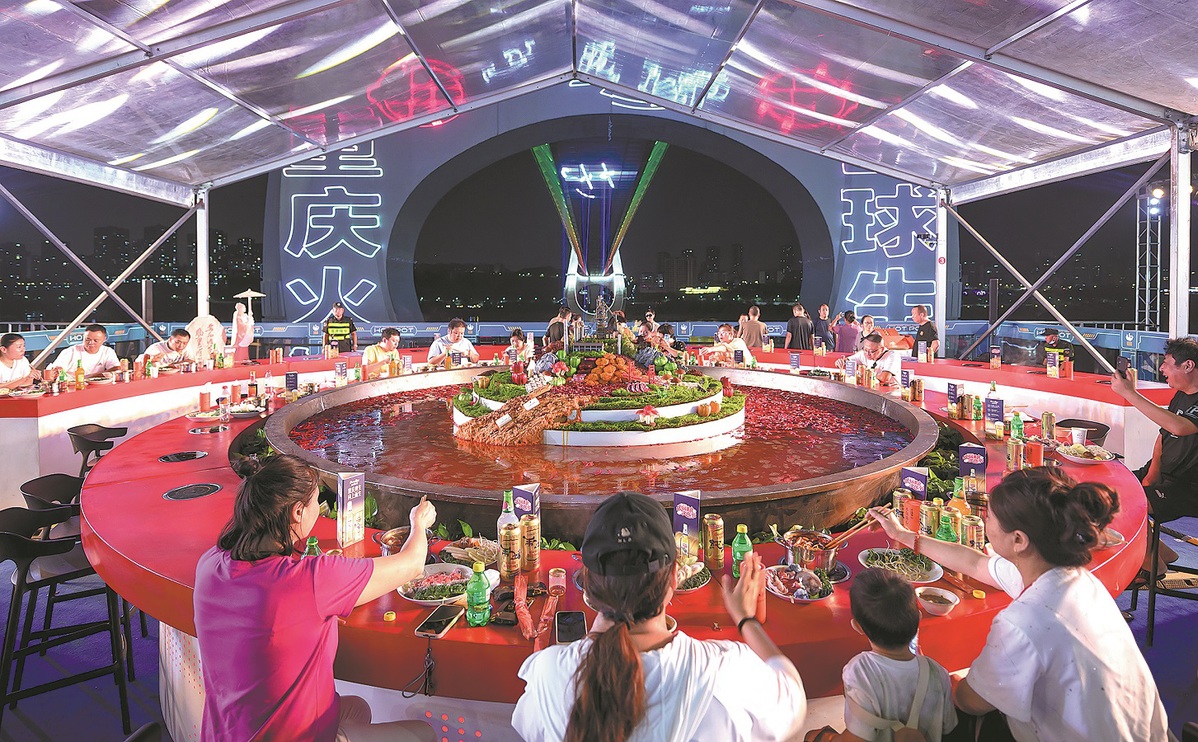
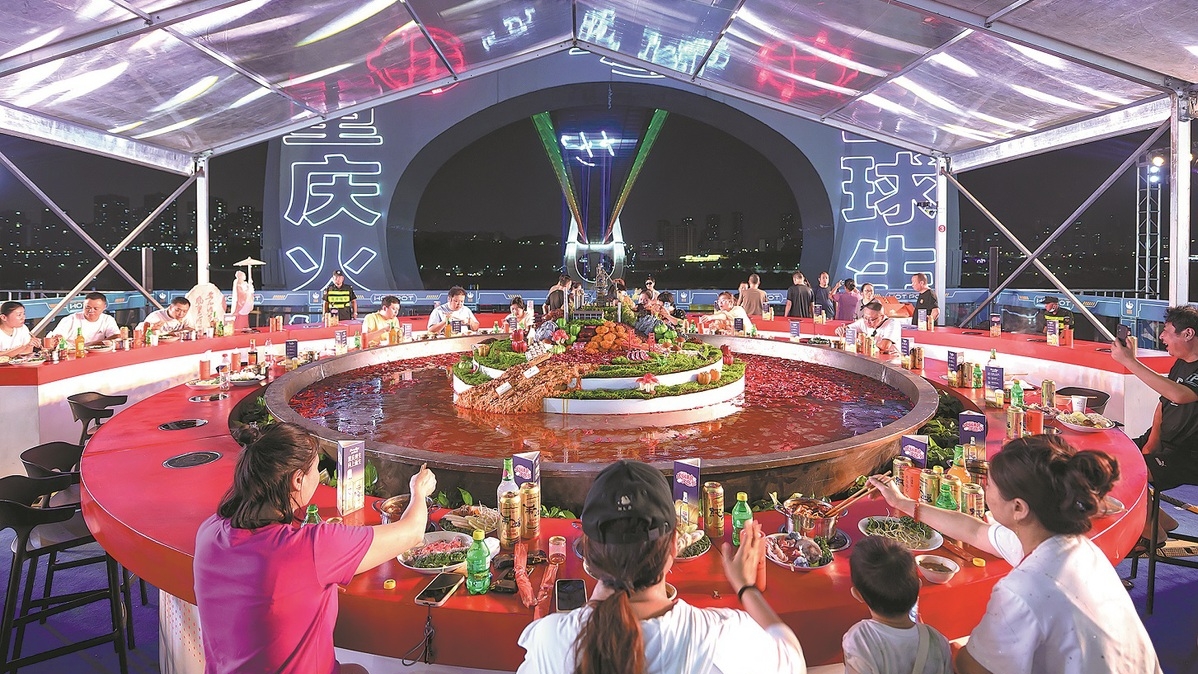
Visitors gather around a giant 10-meter-diameter hotpot to enjoy a communal meal during a hotpot-themed culture festival in Chongqing on Sept. 28, 2025. [Photo/China News Service]
Chongqing is set to upgrade its renowned hotpot industry with the introduction of the Chongqing hotpot industry development promotion regulations, effective on May 1. The legislation aims to standardize and boost the industry while positioning Chongqing as the world's "Hotpot Capital".
For the first time, Chongqing hotpot has been given a legal definition, highlighting its origins and distinctive culinary techniques that produce its signature spicy, numbing, fresh and aromatic flavors.
"The legal framework not only establishes a unique identity for Chongqing hotpot but also highlights its cultural and regional significance," said Lou Zhenxin, director of the legislative affairs office of the Chongqing Municipal People's Congress Standing Committee, which approved the regulations on March 25.
Hotpot is thought to have spread through northern China during the Tang Dynasty (618-907) and gained nationwide popularity by the Qing Dynasty (1644-1911) period. Its modern Chongqing form is believed to have emerged in the late 19th century, when river porters simmered leftover offal with chili oil and herbs. The practice was later commercialized by the Ma brothers, who opened Chongqing's first hotpot restaurant, Maji Laozhengxing, in the 1930s.
When people refer to spicy hotpot, they typically mean the Chongqing version. With both the largest number and some of the best-known hotpot restaurants, Chongqing was named the country's "Hotpot City" by the China Cuisine Association in 2007.
The hotpot industry has become a key component of Chongqing's economy. By 2025, the city had nearly 20,000 hotpot enterprises and close to 40,000 hotpot restaurants, according to the Chongqing Hotpot Association. Of the more than 500,000 hotpot restaurants nationwide, about 160,000 are from Chongqing. Chongqing hotpot has also expanded to more than 50 countries and 200 regions worldwide.
The industry's total output value reached 360 billion yuan ($52.7 billion) last year, accounting for 11.6% of the city's GDP and providing jobs for about 1 million people.
In 2023, the hotpot ingredients sector was included in Chongqing's modern manufacturing cluster initiative, underscoring its role in food and agricultural processing.
Despite its rapid growth, the industry faces challenges, including a lack of standardization and innovation. The Chongqing Hotpot Association has played a key role in the legislative process, conducting extensive research since 2022 to address these issues and translate industry needs into legal safeguards.
"The core of the regulations is to address bottlenecks in industry development through legal means and promote transformation toward standardization, scalability and high-quality growth, setting an example for national food industry legislation," said Pan Ling, deputy secretary of the Chongqing Hotpot Association.
Pan said the regulations also integrate cultural promotion and brand building, supporting the development of landmarks and events such as hotpot festivals and expos. Plans include building food streets and a hotpot-themed museum, while traditional techniques will be included in the intangible cultural heritage list to preserve them as a lasting cultural asset.
The regulations propose strengthening the entire industry chain by establishing production bases, markets and consumption hubs, while advancing technology in seasoning production, soup base preservation and cold chain logistics.
To expand globally, the regulations encourage businesses to establish overseas ingredient warehouses, open chain stores and develop cross-border e-commerce, combining product exports with cultural outreach.
In addition, Chongqing has been leading efforts to develop national and industry standards for the sector in recent years, including professional skill standards for hotpot chefs and evaluation systems for master chefs and managers. Standards for soup base products, as well as levels of spiciness and numbing flavor, are also being developed. A comprehensive system for talent training and certification has been outlined.


 京公网安备 11010802027341号