 Share:

China's ambition of building world-class prowess in collective big-ball sports is facing an integrity crisis, with recent scandals involving match-fixing in soccer and alleged age fraud in basketball undermining the spirit of fair play.
Within days last week, two separate cases involving junior soccer teams in Beijing and a youth basketball player on the U18 national squad, respectively, triggered immediate public scrutiny on potential integrity issues within the country's youth sports community, raising concerns that the ugly side of sports is rearing its head so early and so rampantly at grassroots level.
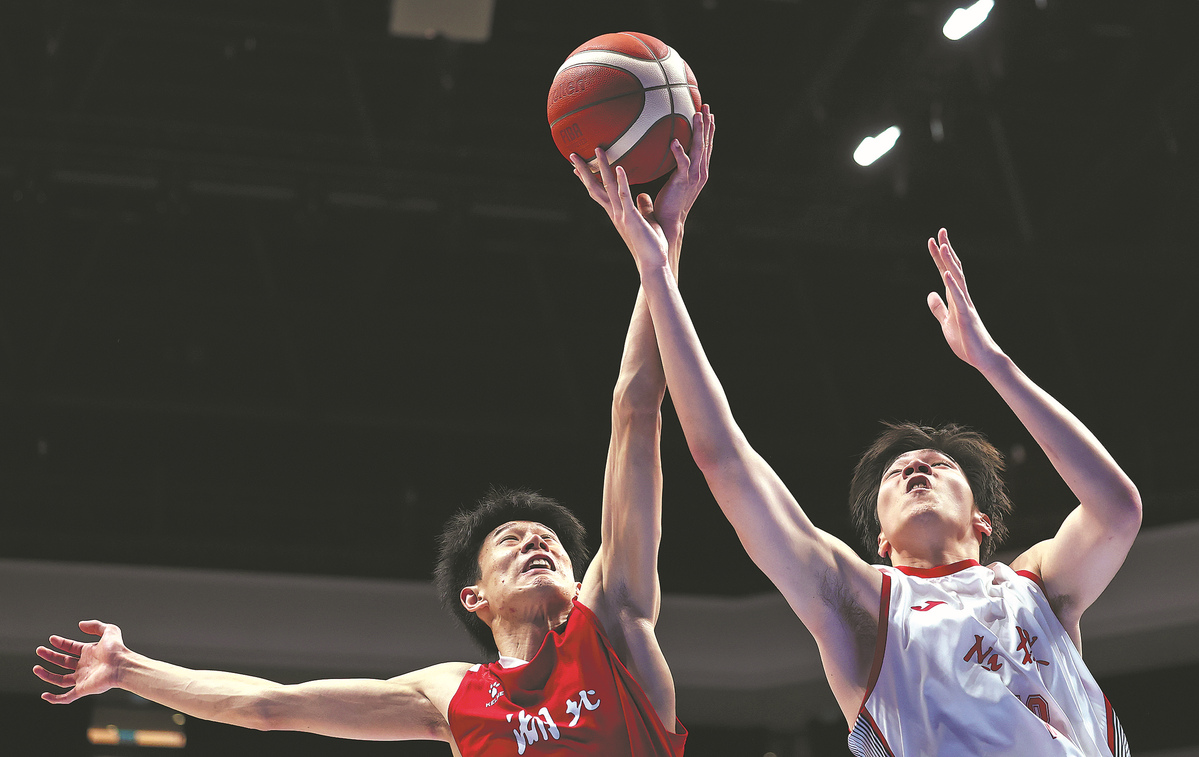
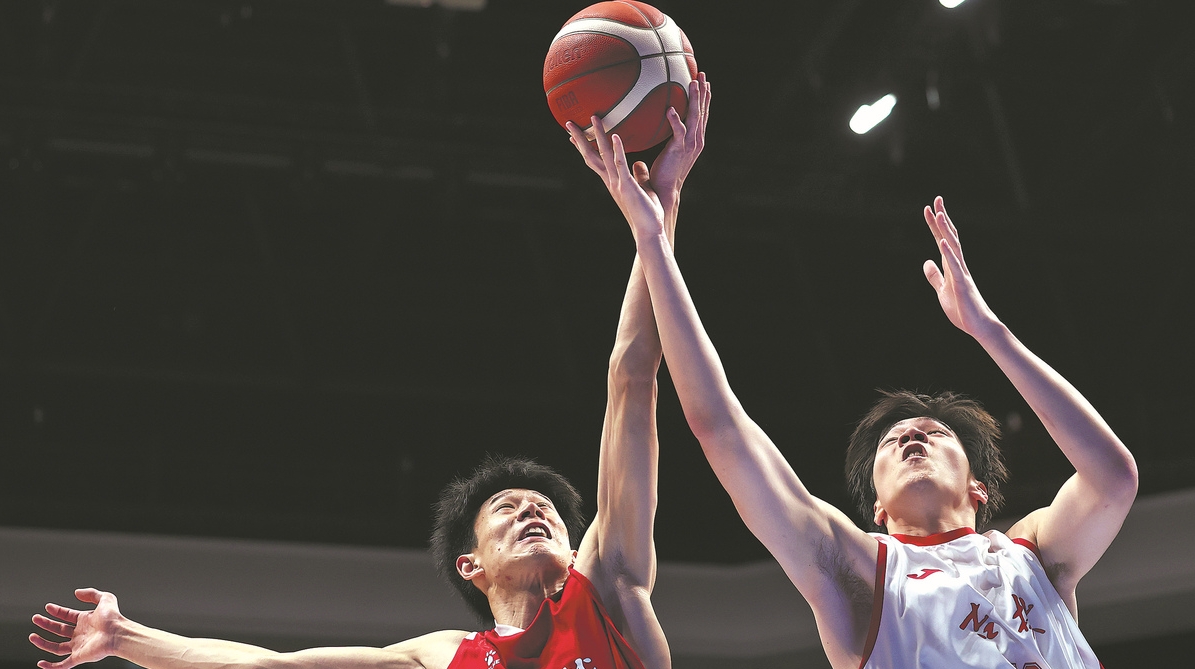
The Chinese Basketball Association confirmed it had taken note of allegations by whistleblowers that Li Yize (left), a guard on China's U18 men's squad, is over age and that the association "is working with relevant authorities to thoroughly investigate the matter". [Photo/Xinhua]
The worrying incidents first came to nationwide attention on Thursday when the Beijing Football Association announced its initial punishment on coaches and team officials involved in a China Youth Football League match between two U10 boys' squads, which saw players on both sides deliberately score own goals in order to lose the match and gain a more favorable draw in the knockout stage of the competition.
Citing video footage and reports from referees and match supervisors, the BFA confirmed in a statement that the match during the 5th China Youth Football League on April 4, between Beijing Dongcheng sports school and the Kickers club, turned out to be "a premeditated manipulation of results, which has severely breached the principle of fair play and the spirit of sportsmanship".
Footage posted by spectators left social media abuzz with angry users on Friday over the shockingly absurd sequence during the second half of the match, which saw the Kickers first score three own goals in succession, followed by two from Dongcheng sports school, with neither goalkeeper making any attempt to block the shots.
Following the Kickers' second own goal, Cui Yu, coach of the Dongcheng sports school, can be seen in the footage shouting to the referee:"What's that? How can they do that?" He can then be seen pulling his boys together, and telling them to follow suit, after the referee responded that there was "nothing we can do about it".
Amid growing public outcry over the incident, the BFA upgraded its punishment on Friday, imposing lifetime bans, up from one year in its original penalty, on the two teams' coaches and managers, including Cui and his counterpart Jiang Kai of the Kickers, from any soccer-related activities, citing its "zero-tolerance" stance against match-fixing.
The Beijing Municipal Sports Bureau also announced on Friday to launch a joint investigation with the Chinese Football Association to probe the youth league's organizers, match supervisors, referees and on-site staff for any malpractice, vowing to hold all responsible parties legally accountable.
Identity crisis
Just a day later, another probe, this time into alleged age and identity falsification involving a key player on China's U18 men's basketball team, turned fans' ire from the soccer pitch to the hardwood court.
In a brief statement released late on Saturday, the Chinese Basketball Association confirmed it had taken note of allegations by whistleblowers that Li Yize, a guard on the U18 men's squad, is over age and that the association "is working with relevant authorities to thoroughly investigate the matter".
The CBA pledged to handle the case in a "serious and earnest" manner and said that it will release the findings of the investigation to the public as soon as possible.
With his breakout performances during the U18 squad's warm-up games last week impressing the country's hoops community, Li's unheralded rise triggered scrutiny of his background by fans, some of whom soon claimed that Li's appearance suspiciously resembles that of another young player named Zhang Hanbo, who is supposedly older than Li.
More fan allegations started to circulate on Chinese social media on Saturday morning, following Li's impressive contribution of 20 points, nine rebounds and seven assists in the U18 team's 100-56 rout of an Australian youth academy squad on Friday, suggesting that Li might have previously competed as Zhang, citing a high-degree of resemblance not just between their looks, but also their left-handed playing styles.
According to official registration information for the current U18 team, Li was born on March 27,2008, making him eligible for U18 events. However, whistleblowers allege his actual birth year was 2006, citing registration information provided for Zhang when he signed up with the national U17 youth league in 2022.
More intriguingly, both Li and Zhang were registered as products of the Hubei provincial youth program in the CBA database, with records of Zhang's participation in official youth competitions ending in 2022, while there are no records for Li in any events prior to representing Hubei at the inaugural National Youth Games of Football, Basketball and Volleyball in 2024.
Such allegations, if confirmed, would mean Li is two years over the age limit and has competed in youth events with an unfair advantage in physicality and experience.
Shortly after the controversy erupted on social media, Li was removed from the roster for Saturday night's U18 exhibition game against a Canadian youth squad.
As of Monday morning, no one from Li's family, the current U18 national team or Hubei's provincial sports department had commented on the allegations.
Although no official findings of this particular probe have been released yet, pundits, who have followed youth development in team ball sports, claim that it's nothing new and that age fraud has been a "tumor" in the sector.
"It's not a rare practice within China's sports scene that athletes deliberately change their age to compete with an unfair advantage in youth competitions," Fu Zhenghao, an independent sports commentator and columnist, said on his Weibo account.
Both cases have exposed a chronic issue that has long hampered China's youth sports systems — that the blind pursuit of medals, results and rankings by the sports hierarchy in the country has compromised the healthy development of youth talent, and more importantly the values of integrity and fair play, often ruining the careers of young athletes involved, who are just seen as collateral damage, Fu added.


 京公网安备 11010802027341号