Share:

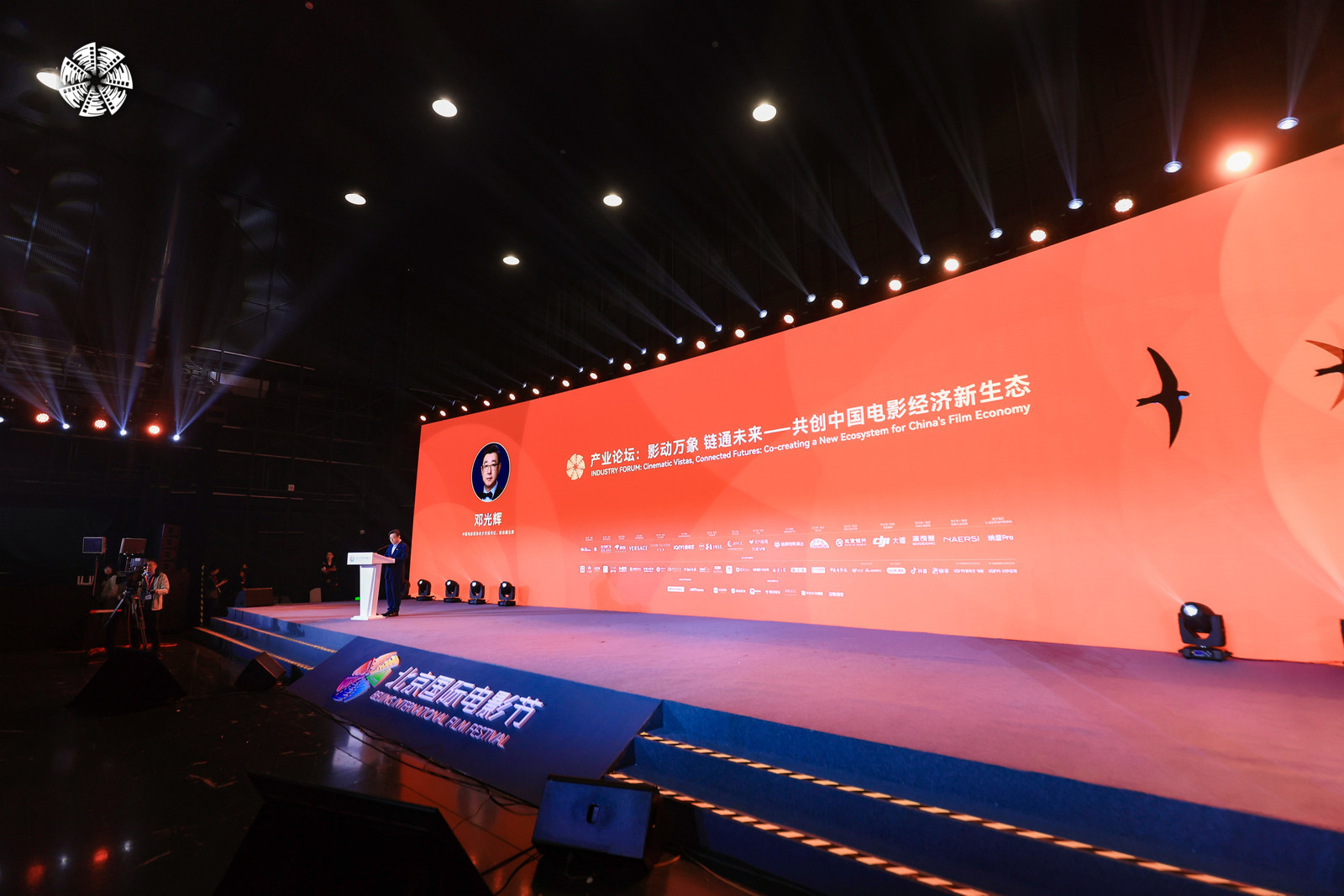
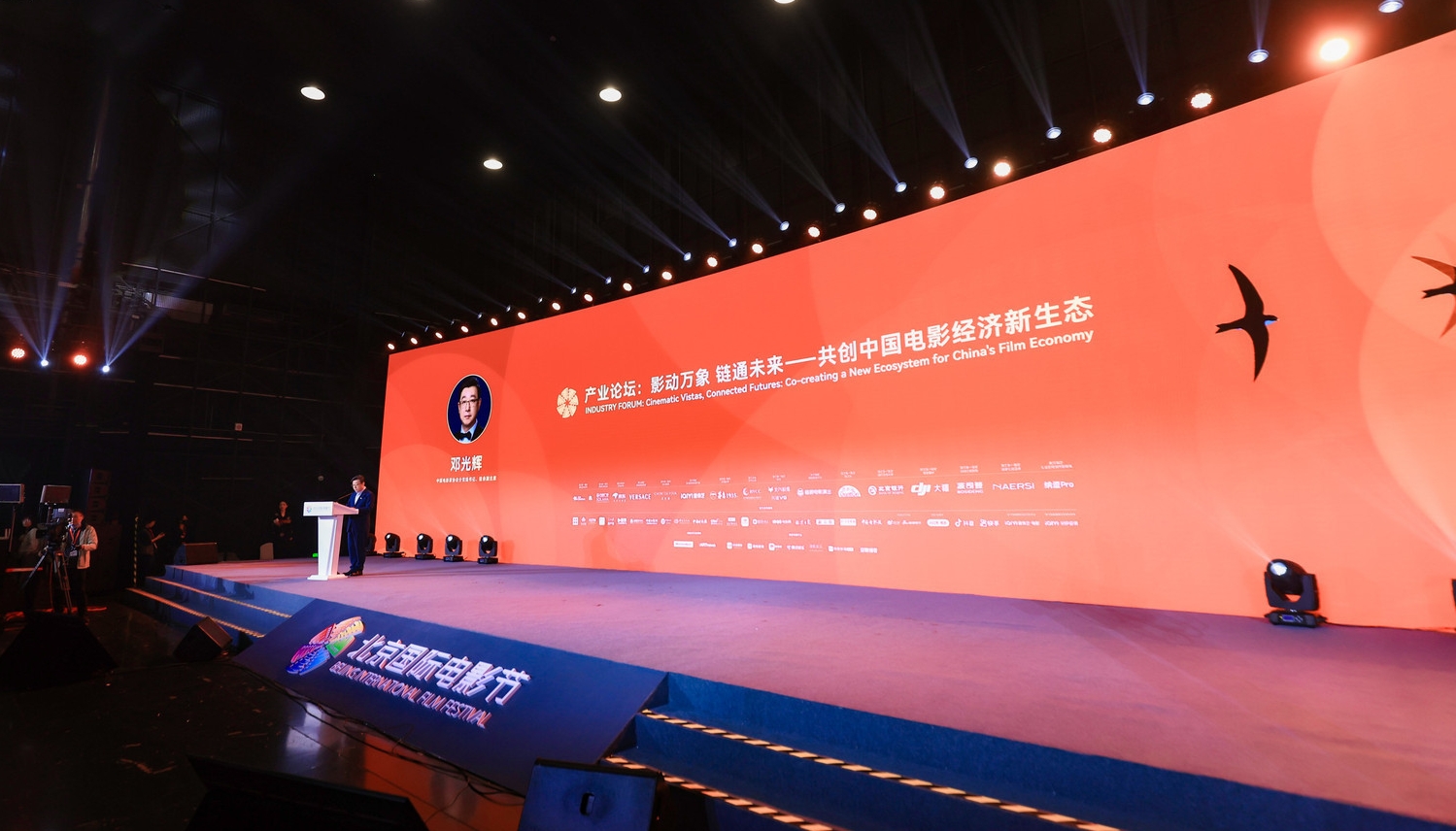
The Industry Forum of the 16th Beijing International Film Festival (BJIFF) convenes in Beijing, April 17, 2026. [Photo courtesy of BJIFF Organizing Committee]
China's film industry is pivoting from a box-office-centric model to a broader economic ecosystem that integrates culture, tourism, technology and consumer markets, industry leaders said on Friday at the Beijing International Film Festival's annual industry forum.
The gathering, co-hosted by the festival's organizing committee and the China Film Association, brought together policymakers, studio executives and scholars to assess the sector's trajectory as the country approaches the tenth anniversary of its goal of turning China into a strong film power.
Deng Guanghui, executive vice chairman of the China Film Association, framed the transformation within the context of three decades of market-oriented reforms that dismantled planned-economy structures and introduced competition.
"We have step by step built a unified, open, competitive and vigorous film market system," Deng said, citing reforms such as the abolition of regional distribution barriers and the establishment of cinema chains. "The exploration of the film economy aims to perfect the modern film system and build an ecosystem aligned with the demands of modern Chinese civilization."
The forum coincided with the government's designation of 2026 as a year to boost film-related consumption. Deng called for equal emphasis on cultivating new productive forces in filmmaking and constructing new cultural forms around cinema. "Let the economy empower culture, and let culture nourish the economy," he said.
The sheer scale of the industry underpins such ambitions. The total output value of China's film industry surpassed 817.26 billion yuan ($112 billion) in 2025, according to official data. Beijing, as the national cultural hub, remains its epicenter.
Yin Hong, vice chairman of the Beijing Film Association and a professor at Tsinghua University, presented the 2025 Beijing Film Industry Report, which showed that the capital accounted for roughly one-quarter to one-third of the country's key film metrics. Beijing-registered projects made up 25% of the 2,709 films approved nationwide last year, and locally produced titles generated 12 billion yuan in box office revenue—29% of the national total for domestic films. The city is home to 15,000 film and television enterprises, representing 36% of the national total.
"Beijing is not only a production powerhouse but also a weathervane for the national market," Yin noted, pointing to double-digit growth in both box office and attendance in the city. He highlighted the expansion of premium-format screens and the emergence of "film plus" venues that blend cinema with technology and cultural tourism.
Fu Ruoqing, chairman of China Film Group Corporation, stressed that the industry's future hinges on innovation and cross-sector synergy.
"The new ecosystem must be open, inclusive and symbiotic—linking cinema with a thousand other industries," Fu said. "Only by deepening innovation and broadening value boundaries can we overcome current bottlenecks."
The forum also spotlighted the role of festivals as economic and cultural engines. Deng pointed to the "siphon effect" of events like the Golden Rooster and Hundred Flowers Film Festival and the Beijing festival itself in aggregating market resources and nurturing emerging talent.
Looking ahead, Yin cautioned that challenges remain but argued that reinforcing Beijing's unique industrial ecology and amplifying the function of theaters as cultural spaces are essential steps.
"Without compelling content at the helm, 'film plus' has nothing to attach to," Yin said. "We must ensure the cinema offers an experience irreplaceable by any screen at home or in the palm of your hand."


 京公网安备 11010802027341号