


 Share:

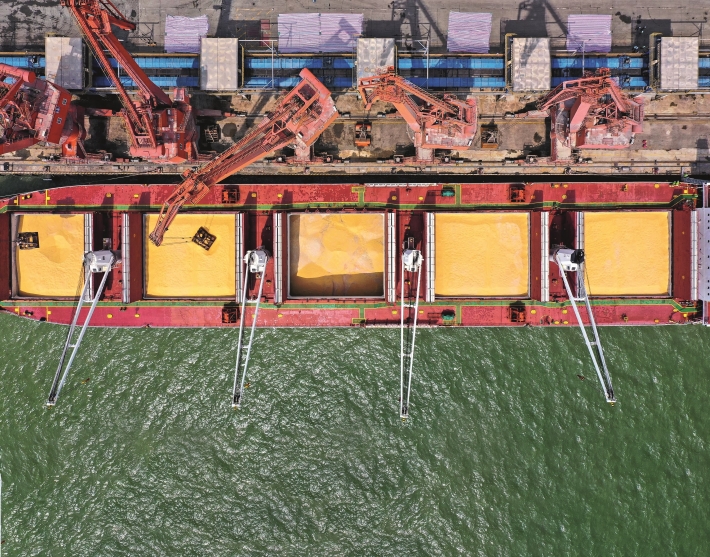 A cargo ship loaded with corn from South Africa arrives at the Mayong Port, Guangdong Province, on 4 May 2023 (XINHUA)
China-Africa trade is set to see a significant boost starting 1 May this year, when China begins the implementation of its zero-tariff treatment to 53 African countries that have diplomatic relations with China.
The implementation decision was announced in Chinese President Xi Jinping's congratulatory message to the 39th African Union Summit in February. He also outlined further measures to support African exports to China, including the upgrading of the "green channel" for African goods - referring to streamlined customs procedures and reduced requirements.
The significance of the zero-tariff policy cannot be overstated. Speaking to the media on the sidelines of the summit, UN Secretary General António Guterres praised the policy and urged other developed and major economies to follow suit. "Africa needs free trade for its goods, and Africa cannot be penalised, as a continent facing significant economic challenges, by restrictive trade policies and tariffs that undermine competitiveness," he said.
At a press conference during China's annual Two Sessions on 8 March, Chinese Foreign Minister Wang Yi reaffirmed this commitment. "We are removing tariffs completely to boost trade, increase benefits for the people, and help Africa to access the vast opportunities of the Chinese market," he said.
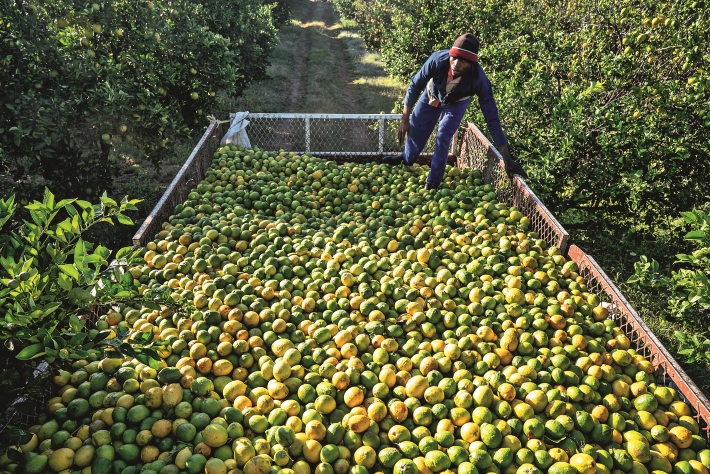
A staff member works in a citrus farm in North West Province, South Africa, on 24 May 2023 (XINHUA)
A new milestone
China began granting zero-tariff treatment to some African products in 2003, when the second Ministerial Conference of the Forum on China-Africa Cooperation (FOCAC) was held in Addis Ababa. At the time, the Chinese government announced a series of measures, including tariff exemptions for selected exports from some of Africa's least developed countries.
The policy was first implemented in 2005, when China removed tariffs on 194 tariff lines from 25 African least developed countries. Since then, both the number of eligible countries and tariff lines have steadily expanded, culminating in the full removal of tariffs in 2026.
The current zero-tariff policy responds to a long-standing concern among African countries: trade imbalance. Although China-Africa trade has grown rapidly, African exports to China have increased more slowly than Chinese exports to Africa.
In 2025, bilateral trade reached $348 billion, up 17.7 percent year on year. Chinese exports to Africa totalled $225 billion, rising by 25.8 percent, while imports from Africa stood at $123 billion, growing by 5.4 percent.
While trade deficits are common among China's trade partners, given its role as the world's manufacturing hub, boosting imports from Africa has become a key priority in China's engagement with the continent, and is seen as an important way to support African economic development.
More broadly, the policy forms part of China's wider efforts to expand imports globally. According to the Ministry of Commerce, China's imports reached 18.5 trillion yuan ($2.7 trillion) in 2025, making it the world's second-largest importer for the 17th consecutive year. In that year, China recorded growth in imports from more than 130 countries and regions, and remained a major export destination for nearly 80 economies.
The policy is expected to deliver immediate gains for African agricultural exports, which currently account for a substantial share of total exports to China. At the same time, it is likely to stimulate investment in processing and manufacturing, as tariff exemptions make Africa a more attractive base for export-oriented production. This, in turn, will support the continent's broader efforts to move up the value chain beyond raw material exports.
Part of a broader system
Although widely regarded as a landmark measure rarely seen in global trade history, zero-tariff treatment alone is insufficient to address the structural challenges facing Africa's export sector. Limited production capacity, difficulties in meeting international standards, a lack of export diversification, and limited access to finance remain key obstacles that call for broader international support.
China has complemented tariff reductions with a range of supporting measures. Trade platforms such as the China-Africa Economic and Trade Expo in Changsha help to increase the visibility of African products and create business opportunities for exporters. The China International Import Expo in Shanghai has likewise seen increasing African participation, supported by measures such as free booths for least developed countries, expanded exhibition areas, and enhanced business matchmaking.
Trade facilitation has also been strengthened through measures such as "green channels" for African imports, enabling faster customs clearance, streamlined phytosanitary procedures, and increased investment in logistics and training.
A recent example is the supplementary agreement signed in April between China and South Africa on phytosanitary requirements for citrus exports. While maintaining safety standards, the arrangement shortens cold treatment duration and lowers temperature requirements, thereby reducing cold-chain energy use and maritime transport costs. "This will enhance the competitiveness of these fruits in the Chinese market," said South African Minister of Agriculture John Steenhuisen.
Chinese investment is also playing an increasingly bigger role in enhancing Africa's exports. In Madagascar, for example, Yuan's High-tech Seed, a company headquartered in Changsha, has established a complete industrial chain covering sheep fattening, slaughtering, processing, and export. In collaboration with local partners, it is also developing farming cooperatives, with the objective of increasing annual mutton exports to China to 20,000 tonnes within the next few years.
For Africa, the zero-tariff policy represents a valuable opportunity. However, fully utilising it will require addressing underlying structural problems. A major concern is that expanding zero-tariff treatment to a wider group of countries may undermine the comparative advantage earlier granted to least developed economies, as more competitive markets including South Africa and Kenya now enjoy equal treatment.
This highlights the need for deeper regional cooperation, including the integration of weaker economies into regional value chains and the strengthening of collective export capacity to better compete in the Chinese market.
Ultimately, zero-tariff treatment is not an end in itself, but a catalyst. With sustained commitment from both sides, it could go beyond a trade policy instrument and help to reshape China-Africa economic cooperation towards a more balanced, resilient, and mutually beneficial growth trajectory.


 京公网安备 11010802027341号