


 Share:

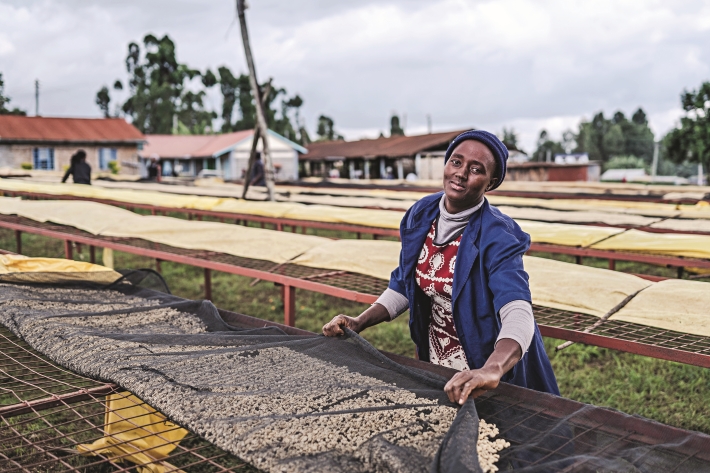
A worker dries coffee beans at a coffee processing plant in Kirinyaga, Kenya, on 18 December 2024 (XINHUA)
China's zero-tariff initiative has become a hallmark of China-Africa cooperation in the new era. As an important step in China's push for unilateral opening up, the initiative demonstrates the country's willingness to assume greater international responsibilities while reaffirming its commitment to advancing high-standard openness.
With the launch of the 15th Five-Year Plan (2026-2030), the accelerated implementation of zero-tariff measures signals China's firm resolve to deepen opening up through concrete policy action. As China and Africa pursue modernisation and build an all-weather community with a shared future, the zero-tariff policy serves as both a catalyst and a practical instrument for driving shared development.
Policy innovation
At the Beijing Summit of the Forum on China-Africa Cooperation in September 2024, President Xi Jinping announced that China would proactively expand unilateral market access by granting zero-tariff treatment covering 100 percent of tariff lines to all least developed countries with diplomatic relations with China, including 33 African nations. China thus became the first major developing country and one of the first major economies to implement such a comprehensive unilateral opening measure.
At the Ministerial Meeting of Coordinators on the Implementation of the Follow-up Actions of the Forum on China-Africa Cooperation, President Xi noted that China stands ready to conclude Economic Partnership Agreements for Shared Development with African partners. Through these arrangements, China would extend zero-tariff treatment across all tariff lines to the 53 African countries that maintain diplomatic relations with China, while further facilitating exports from Africa's least developed countries to the Chinese market.
On 14 February, President Xi sent a congratulatory message to the rotating Chairperson of the African Union (AU) and President of Angola João Lourenço, and Chairperson of the AU Commission Mahmoud Ali Youssouf, on the convening of the 39th AU Summit. President Xi noted China's decision to fully implement zero-tariff treatment for 53 African countries that have established diplomatic relations with China, starting 1 May this year. At the same time, China will continue to promote the negotiation and signing of the agreements on economic partnership for shared development and further expand access for African products exported to China by upgrading the "green channel" and other measures.
China's decision to extend zero tariffs to all African diplomatic partners represents a significant policy innovation.
This requires balancing compliance with the World Trade Organisation (WTO) principles, particularly the Most-Favoured-Nation obligation, with the establishment of more reciprocal and sustainable trade and investment arrangements. In this context, the negotiation of Economic Partnership Agreements for Shared Development constitutes a critical institutional safeguard ensuring the effective implementation of the zero-tariff policy.
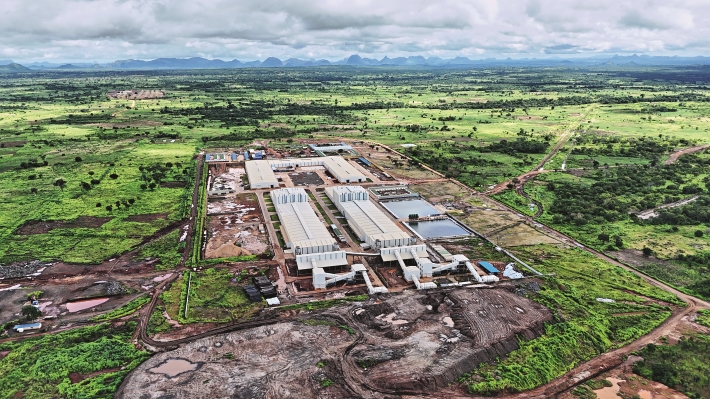
View of a Chinese built graphite processing plant in Nipepe District, Niassa Province, Mozambique, on 31 January (XINHUA)
Speedy implementation
The signing of early harvest arrangements represents a concrete step towards operationalising the zero-tariff initiative and is fully consistent with relevant authorisation provisions under the WTO rules. Driven by the zero-tariff policy, China's imports from Africa's least developed countries reached $67.336 billion in 2025, marking a 6 percent year-on-year increase and the highest level in a decade, demonstrating the tangible effect of broader market access.
The Republic of the Congo became the first African country to sign an early harvest arrangement with China, under which China will grant zero-tariff treatment covering 100 percent of tariff lines to Congolese exports. Following the agreement's conclusion, China formally notified the WTO of the important progress made in advancing the China-Africa Economic Partnership Agreement for Shared Development, underscoring China's commitment to transparency and its firm support for the multilateral trading system, with the WTO at its core.
High-level diplomacy has further accelerated policy implementation. In January 2026, Foreign Minister Wang Yi made his first overseas visit of the new year to Africa, with the zero-tariff policy high on the agenda. In March, Vice President Han Zheng paid official visits to Kenya, South Africa and Seychelles at their invitation, promoting the implementation of zero-tariff measures.
During the visit to Kenya, the two sides signed the Arrangement on Early Harvest under the Economic Partnership Agreement for Shared Development. Beginning on 1 May, Kenyan tea, coffee and avocados will enter the Chinese market duty-free and quota-free. China will also upgrade the existing "green channel" to facilitate trade.
With South Africa, its largest trading partner in Africa, China signed the Framework Agreement on an Economic Partnership for Shared Development at the ninth Meeting of the Joint Economic and Trade Committee held in February. Under the arrangement, South Africa will enjoy zero-tariff treatment on 100 percent of tariff lines for exports to China in a manner consistent with the WTO rules.
As for Seychelles, the two countries have reached consensus on an early harvest arrangement. Seychelles' Vice President Sebastien Pillay said his country will use the zero-tariff policy to become a transshipment hub for Chinese goods entering the African market.
Together, these developments illustrate that the zero-tariff initiative has moved beyond policy declaration into a phase of accelerated implementation.
New opportunities
The combination of China's vast market and Africa's demographic dividend is unlocking Africa's manufacturing potential. China's market represents not only a key advantage for its own development, but also a vehicle for Africa's modernisation. With the combined effect of zero tariffs and enhanced green channels, Africa can fully utilise its human capital advantages to accelerate the rise of "Made in Africa." The Chinese market provides a broad platform for African products, helping to drive the continent's industrialisation process.
Complementary China-Africa industrial structures, strengthened by zero-tariff policies, are helping Africa to move up the global value chain. Zero tariffs encourage the transfer of China's competitive production capacity to Africa, helping to cultivate local manufacturing capabilities and promote deeper industrial integration and coordinated upgrading. This cooperation is fostering a development model characterised by Chinese technology, African resources and localised production, effectively enhancing Africa's position within global industrial and supply chains.
Zero tariffs also create new opportunities for Africa to better utilise its critical mineral resources. Amid the global green energy transition, Africa has emerged as a key supplier of strategic minerals. However, limited processing capacity, fragmented industrial chains and infrastructure gaps have left many African countries trapped in the so-called resource curse, characterised by low value-added exports and limited industrial transformation.
Zero-tariff arrangements are expected to encourage Chinese enterprises to establish integrated mineral supply chains in Africa, while developing integrated industrial parks that enhance local value addition and help to transform Africa's resource advantages into actual strengths for sustainable development.
In short, China's zero-tariff initiative is a strategic multiplier for Africa's resource potential, demographic dividend and market opportunities. The policy promotes genuine mutual benefit and shared growth, providing a strong foundation for China and Africa to advance together towards modernisation.
The author is Assistant Researcher, Department for Developing Countries Studies, China Institute of International Studies.


 京公网安备 11010802027341号