 Share:

Few setbacks are more cruel for an athlete than reaching the peak of their career only to be forced off the world stage by a torn ACL.
For Wu Tongtong, that ordeal came twice.
For the 1.75-meter guard, defined less by physical stature than by resilience, the challenge was not only to return, but to rebuild.
After suffering two ACL tears in consecutive years, including one in a World Cup final, the 31-year-old returned to the court and rebuilt herself into one of the most complete guards of the 2025-26 Women's Chinese Basketball Association (WCBA) season, earning both regular-season MVP and leading assists honors.
Setbacks
Just a few years ago, though, Wu's career appeared to be unraveling.
In the final of the 2022 FIBA Women's Basketball World Cup in Sydney, Wu, one of China's best-known all-around guards, combining a sturdy frame with reliable shooting range, suffered a devastating ACL tear in her left knee, along with severe meniscus damage.
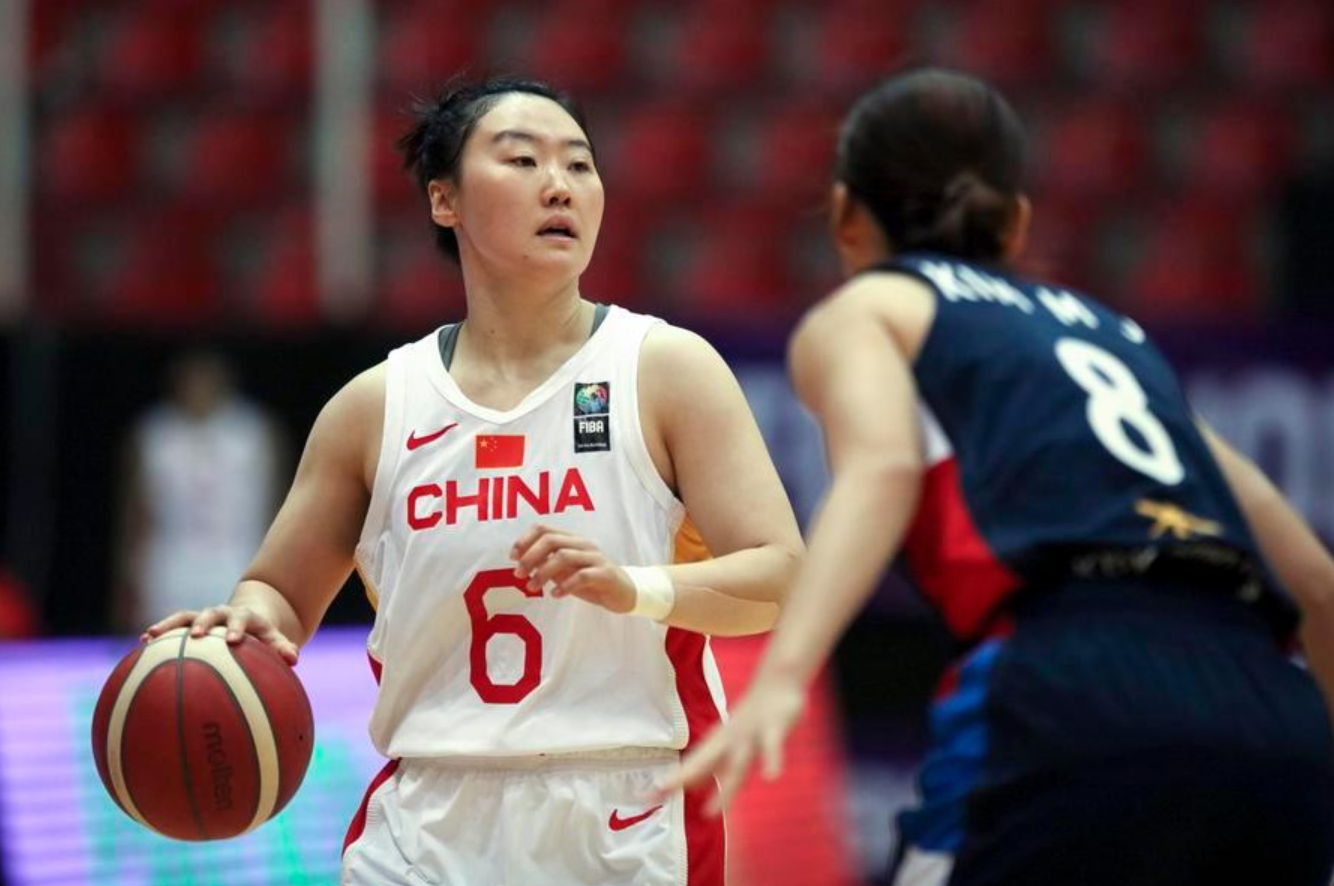
Wu (L) drives the ball during the FIBA Women's Asia Cup semifinal against South Korea in Amman, Jordan on Oct. 2, 2021. (Photo by Mohammad Abu Ghosh/Xinhua)
For many athletes, such an injury can seriously alter — if not permanently end — a career.
After surgery and rehabilitation, she initially responded with optimism. The forced pause, she believed, might offer some balance after years of nonstop competition between national team duty and the WCBA.
"People always have ups and downs," she said. "I could rest, spend time with family, reset and come back."
Her recovery from the first surgery progressed smoothly, reinforcing her belief that a return to form was within reach.
Then came the second blow.
In June 2023, during a training session as she neared a comeback, Wu tore the ACL in her right knee.
"I hadn't even officially returned to the court, and I went down in the same way again," she said. "That made me feel desperate."
Before the injuries, Wu had rarely been sidelined.
Coaches and trainers consistently praised her physical condition. But, after the second tear, uncertainty replaced expectation.
Walking became difficult. Daily life, once effortless, required assistance.
Watching others play from afar, she was forced to confront an unfamiliar identity as an athlete separated from the game.
Struggle
Wu, who grew up in Fuxin in Northeast China's Liaoning province, had shown athletic promise from an early age. She ran fast, skated well and drew attention from multiple sports programs, with coaches from different disciplines trying to recruit her.
But when her father asked what she wanted to pursue, the girl's answer was immediate: basketball.
"At the time, I didn't have big ambitions like making the national team," she said. "I just loved playing."
That love supported her as she left home at a young age to pursue basketball, and it also became her anchor through the darkest period of her career.
To shorten the recovery timeline, Wu made a bold medical decision during her second surgery, opting for an artificial ligament implant.
Doctors warned that it would carry greater risk and long-term uncertainty than traditional reconstruction using the body's own tissue.
"If I didn't do it, I would face another long recovery period," she said. "Basketball has given me so much. I was willing to give something back."
The road back, however, was grueling.
In training, she sometimes struggled with basic movements, even simple jumps onto a 10-centimeter platform that children could complete easily.
Repetition bred doubt, and there were moments when she questioned whether she would ever return to the elite stage.
Driven more by inner resolve than external examples, Wu leaned into solitude during rehabilitation, spending 438 days away from competition while rebuilding herself physically and mentally, step by step.
"I always place responsibility on myself," she said.
"As long as I am still here, and mentally strong, I can face anything."
Rebirth
Her return began quietly, without fanfare.
Last season, she left Shanxi Flame after nine years and joined Xinjiang Magic Deer. The transition coincided with her ongoing physical rebuilding and a team still trying to find its shape.
The turning point came in the offseason, when she trained under former China women's national team head coach Zheng Wei with the Guangdong squad for China's 15th National Games. Immersed in high-intensity competition throughout the summer, she went through a physically demanding, but transformative period that gradually restored both her fitness and confidence, ultimately helping her team win the title.
By the 2025-26 WCBA season, Xinjiang had emerged as one of the league's surprise contenders.
Led by veterans including Wu, Wang Xuemeng and Zhang Qifang, the team steadily advanced through the season and into the semifinals.
Wu played a central role, averaging 17 points and 8.9 assists per game, while serving as both the primary initiator and offensive organizer.
"I thought I would improve, but I didn't expect these awards," she said. "It's an affirmation. I'm grateful to my teammates."
Before each game, her primary wish is simply to come through unscathed, but once the ball is tipped, caution disappears and competitive instinct takes over.
"I've made peace with the injuries," she said.
"If you keep dwelling on the past, you're wasting the present version of yourself."
The injuries have also reshaped how she sees her role. Once focused mainly on her own performance, she now sees herself as a connector and mentor.
On the sidelines, she often breaks down tactical details for younger teammates and emphasizes injury prevention, urging them to value their bodies.
As Chinese women's basketball continues to evolve, and younger players rise through the system, Wu acknowledges that her national team role may be changing. Instead, she is focused on something simpler and harder to lose — her love of the game.
"Anyone who truly loves something should have something to pursue," she said. "If someone has gone through similar difficulties as me, I hope they can stand back up, too."


 京公网安备 11010802027341号