 Share:

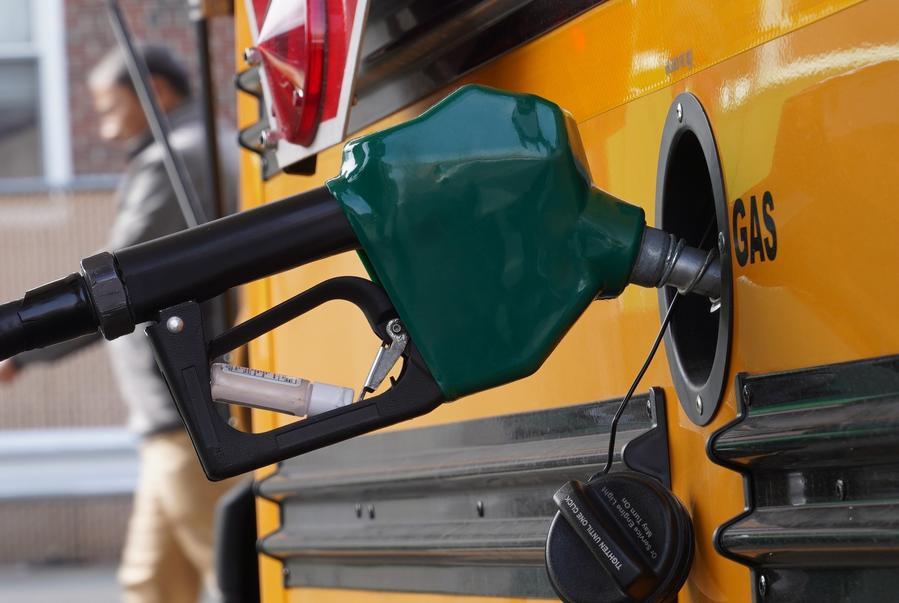
U.S. prices for most goods and services surged in April, according to data released Tuesday by the U.S. Bureau of Labor Statistics. [Photo/Xinhua]
U.S. prices for most goods and services surged in April, according to data released Tuesday by the U.S. Bureau of Labor Statistics.
The Consumer Price Index increased at a seasonally adjusted 0.6 percent month on month and 3.8 percent year on year, according to the data. Stripping out food and energy, the core Consumer Price Index ticked up 0.4 percent and 2.8 percent, respectively.
The year-on-year headline rate of inflation hit the highest level since May 2023.
Many analysts said the war on Iran is to blame, as prices have increased as a result of higher oil prices due to the situation in the Strait of Hormuz, through which some 20 percent of the world's oil flows.
Dean Baker, co-founder of the Center for Economic and Policy Research, told Xinhua: "The war has sent oil prices higher and we are beginning to see ripple effects in other areas."
"Prices are now outpacing wages, meaning that workers are on average worse off than they were a year ago," Baker said.
Prices of energy, which surged 3.8 percent, comprised over 40 percent of the headline inflation increase, with the cost of food climbing 0.5 percent month on month. That put the 12-month increase in energy up 17.9 percent, while food inched up 3.2 percent.
The gasoline index rose 28.4 percent year on year. Prices of meals at home climbed 0.7 percent -- the largest month on month gain since August 2022.
While inflation in energy -- especially gasoline -- has grabbed major headlines, other sectors also contributed to driving prices higher.
The cost of shelter increased 0.6 percent after tamping down a tad in previous months, signaling that inflation is not just due to the Iran conflict.
The apparel sector, which is sensitive to inflation, rose 0.6 percent, while air tickets climbed 2.8 percent, with an annual gain of 20.7 percent. Tariffs also hit sectors including household furnishings, which were up 0.7 percent.
The price of new vehicles dropped by 0.2 percent while costs for used vehicles were flat.
Medical care costs decreased by 0.1 percent, with hospital services being down 0.3 percent.
Health insurance costs came down a moderate 0.4 percent, with vehicle insurance rising 0.1 percent.
Analysts believe that decreasing tariffs and ending the war on Iran are the only two actions that can be taken in the short run to tamp down inflation.
Gary Hufbauer, a nonresident senior fellow at the Peterson Institute for International Economics, said: "Those are the only two things (U.S. President Donald) Trump can do in the short run. Over a longer time period, he could curb the federal budget deficit by cutting spending. None of that will happen."
Inflation began to take hold in the United States in 2021, during the previous administration.


 京公网安备 11010802027341号