Share:

This year's Government Work Report, delivered during the "two sessions" — annual meetings of the National People's Congress and the National Committee of the Chinese People's Political Consultative Conference — has set clear the overall requirements, policy orientation and key tasks for China's economic and social development in 2026, which marks the beginning of the 15th Five-Year Plan period (2026-2030).
A group of new phrases and expressions have been included in the report, outlining the country's consistent pursuit of high-quality development, which highlights the people-centered philosophy, technological innovation, green transition, efficiency and sustainability.
Here, we take a closer look at some of these new buzzwords to help readers better understand China's socioeconomic development priorities and trends for the year.
Income growth plan for urban and rural residents (城乡居民增收计划)
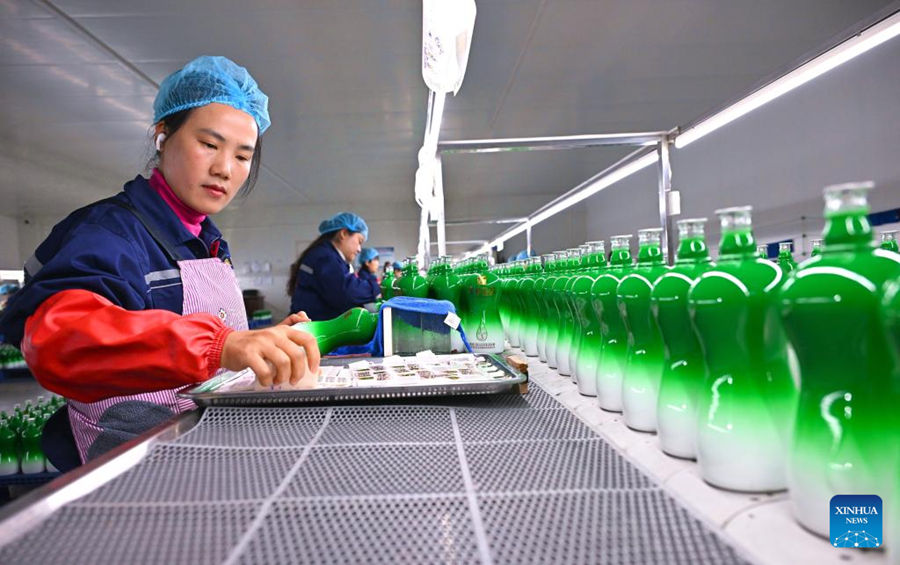
Workers at a glass plant in Renshou county, Meishan city, Sichuan province, Feb. 24, 2026. [Photo/Xinhua]
In 2026, China will formulate and implement an income growth plan for urban and rural residents and roll out a range of practical measures to boost the earnings of low-income groups, increase property income, and refine the remuneration and social security systems.
The plan was first explicitly noted in the Recommendations of the Central Committee of the Communist Party of China for Formulating the 15th Five-Year Plan for National Economic and Social Development adopted in October 2025. It showcases a people-centered development philosophy to consistently improve people's well-being, ensure all urban and rural residents' willingness and ability to spend, and steadily promote common prosperity for all. The growth plan stresses that the country will effectively increase the earnings of low-income people, steadily enlarge the middle-income group, make reasonable adjustments to excessive incomes, and eliminate illicit gains, all with the aim of facilitating the formation of an oval-shaped structure of distribution.
This year, China will promote high-quality full employment, and create over 12 million new urban jobs. The country will also deepen the reform of the income distribution system, raise the share of personal income in the distribution of national income and give more weight to work remuneration in primary distribution, leverage multiple channels to increase the property income of both urban and rural residents and promote further redistribution by means of taxation, social security and transfer payments.
Promote new forms of literature and art for the general public in the internet age (繁荣互联网条件下新大众文艺)
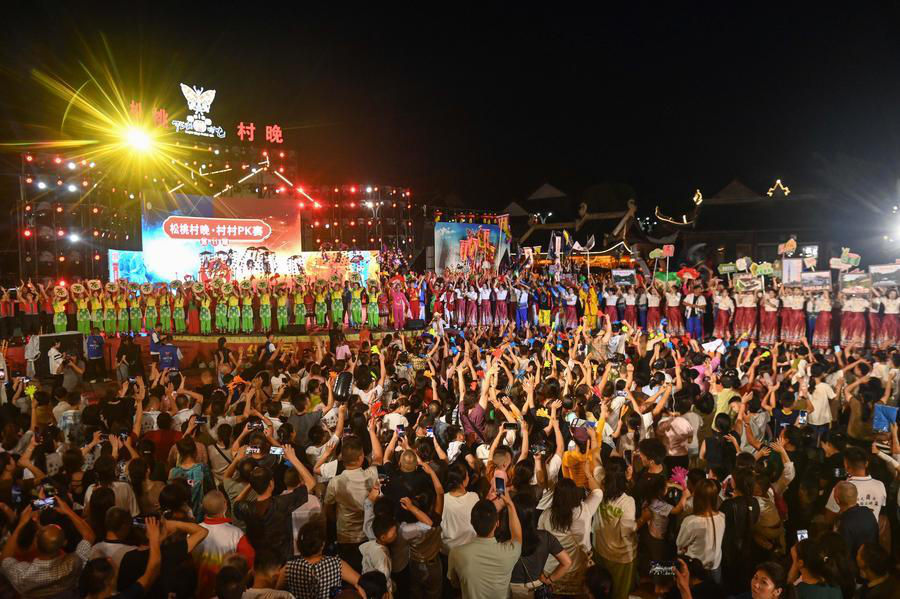
People attend a village gala in Songtao Miao autonomous county, Guizhou province, June 28, 2025. [Photo/Xinhua]
The Government Work Report introduced the phrase "promoting new forms of literature and art for the general public in the internet age" this year for the first time.
The rapid development of the internet and artificial intelligence has enabled more people from all walks of life — including IT professionals, farmers, workers and delivery couriers — to participate in artistic creation and share their works on various platforms. The public is no longer satisfied with being appreciators, and instead want to be active creators of art and literature, which has spurred the development of new art forms such as web literature, micro-dramas, digital music and talk shows.
In 2025, China's online literature market surpassed 50.21 billion yuan ($7.17 billion) in revenue, up 16.6% year on year, and the number of writers soared by nearly 1.5 million to 32.69 million. In 2025, the market size of micro-dramas reached 108 billion yuan, a year-on-year increase of over 110%.
The expression has been included in the Outline of the 15th Five-Year Plan for National Economic and Social Development, stressing that literature and art are from the people, for the people and of the people, and everybody can have a stage for creation and talent show.
New forms of smart economy (智能经济新形态)

A person uses the DeepSeek app on a cellphone, Feb. 17, 2025. [Photo/Xinhua]
China has made the creation of new forms of smart economy a major task for this year. Efforts will be made to advance and expand the AI Plus Initiative, build a vibrant open-source ecosystem, implement new infrastructure projects on hyper-scale intelligent computing clusters and coordinated development of computing capacity and electricity supply, expedite the development of satellite internet, introduce an upgraded 5G Plus Industrial Internet Initiative, better utilize data resources, and improve AI governance.
New forms of smart economy, based on AI with three key elements of computing power, data and talent, hold enormous potential. They have the potential to greatly empower a variety of sectors, including the industrial internet, manufacturing, transportation, agriculture, healthcare, logistics and services.
Fostering new forms of smart economy will drive the upgrading of traditional industries, as well as a qualitative leap in productive forces, profound changes in production methods, emergence of new business formats and application scenarios, and ultimately, high-quality economic development. They will also help reduce development gaps between regions, urban and rural areas, and industries through technological inclusivity, and improve access to basic public services to ensure the fruits of development benefit all people.
In 2025, the core AI industry in China exceeded 1.2 trillion yuan in scale, with more than 6,200 relevant enterprises, according to official data.
New infrastructure projects (新基建工程)
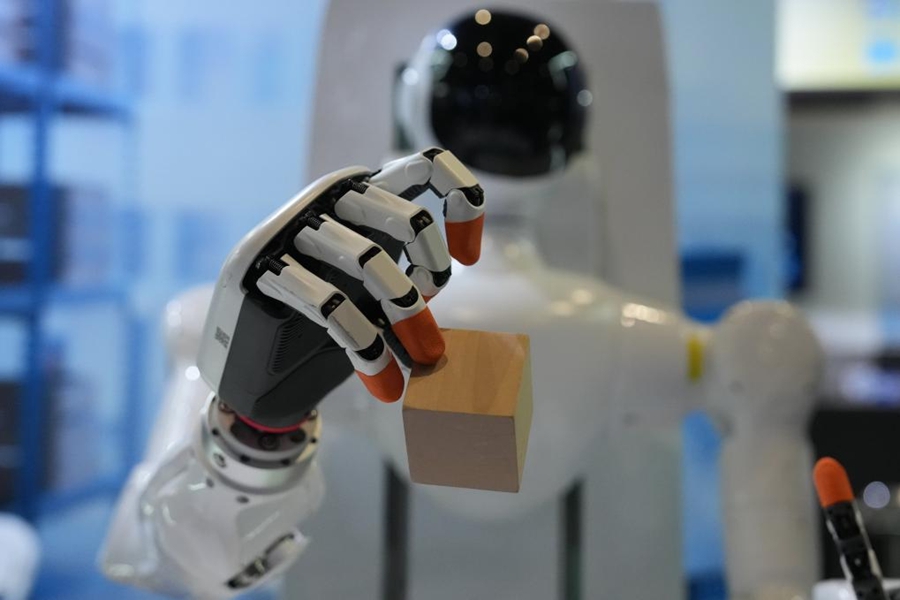
A smart robotic hand demonstration at the 2025 World Internet Conference Light of Internet Expo in Wuzhen, Zhejiang province, Nov. 6, 2025. [Photo/Xinhua]
In contrast to traditional infrastructure such as roads, railways and bridges, new infrastructure, or new types of infrastructure, refers to technological innovation-driven infrastructure systems, such as 5G networks, artificial intelligence, industrial internet, big data centers, ultra-high voltage power transmission, intercity high-speed railways, urban rail transit and NEV charging piles. These projects are designed to support the digital, intelligent and low-carbon transformation of the economy to foster new quality productive forces and high-quality development.
China will launch new infrastructure projects on hyper-scale intelligent computing clusters and coordinated development of computing capacity and electricity supply this year, according to the Government Work Report. The country will step up integrated monitoring and distribution of computing capacity across the country and support the development of public cloud services. So far, China has built 42 ten-thousand-GPU intelligent computing clusters. The country's total intelligent computing scale has surpassed 1,590 EFLOPS, ranking among the global leaders. This progress has greatly supported the rapid development of the country's AI industry.
As highlighted in the Outline of the 15th Five-Year Plan (2026-2030), the country will promote construction of new types of infrastructure with appropriate forward planning. It will promote the layout and construction of new infrastructure projects with intensive, efficient utilization, focusing on the "eastern data, western computing" project to develop a multi-tiered computing infrastructure system and a national integrated computing network, the national blockchain network, satellite internet, information and communication networks, data infrastructure, low-altitude infrastructure, as well as the digital and intelligent upgrading of infrastructure in transportation, energy, water resources and other sectors.
Future energy (未来能源)
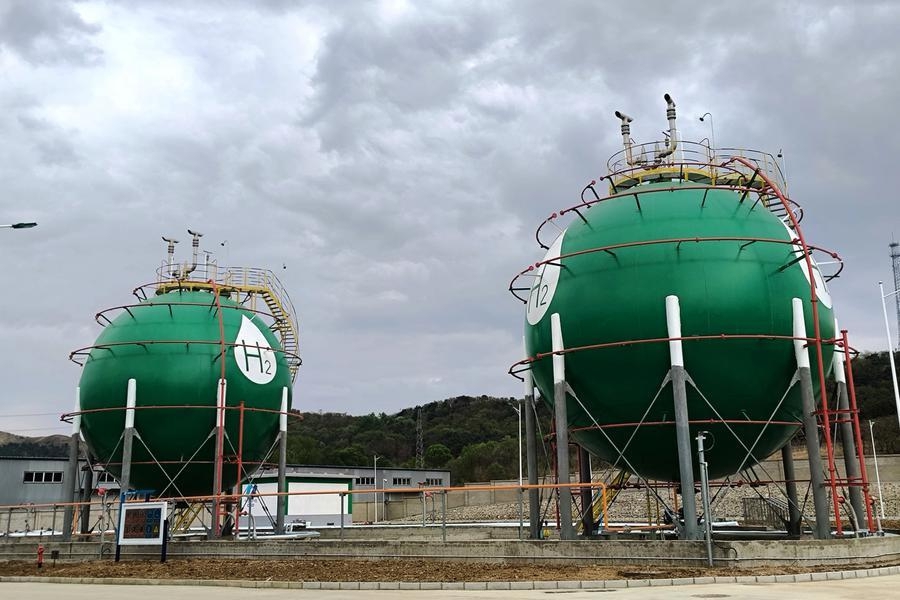
A wind power off-grid hydrogen production project in Tieling county, Liaoning province, July 30, 2025. [Photo/Xinhua]
This year's Government Work Report states that China will nurture industries of the future such as future energy, quantum technology, biomanufacturing, embodied AI, brain-computer interfaces and 6G technology.
Future energy refers to a clean, safe, efficient, smart, low-carbon or even zero-carbon energy ecosystem through disruptive innovation, designed to progressively replace traditional fossil fuels, and address the challenges of climate change, energy security and sustainable development. It encompasses not only wind and solar power, but controlled nuclear fusion, green hydrogen, new types of long-duration energy storage, next-generation renewables and digital transformation in the energy sector.
"China Services" brand (“中国服务”品牌)
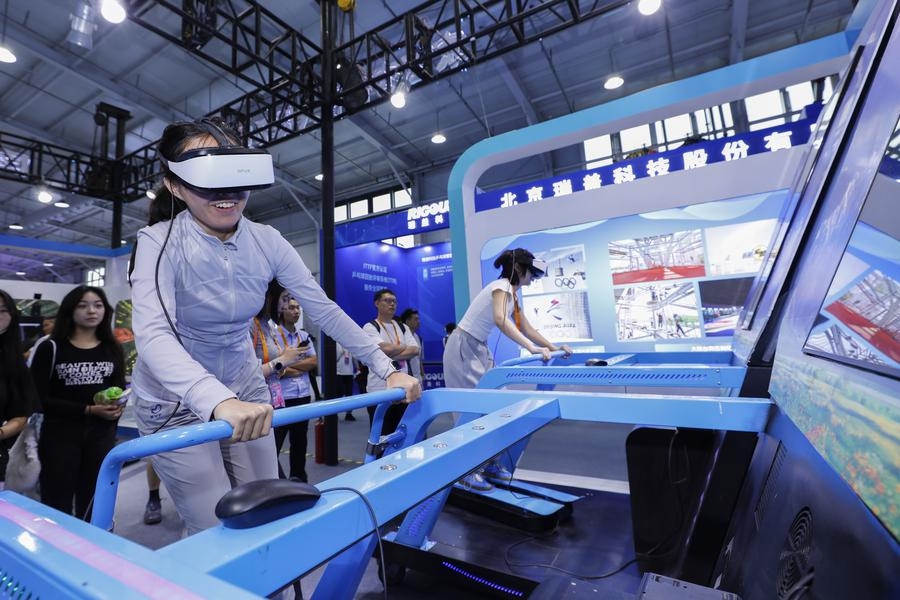
Visitors experience VR skiing during the 2025 China International Fair for Trade in Services in Beijing, Sept. 10, 2025. [Photo/Xinhua]
China will enhance the capacity and quality of the service sector, improve national standards for the service sector, and cultivate the "China Services" brand. This year was the first time that the term was added to the Government Work Report, signifying greater importance attached by the country to the largest pillar of national economy.
Official data shows that in 2025, the added value of China's services sector surpassed 80 trillion yuan for the first time, making up 57.7% of the national GDP and contributing 61.4% to economic growth. The sector, which accounts for around half of total employment, is expected to top 100 trillion yuan during the 15th Five-Year Plan period (2026-2030).
From "Made in China" to "Created in China" and the "China Services" brand, the country is striving to enhance the international competitiveness of its services sector. In 2025, China's exports of services trade reached 3.63 trillion yuan, a year-on-year increase of 14.2%, demonstrating strong growth momentum.
The country will promote the development of producer services such as financial services, information technology, modern logistics, intellectual property services, and inspection and testing, which serve as essential boosters for upgrading the manufacturing industry, as well as enhance the quality, diversity and accessibility of consumer services to meet people's needs for better lives.
Satellite internet (卫星互联网)
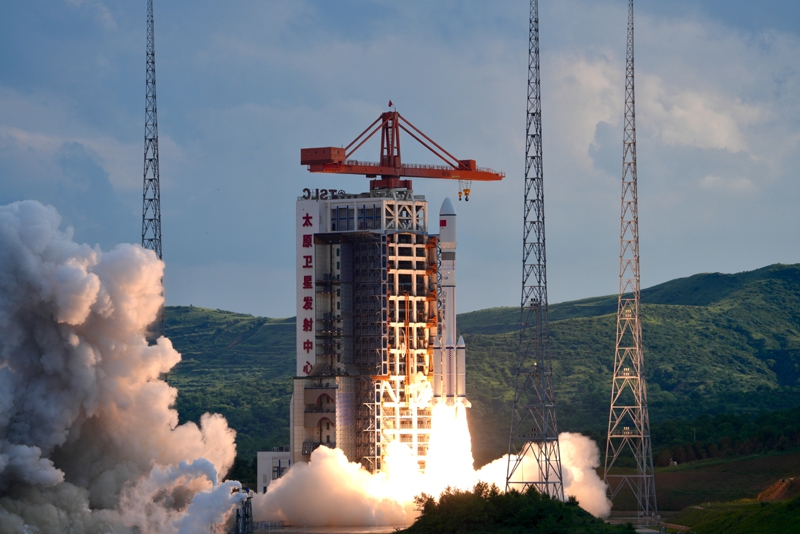
A modified Long March-6 carrier rocket carrying low earth orbit satellites blasts off from the Taiyuan Satellite Launch Center in Shanxi province, July 27, 2025. [Photo/Xinhua]
China will expedite the development of satellite internet as a new growth driver this year.
Satellite internet is a communication network system that uses artificial satellites as signal relay stations to provide users with broadband internet access services. At present, it mostly refers to low-orbit broadband satellite internet achieved through low-earth-orbit satellites operating between 300 and 2,000 kilometers above the Earth's surface.
Satellite communication has become a key strategic direction for global communications, serving as an important technological foundation for 6G communications, while also providing essential technical support for the development of emerging fields such as autonomous driving, low-altitude economy, the Internet of Things, and space-based computing power.
Driven by factors such as increasing policy support, accelerated progress in large-scale constellation construction and strong demand in the commercial satellite market, China's satellite internet industry reached a scale of 45.41 billion yuan in 2025, and is predicted to exceed 51 billion yuan in 2028, according to the Center for Internet of Things Industry Research of market research firm CCID Consulting.
World-class city clusters (世界级城市群)

The skyline of Beijing, May 3, 2026. [Photo/Xinhua]
China will encourage the Beijing-Tianjin-Hebei region, the Yangtze River Delta, and the Guangdong-Hong Kong-Macao Greater Bay Area (GBA) to build themselves into world-class city clusters.
World-class city clusters are highly integrated, dynamic and competitive urban regions that drive national economy and global innovation. Official data showed that these three Chinese regions, as major engines of economic growth, accounted for over 40% of national GDP in 2024.
The Beijing-Tianjin-Hebei region boasts strong advantages in technological innovation and whole industrial chain collaboration for integrated development. Beijing's edge in sci-tech R&D is combined with Tianjin's strengths in high-end manufacturing and port-oriented industries, and Hebei undertakes the industrial transfer of the two cities while developing its own distinctive industries. The Yangtze River Delta, which contributed nearly a quarter of national GDP in 2025, has the most complete industrial system in China and even the world, spanning from traditional industries with competitive edges to emerging strategic sectors and future frontier industries. The GBA is one of China's most open and economically vibrant regions, powered by Hong Kong's status as an international financial hub, strong foreign trade, and significant innovation capacity with advanced manufacturing, strategic emerging industries, maritime economy and modern services.
The three regions will be developed into world-class city clusters with outstanding economic strengths and innovation vitality, amid China's efforts to boost high-quality development and core global competitiveness.


 京公网安备 11010802027341号