 Share:

The Shangyi Pumped Storage Power Station is scheduled to connect its first turbine to the grid by late May, a milestone that will bolster energy stability across the Beijing-Tianjin-Hebei region and advance China's vision to build a new electric power system under its 15th Five-Year Plan (2026-2030).
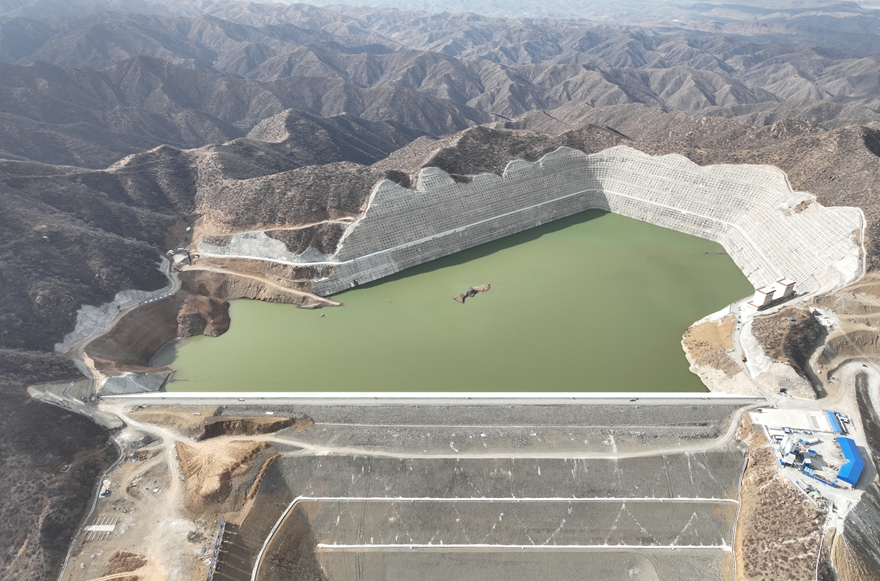
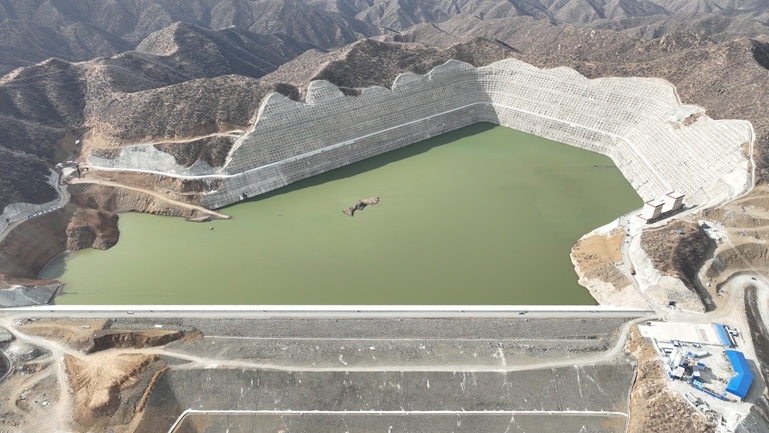
The Shangyi Pumped Storage Power Station during construction in Shangyi county, Hebei province, April 8, 2026. [Photo provided to China.org.cn]
The facility, nestled in the mountains of northern Hebei province, has a total capacity of 1,400 megawatts across four units and was built at a cost of 9.56 billion yuan (about $1.3 billion). After the first unit goes into operation this month, the remaining three are expected to be up and running by September.
With a rated head of 449 meters — the effective height that drives the turbines — the Shangyi facility is designed to produce roughly 1.4 billion kilowatt-hours of electricity a year.
Li Qi, Party secretary of the First Branch of Sinohydro Bureau 4, said, "Once the first unit becomes operational, it will help the Beijing-Tianjin-Hebei grid balance supply and demand during peak periods and ensure more reliable delivery of clean energy to key areas, including the Xiong'an New Area."
The station sits in Zhangjiakou, China's largest non-hydro renewable energy base, where more than 42 gigawatts of wind and solar account for 88% of total installed capacity. That heavy reliance on intermittent sources makes storage a pressing need. The plant works like a giant battery, pumping water uphill when power is abundant and releasing it through turbines to generate electricity when demand surges.
"Pumped storage can smooth out the volatility of wind and solar, and it does so at a cost lower than battery storage," said Liu Ke, dean of the Clean Energy Institute at the Southern University of Science and Technology. "It is both a giant rechargeable battery for the grid and a stabilizer for the new electric power system."
These important roles have driven a rapid expansion of pumped storage capacity across China in recent years, making the country the world's largest builder and operator of the technology.
"China's pumped storage sector has grown into the world's largest," said Li Yang, Shangyi project manager with PowerChina Beijing Engineering Corporation. "By the end of March, operational capacity had reached 67 gigawatts, with more than 200 gigawatts under construction or approved. Key equipment localization has now surpassed 90%."
Under the 15th Five-Year Plan, China has outlined that "sound plans should be drawn up for pumped-storage hydropower," with new projects to be built in areas where site conditions are favorable and demand for load regulation is strong. The plan sets a target of adding roughly 100 gigawatts of pumped storage capacity during this period.
The technology's strategic importance was further elevated in April 2026, when a high-level Party meeting called for the coordinated construction of "six networks" — water infrastructure, a new power grid, computing power, next-generation communications, urban pipelines and logistics.
"Pumped storage has evolved from balancing supply and demand to anchoring full system stabilization," Li Yang said. "Its ability to regulate in both directions, respond rapidly, store energy over long durations, and operate with inherent safety makes it not just a flexible resource, but the physical foundation that guarantees reliable power for the computing power network and the logistics network." He added that pumped storage is increasingly becoming a critical link between energy distribution and broader infrastructure coordination across the six-network framework.


 京公网安备 11010802027341号