 Share:

Artificial intelligence (AI), as a representative of the new quality productive forces and a standout in China's sci-tech advancements, is now driving upgrading and innovation across industries.
This year's government work report calls for faster application of new-generation intelligent terminals and AI agents, large-scale commercial application of AI in key sectors and fields, and the cultivation of new forms and models of AI-native business.
As the country steadily advances high-quality development, its vast market and well-established industrial system are providing broad prospects for AI applications.
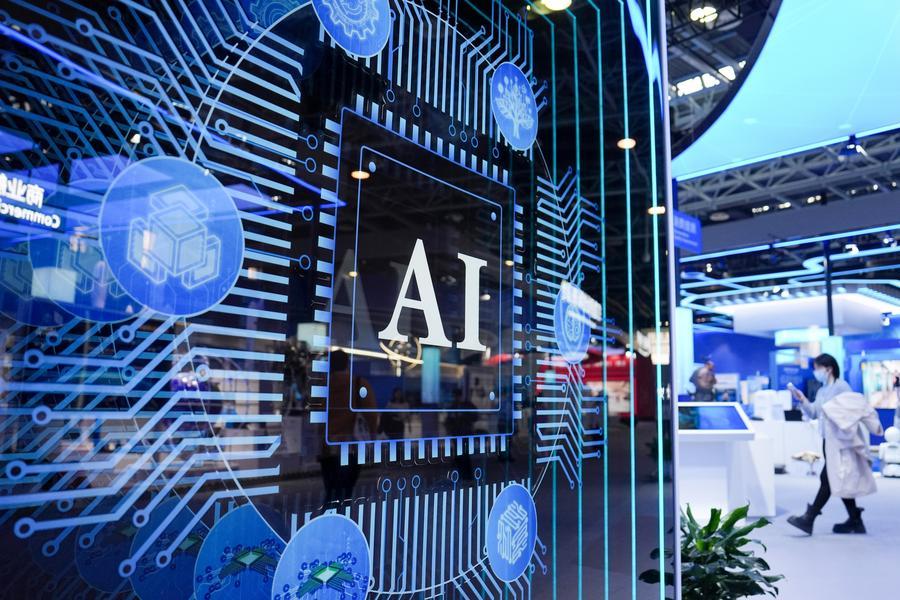
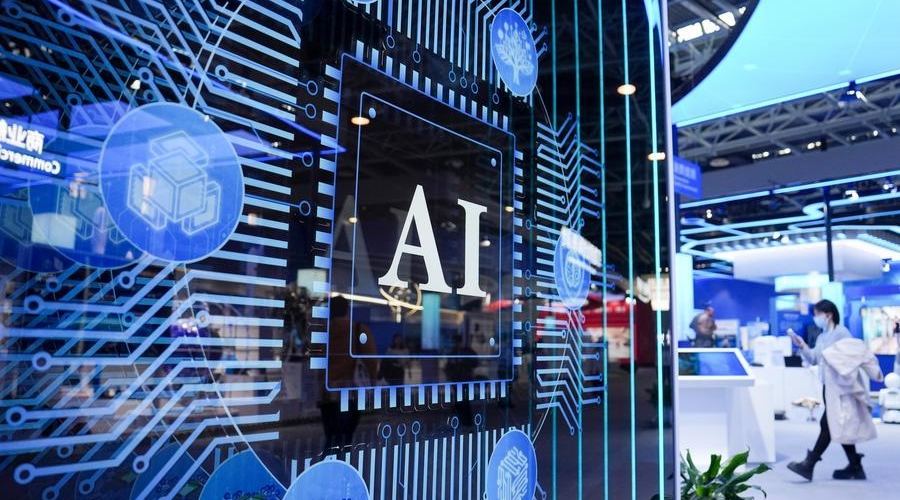
A woman visits the permanent exhibition at the Zhongguancun Exhibition Center in Beijing, capital of China, March 25, 2026. [Photo/Xinhua]
Farming tools grow "brains"
At present, rapidly developing information and AI technologies are deeply integrating with agricultural production in China. Intelligent agricultural equipment is becoming an increasingly handy "new farming tool."
Data from the Ministry of Agriculture and Rural Affairs shows that the contribution rate of agricultural science and technology progress in China had exceeded 64 percent in 2025.
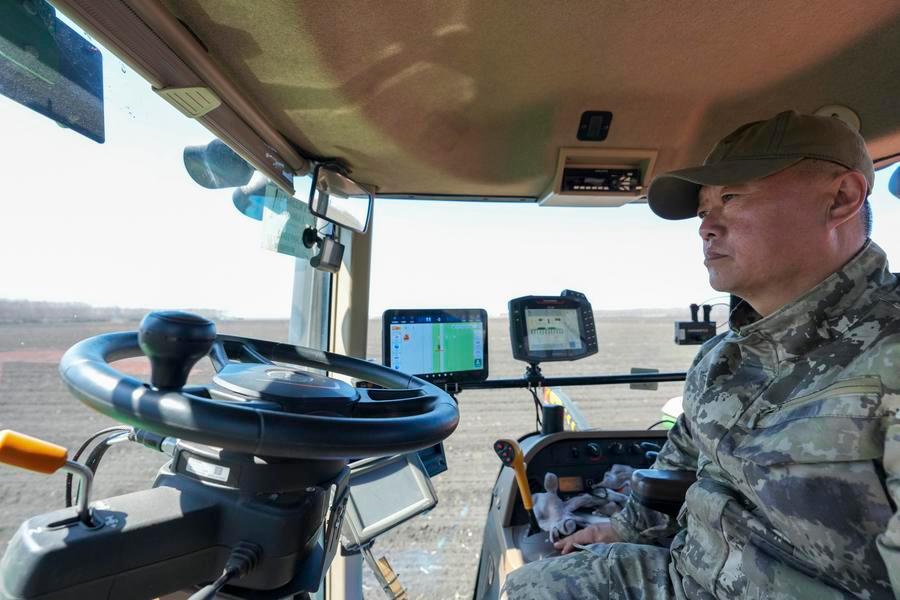
A farmer monitors the operation of an intelligent agricultural machine at its driving cab in Youyi Farm Co., Ltd. under Beidahuang Group in northeast China's Heilongjiang Province, April 28, 2026. [Photo/Xinhua]
Businesses make "Smarter money"
A dedicated "AI plus software" action will be launched to foster new business models, while open-source ecosystems will be further strengthened and basic and industrial software will benefit from intelligent upgrades.
Currently, AI, robots and digital technologies are accelerating their integration into the country's service sector.
Doctors cure in cleverer ways
From AI-assisted diagnosis to smart health platforms, China is intensifying efforts to embed AI across its evolving intelligent healthcare ecosystem, seeking to further boost efficiency and broaden access to quality medical services.
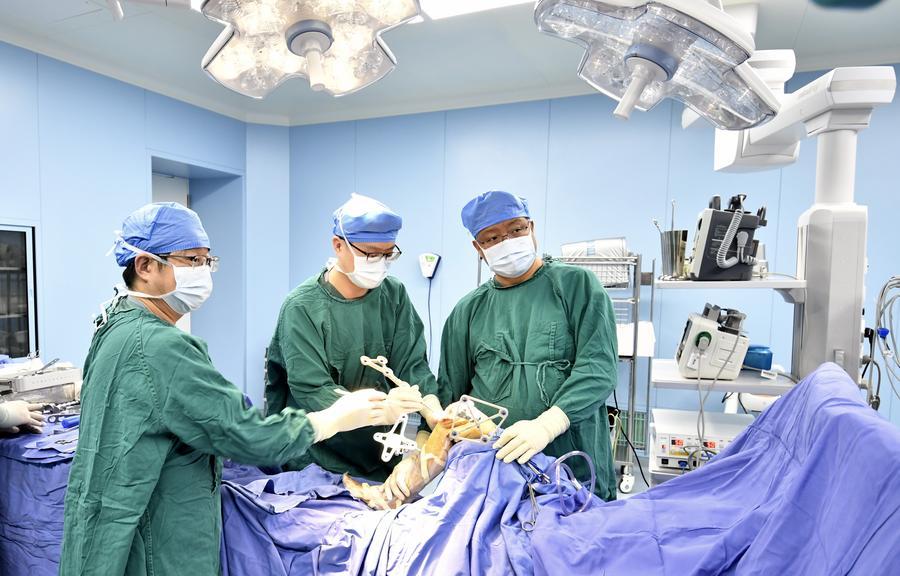
Experts perform orthopedic surgery via a robotic surgical system at the Tongzhou branch of Beijing Anzhen Hospital in Beijing, capital of China, Feb. 3, 2026. [Photo/Xinhua]
AI education yields more innovative minds
Efforts are also underway to enhance science and technology education at earlier stages and integrate AI into teaching, laying the groundwork for developing innovation-driven talents.
By 2030, AI is expected to comprehensively empower high-quality development in China, with the penetration rate of next-generation intelligent terminals and agents exceeding 90 percent, making the intelligent economy a key growth driver.


 京公网安备 11010802027341号