 Share:

The World Science Fiction Archive was launched in Shenzhen, Guangdong province, on May 20 to collect and preserve science fiction books, documents and related derivative products.
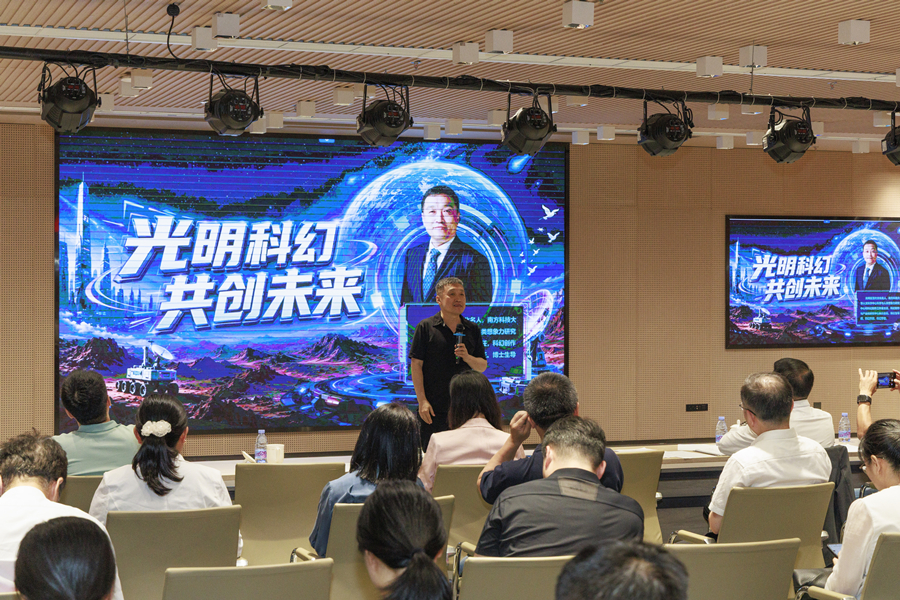
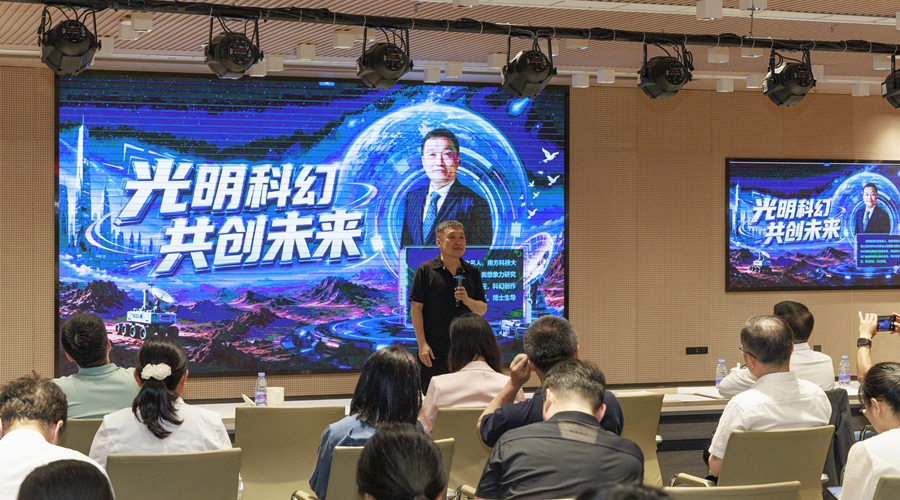
Wu Yan, founder and curator of the World Science Fiction Archive, speaks at the launch event in Shenzhen, Guangdong province, May 20, 2026. [Photo provided to China.org.cn]
Wu Yan, founder and curator of the archive, said the building of the archive was inspired by Yu Junxiong, former editor-in-chief of the popular science magazine "We Love Science." During a conversation five years ago in Beijing, Yu expressed his fears that the large amount of materials on the history of science popularization and sci-fi in China that he and the older generation had collected might be lost in the future. As such, he asked Wu if he could build an archive to preserve them.
"To make this happen, I have been working tirelessly for years," Wu said. "Some private collectors have indeed gathered such materials before. But donors have their concerns. The most important issue for them is how to ensure that their donations will be properly preserved and widely used. Today, this problem has been solved. The World Science Fiction Archive is going to take on this mission — and go even further to do much more."
Wu hopes the archive can become a "sacred land for sci-fi researchers and creators," explaining that visitors will be able to see how Chinese and global science fiction literature has developed. The lessons learned from this development process will help researchers better understand the genre and provide creators with more resources for innovation.
He extended an invitation to all publishing institutions, writers and enthusiasts around the world to donate their works and collections to the archive, promising fair compensation per international practices. He also said they would partner with other sci-fi preservation institutions to exchange materials and turn Shenzhen's Guangming district into a premier hub for sci-fi research and creation.
Also unveiled at the event at Guangming District Library was the Guangming Research Center for Science Fiction and Future Literature, which will focus on future literary creation, the development of the sci-fi economy and urban strategic studies in imagination culture, with the aim of becoming a frontrunner and experimental hub for cutting-edge future cultural research.
The two platforms, under Wu Yan's supervision, will leverage their combined strengths to coordinate efforts across multiple dimensions — including academic research, original creation, industrial integration and talent cultivation — to comprehensively promote the steady development of the future cultural industry in Guangming district.
Wu, a sci-fi scholar, writer and professor at the Southern University of Science and Technology, has signed an agreement with the district to expand his sci-fi projects and initiatives there. He said the district's strong industrial base and rich cultural atmosphere make it a high-quality environment where technology and culture can thrive together. In the future, he will leverage his professional resources and industry influence to focus on sci-fi literary creation, youth imagination education and sci-fi industry cultivation, helping Guangming develop into a distinctive hub where technology and humanity are seamlessly integrated.
An exhibition about Wu's nearly five decades of efforts and achievements in the sci-fi field also opened at the local library, featuring academic books, sci-fi novels and sci-fi educational materials, as well as some of the domestic and international awards he has won.
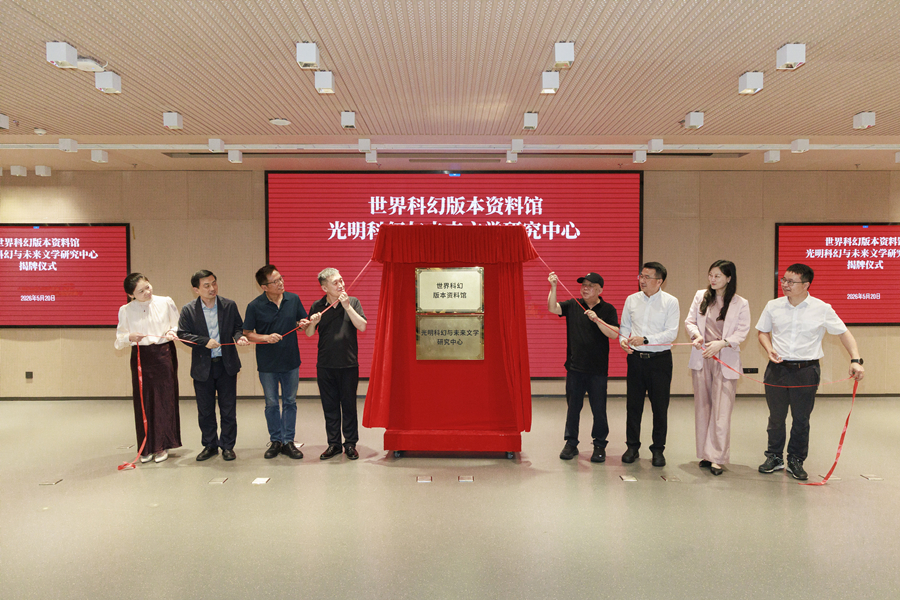
Wu Yan (fourth from left), local leaders and guests unveil plaques for the World Science Fiction Archive and the Guangming Research Center for Science Fiction and Future Literature at the launch event in Shenzhen, Guangdong province, May 20, 2026. [Photo provided to China.org.cn]
Wu noted that Chinese sci-fi literature has grown rapidly since the turn of the millennium. In 2025, a total of 727 titles were published and 190,000 new online works were released. Overseas, Chinese sci-fi novel publications also hit a record high. "The Three-Body Problem," for example, has sold 30 million copies worldwide in over 40 languages. The reputation of Chinese sci-fi now far surpasses that of mainstream literature, and young people's enthusiasm for sci-fi writing is extremely high.
Wu shared his vision on how to promote sci-fi education, theoretical exploration of science fiction and future literature — which is a key component of independent knowledge innovation in Chinese sci-fi literature — and the development of new works, including an Asia-Pacific future literature anthology and several sci-fi theater productions. He also spoke about his hopes for more unique projects spanning books, video games, toys and other merchandise to be born in Guangming district.
"All of this work needs to start today," he said.


 京公网安备 11010802027341号