 Share:

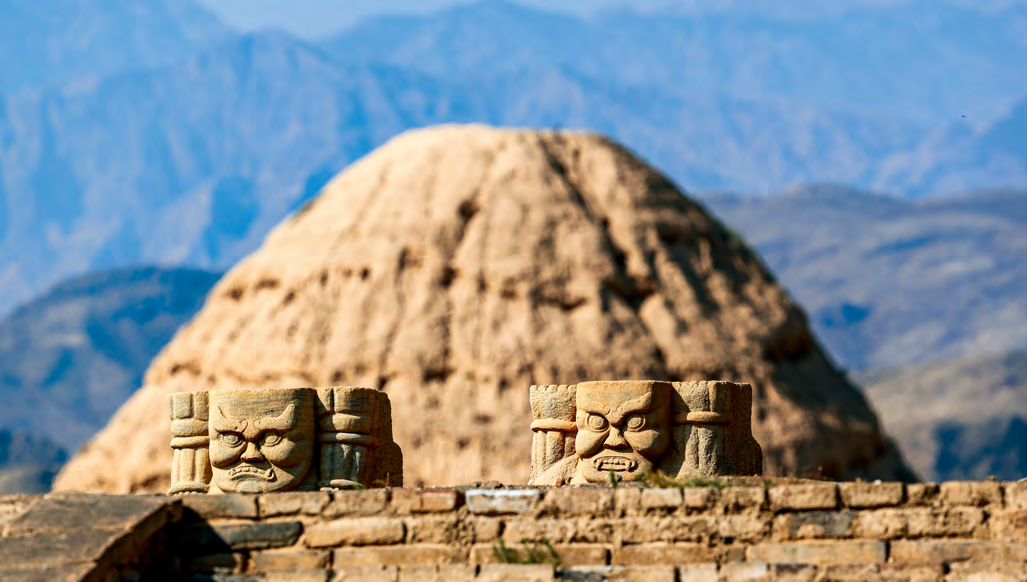
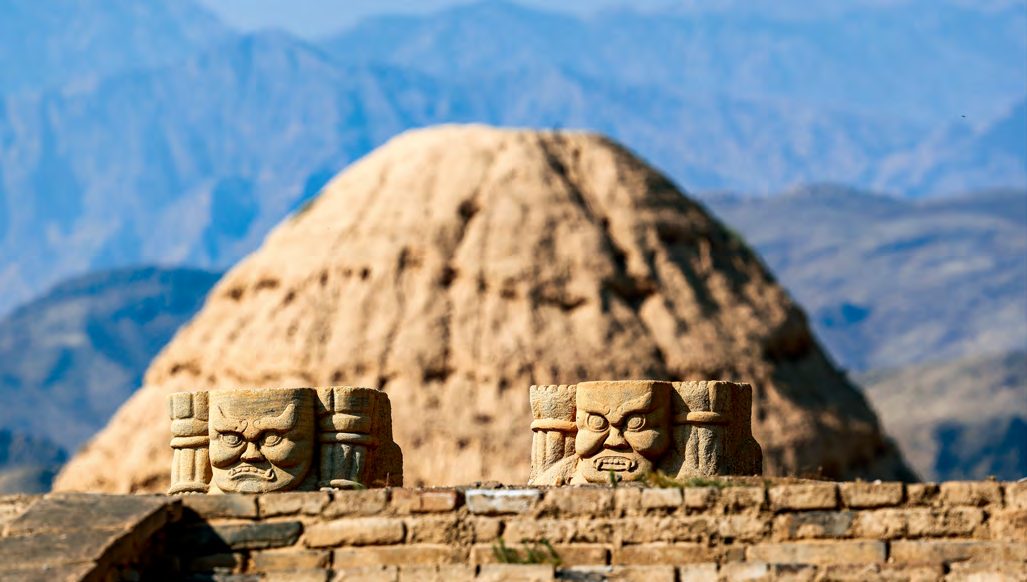
Carved stone pedestals in Mausoleum No. 3 of the Xixia Imperial Tombs. (Photo by Xu Xun/China Pictorial)
A massive royal cemetery from the Xixia Dynasty (1038-1227), established by the Tangut people, rests at the foot of the Helan Mountains in northwestern China's Ningxia Hui Autonomous Region. Covering nearly 40 square kilometers, it features nine imperial mausoleums, 271 subordinate tombs, and 32 flood control works as well as a northern architectural complex spanning 5.03 hectares. On July 11, 2025, the Xixia Imperial Tombs were inscribed on the World Heritage List during the 47th session of UNESCO's World Heritage Committee, bringing China's total count of World Heritage sites to 60.
According to the World Heritage Committee, the Xixia Imperial Tombs show evidence of cultural and religious influences from multiple sources ranging from the traditions of the Tang (618-907) and Song (960-1279) dynasties to the beliefs and funerary customs of the Tanguts, where adherence to Buddhism dominated and ancestral traditions persisted. These characteristics are reflected in the spatial layout, design, and architecture of the Xixia funerary complex. The site also testifies to the unique role of the Xixia Dynasty in cultural and commercial exchange along the Silk Road from the 11th to 13th century.
Following the collapse of the Xixia Dynasty, the subsequent Yuan Dynasty (1271-1368) did not compile an official history of Xixia. Due to a scarcity of historical records and the enigmatic nature of the Tangut script, the history of Xixia remains shrouded in mystery. As the largest, highest-ranking, and best-preserved archaeological site of the Xixia Dynasty ever discovered to this day, the Xixia Imperial Tombs stand as an irreplaceable testament to Xixia and its imperial lineage in Chinese history, enabling more people to learn the history of this dynasty.
The tomb complex vividly fuses diverse cultures. Its architectural layout and unearthed artifacts demonstrate a comprehensive integration spanning the material and spiritual realms as well as institutional structures and cultural practices.
Historically, the Xixia Imperial Tombs faced challenges such as natural erosion and expanding societal development. However, thanks to China's long-standing practices in cultural heritage and ecological conservation, the site has been preserved to this day. This success exemplifies the distinct Chinese approach to protecting both cultural heritage and the natural environment. As a result, the Xixia Imperial Tombs now stand with a new lease on life, showing the world the inclusiveness, diversity, and enduring vitality of Chinese civilization.


 京公网安备 11010802027341号