 Share:

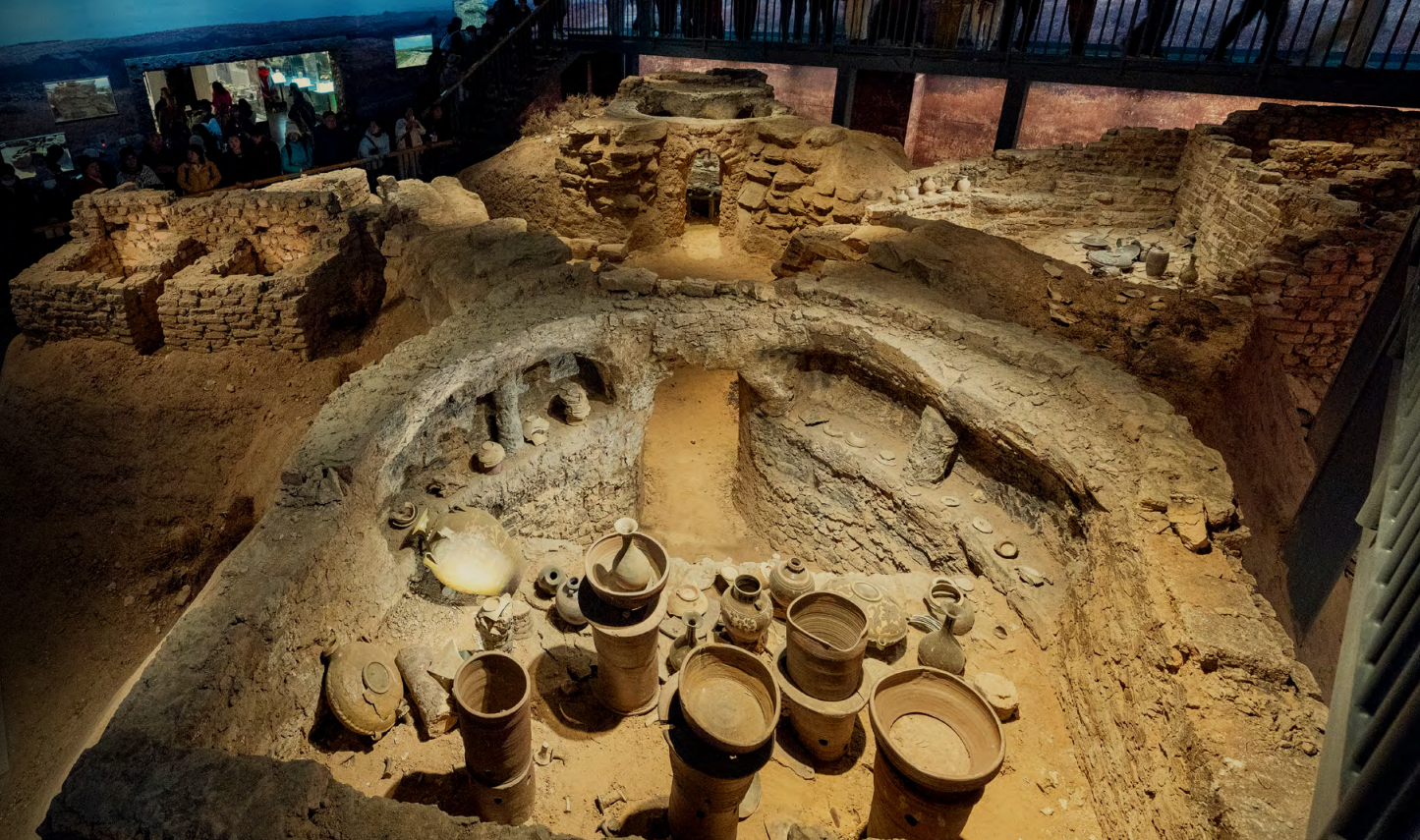
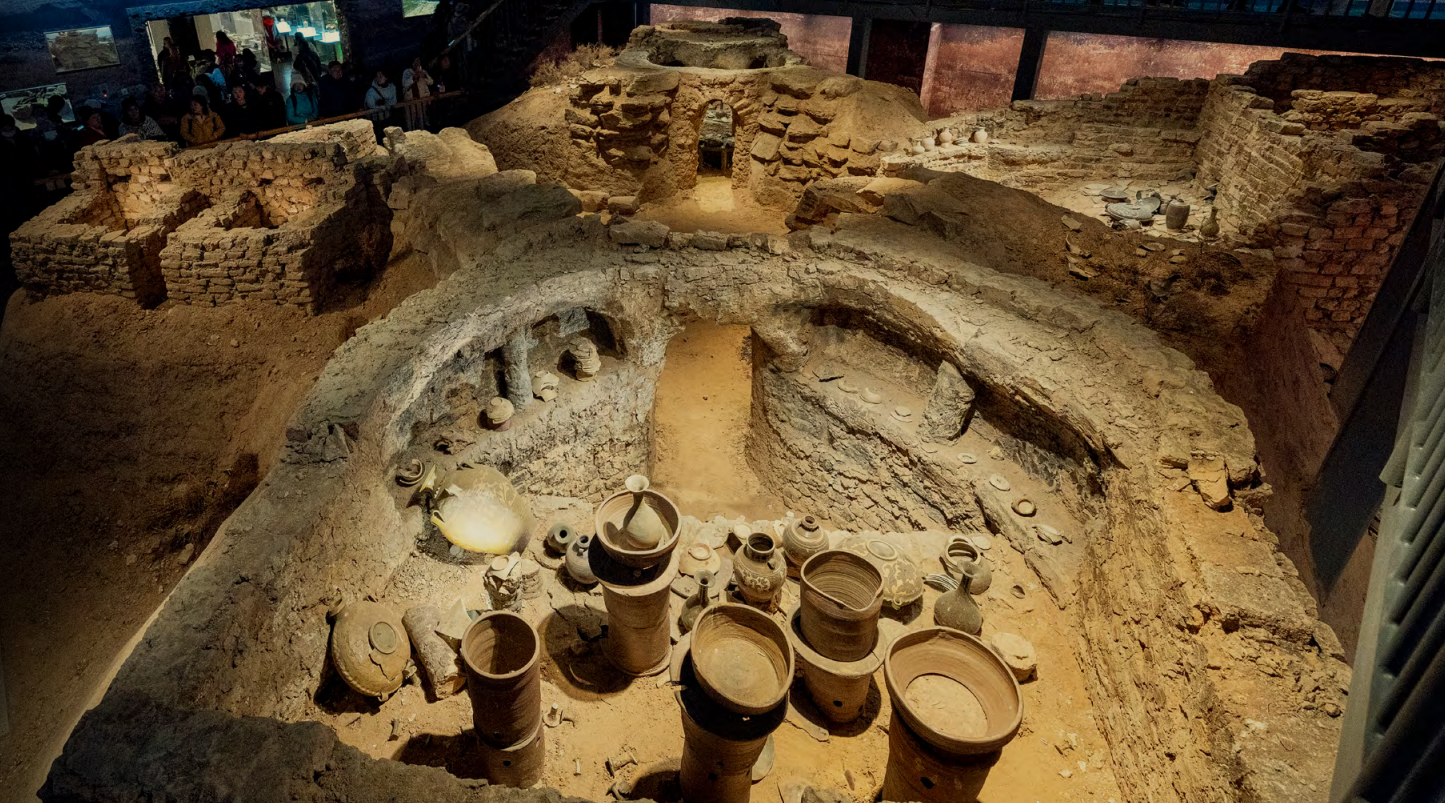
The Bailianggou Kiln, housed in the Xixia Imperial Tombs Museum, is the rare remains of a kiln from the Xixia Dynasty. (Photo by Xu Xun/China Pictorial)
In northwestern China's Ningxia Hui Autonomous Region, two cultural institutions are widely recognized as premier destinations for exploring the history of the Xixia Dynasty (1038-1227): the Xixia Imperial Tombs Museum, home to over 6,000 artifacts unearthed from these royal tombs, and the Ningxia Museum, which features the thematic exhibition "Tracing the Great Xixia."
Wang Xiaojun, director of the Ningxia Museum, said that the museum has curated a comprehensive collection of Xixia relics from across Ningxia, spanning gold and silver ware, stone tools, silk textiles, and ceramics. "These artifacts testify to the exchange, interactions, and integration among China's diverse ethnic groups, highlighting the unity in diversity that defines Chinese civilization."
Beyond Ningxia, significant Xixia artifacts are also preserved in Beijing, Gansu, and other regions. Together, these collections bridge past and present, offering modern audiences a passport to this ancient dynasty.
Shi Jinbo, an expert on the Xixia Dynasty, highlighted the critical role of artifacts in studying an ancient dynasty given limited historical records as is the case with Xixia. "For Xixia, unearthed artifacts are the cornerstone of its historical and cultural legacy," he explained. "They serve as primary references for unraveling and reconstructing the history of the ancient dynasty."


 京公网安备 11010802027341号