Share:

The World Anti-Doping Agency leadership recognized China as a strong partner as the two sides collaborated in areas including education, scientific research, and building a global anti-doping network.
With the revised International Standard for Education coming into force along with the new World Anti-Doping Code in 2027, WADA president Witold Banka and Director General Olivier Niggli were pleased that China took education "very seriously".
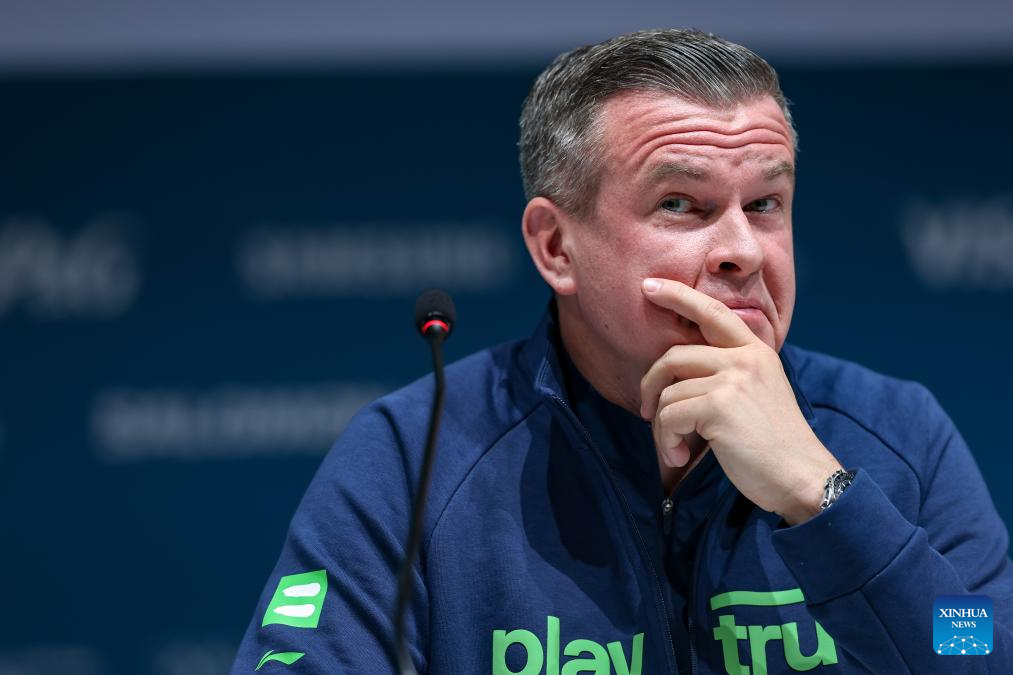
World Anti-Doping Agency (WADA) President Witold Banka attends a press conference at the main press center of the Milan-Cortina 2026 Olympic Winter Games, in Milan, Italy, on Feb. 5, 2026. (Xinhua/Zhang Cheng)
"It's very important. CHINADA is a strong partner, and the Chinese government as well. And we see the solid fundamental," said Banka, referring to the government's stance on zero tolerance on doping.
"Education is an important tool. We want to balance the system, not only catch and punish, but also prevent and support. And this is the role of education.
"So we see the new and stronger force from CHINADA to instill the culture, to strengthen the educational actions and programs, to make sure that at least aware of the responsibilities and the rules. So education plays definitely a bigger role in the CHINADA policy," noted Banka, who is in Beijing for the WADA Asia and Oceania Intergovernmental Ministerial Meeting and Asia and Oceania Symposium from June 1 to 3.
CHINADA carried out 1259 qualification programs in 2025 alone, which translates to around 50,000 provincial-level athletes and 135,000 from sports schools passing anti-doping exams before they were allowed to participate in domestic and international competitions.
Niggli recalled the leadership's visit to the Guangdong anti-doping base last year during China's National Games in the southern province.
"Education is key for the long-term solution, especially in a country like China with such a big population, and it's very important to be able to educate as many as possible, not only the elite athletes, but also lower level and the young people coming to the market," said Niggli.
"I think CHINADA is doing a good job. During the National Games, we were presented with their education program in one occasion, which was very impressive. I think CHINADA takes that very seriously, which is good," he added.
Niggli noted that the collaboration between WADA and China goes beyond education.
"There are many fields of activity where we have collaboration and continue to have. One of the areas is the scientific aspect. You have a lot of very good brains in China. [We hope to] benefit from research that can be conducted in Chinese university," Niggli said. "We talk about technologies, development of AI, and all of these. China is going to play a big role worldwide in the years to come. So I think we will work closely with CHINADA to see how all of this can benefit anti-doping and how we can bring that to the world."
In an earlier speech at Tsinghua University, a prelude event to the meetings, Banka hailed the success of its Global Anti-Doping Intelligence and Investigations Network (GAIIN), which brought the Interpol, Europol and governments to work together in cutting off performance-enhancing drug supply chains.
"The goal is to create the biggest network in the world of law enforcement agents together with the national anti-doping organizations, and customs working together in many countries [and regions]," said Banka.
According to Banka, 88 illicit laboratories have been dismantled and almost 90 tons of performance-enhancing drugs have been seized by the authorities in around 250 operations.


 京公网安备 11010802027341号