Share:

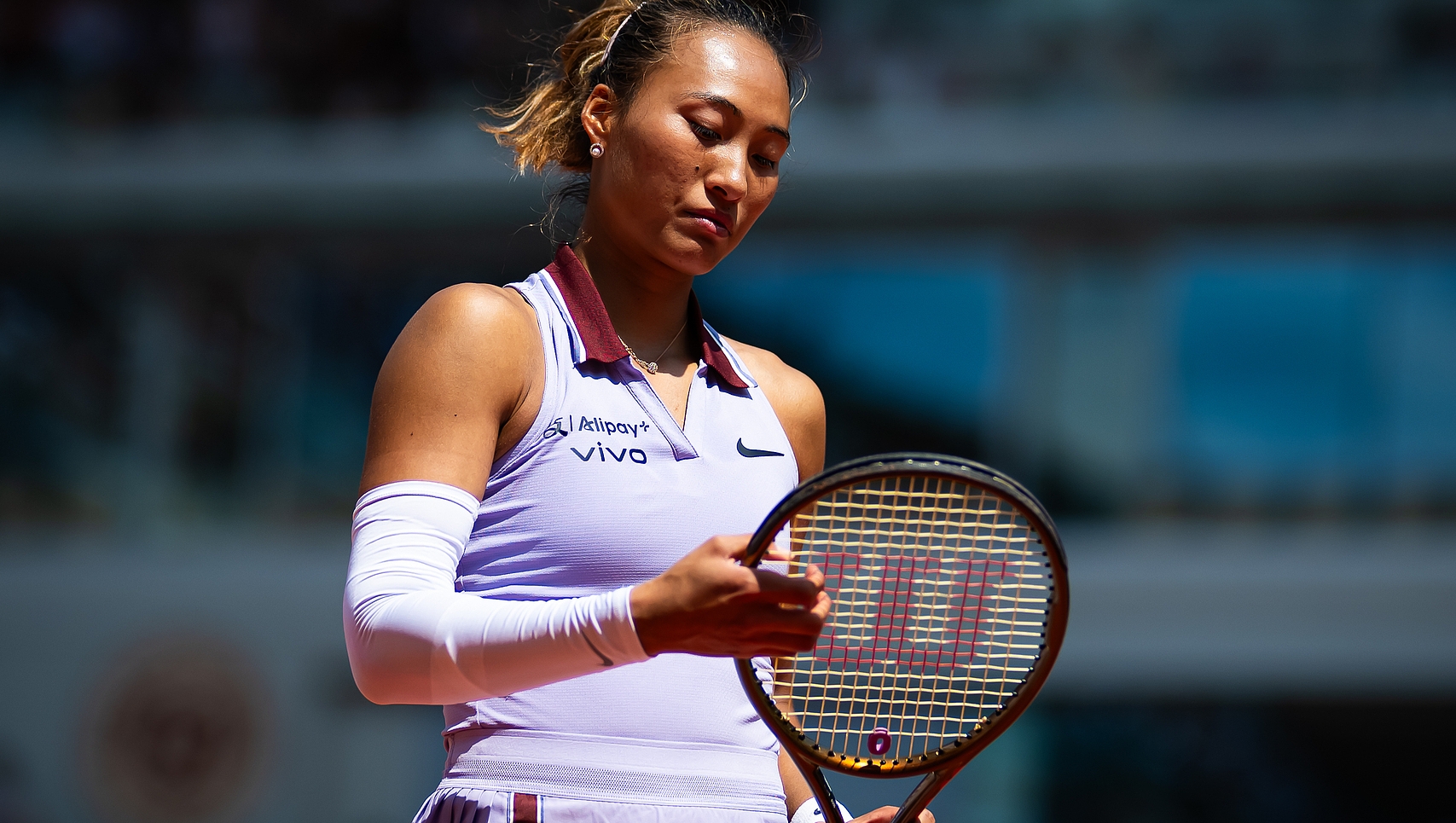
Roland Garros was once Zheng Qinwen's happy hunting ground — the venue where she sealed the biggest triumph of her career: the women's singles gold medal at the 2024 Paris Olympics.
Yet after recovering from an elbow injury, her return to this year's French Open ended in a shock first-round exit, her worst result at the clay-court major to date. For the former world No. 4, the upset sent her Women's Tennis Association (WTA) ranking plummeting to outside the top 100.
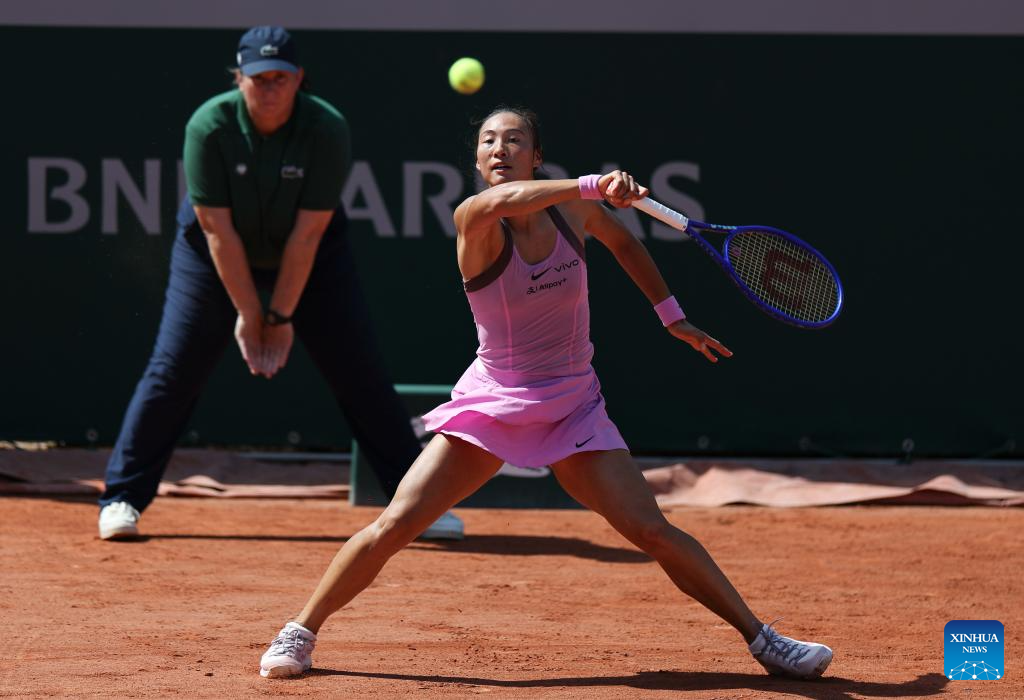
Zheng Qinwen hits a return during the women's singles first round match between Maja Chwalinska of Poland and Zheng Qinwen of China at the French Open tennis tournament at Roland Garros, Paris, France, May 25, 2026. (Xinhua/Wu Huiwo)
Everything changed when she underwent arthroscopic right elbow surgery in July 2025. Eager to bounce back, Zheng made an early return just two months later at the China Open, only for the premature comeback to aggravate her existing injury.
Sidelined by ongoing rehabilitation, she subsequently skipped the 2026 Australian Open. The Chinese star did not return fully to the WTA Tour until February 2026 and has struggled to regain her rhythm since.
In tennis, the elbow acts as a vital fulcrum transferring kinetic energy across the body. Virtually every fundamental shot — serve, forehand and backhand groundstroke, plus overhead smash — depends on steady elbow flexion and extension to unleash full-body power.
As an aggressive baseliner, Zheng has built her game around powerful serving and crushing forehands, meaning an elbow setback strikes at the core of her playing identity.
Since her return, Zheng has lost considerable power on both her serve and forehand. Her serve was previously her most reliable match-winning asset: she regularly clocked first serves above 180 kmh and ranked among the WTA's ace leaders.
To protect her healing elbow from reinjury, she has been forced to dial back her power output. She trimmed her average first-serve speed, causing her first-serve win percentage to drop to 52% during her recent first-round loss to Maja Chwalinska at Roland Garros — a sharp decline from her peak of over 70%.
Her post-injury outings reveal a clear reluctance to commit fully to her shots. She holds back on racket acceleration and shies away from all-out aggression, which weakens ball brushing and strips pace and spin from her strikes. She can no longer dictate rallies and build match momentum by overpowering opponents with her signature serve and forehand.
Many top players have overcome major injuries and climbed out of prolonged slumps. Zheng now faces a stark choice: revert to her natural attacking game at the risk of reinjuring her elbow, or overhaul her tactics and remodel her playing style to suit her current physical limitations.


 京公网安备 11010802027341号