 Share:

International participants visiting Yudu county in Jiangxi province this week as part of the "Together on the Long March: 90th Anniversary of an Epic Journey" CICG International Communication Project retraced the route of the Red Army while witnessing how the birthplace of one of modern China's defining journeys has evolved into a center of modern agriculture and rural revitalization.
Ninety years after some 86,000 Red Army troops crossed the Yudu River to begin the Long March, local officials and businesses say that determination and resilience continue to shape the county's development. Once among the poorest regions of Jiangxi, Yudu has built new industries in agriculture and tourism while preserving its revolutionary heritage.
A new chapter for rural revitalization
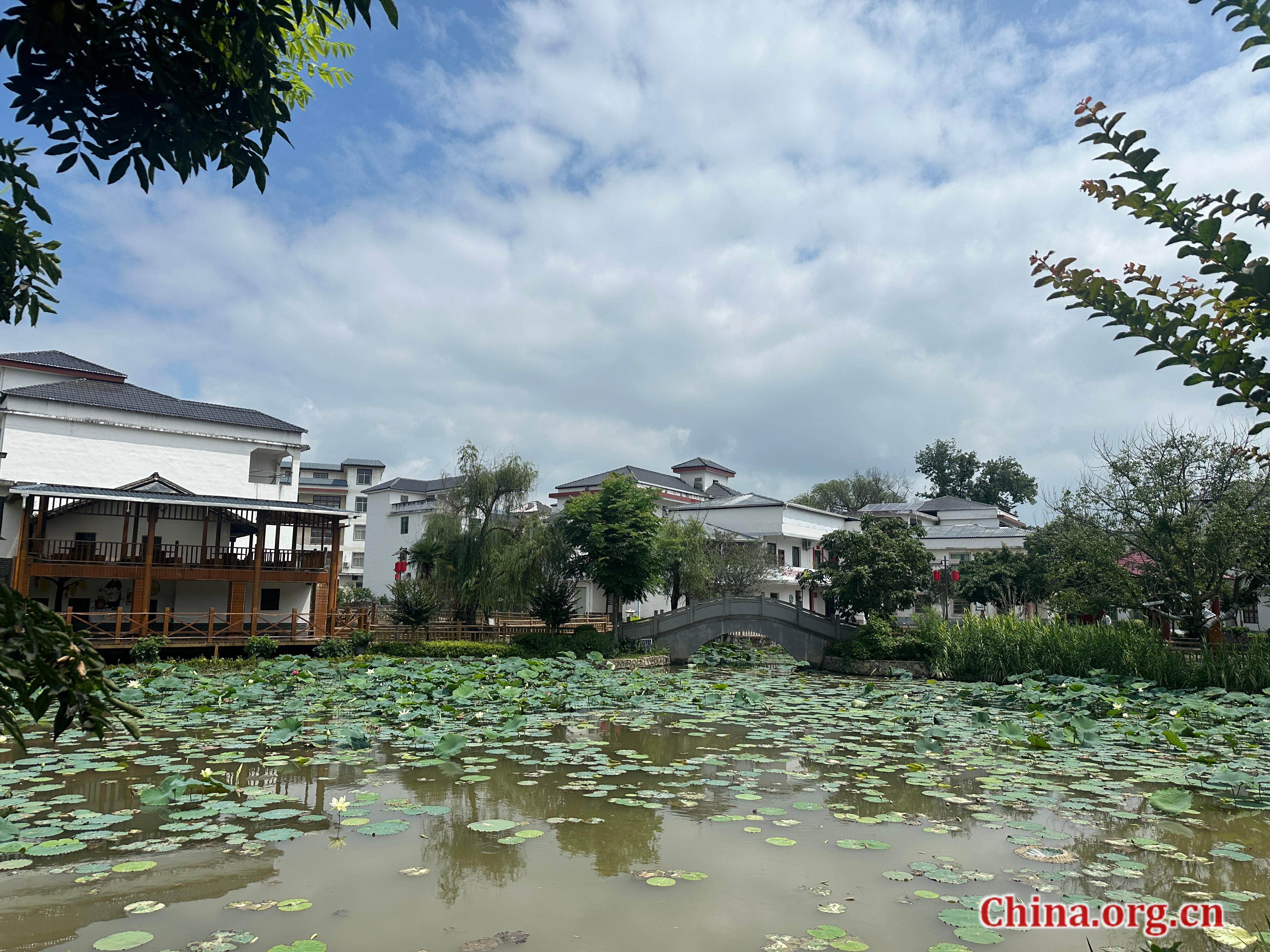
A view of Tantou village in Yudu county, Jiangxi province, June 16, 2026. [Photo by Wang Ziteng/China.org.cn]
In Tantou village of Zishan town, that transformation can be seen in the rows of steel-framed greenhouses filled with selenium-rich vegetables that stretch across the countryside. Selenium, a trace mineral beneficial to human health, occurs naturally in the soil here, and Yudu has turned that resource into an industry. The county now boasts 186 demonstration bases for selenium-rich agriculture, with standardized planting covering 300,000 mu (20,000 hectares) and total output value exceeding 6 billion yuan (about $888 million).
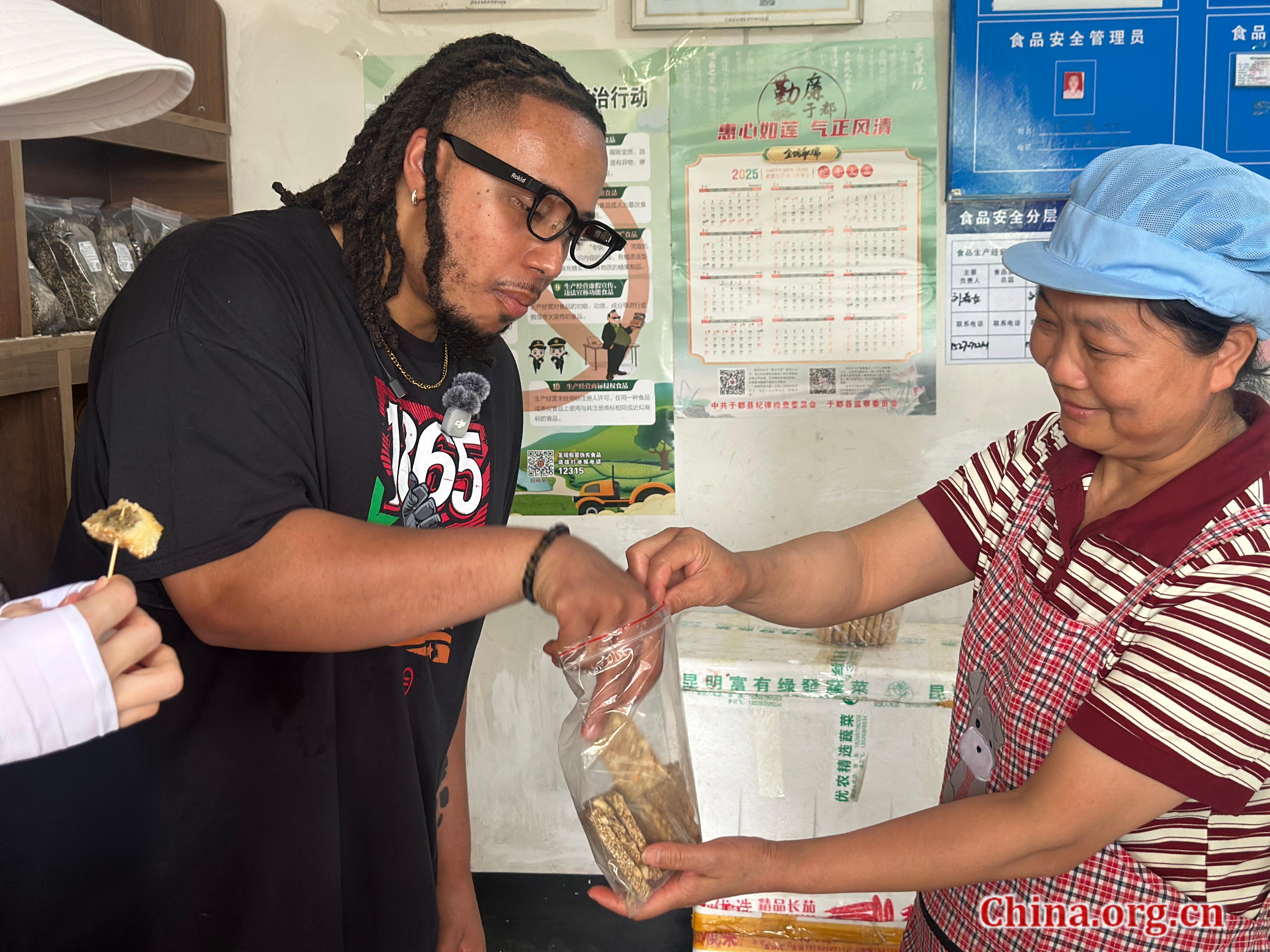
Zhavier Harris, marketing and communications manager of Springfield Urban League, tastes local agricultural products during a visit to Tantou village in Yudu county, Jiangxi province, June 16, 2026. [Photo by Wang Ziteng/China.org.cn]
"Local people have prospered and seen higher incomes," said Li Xinlong, a publicity and culture tourism official in Zishan. "The selenium-rich vegetables grown in the greenhouses allow local people to work and earn stable incomes right on their doorsteps. Our selenium-rich rice, fruits and vegetables are supplied to the Guangdong-Hong Kong-Macao Greater Bay Area, and exported to Southeast Asia via China-Europe freight trains."
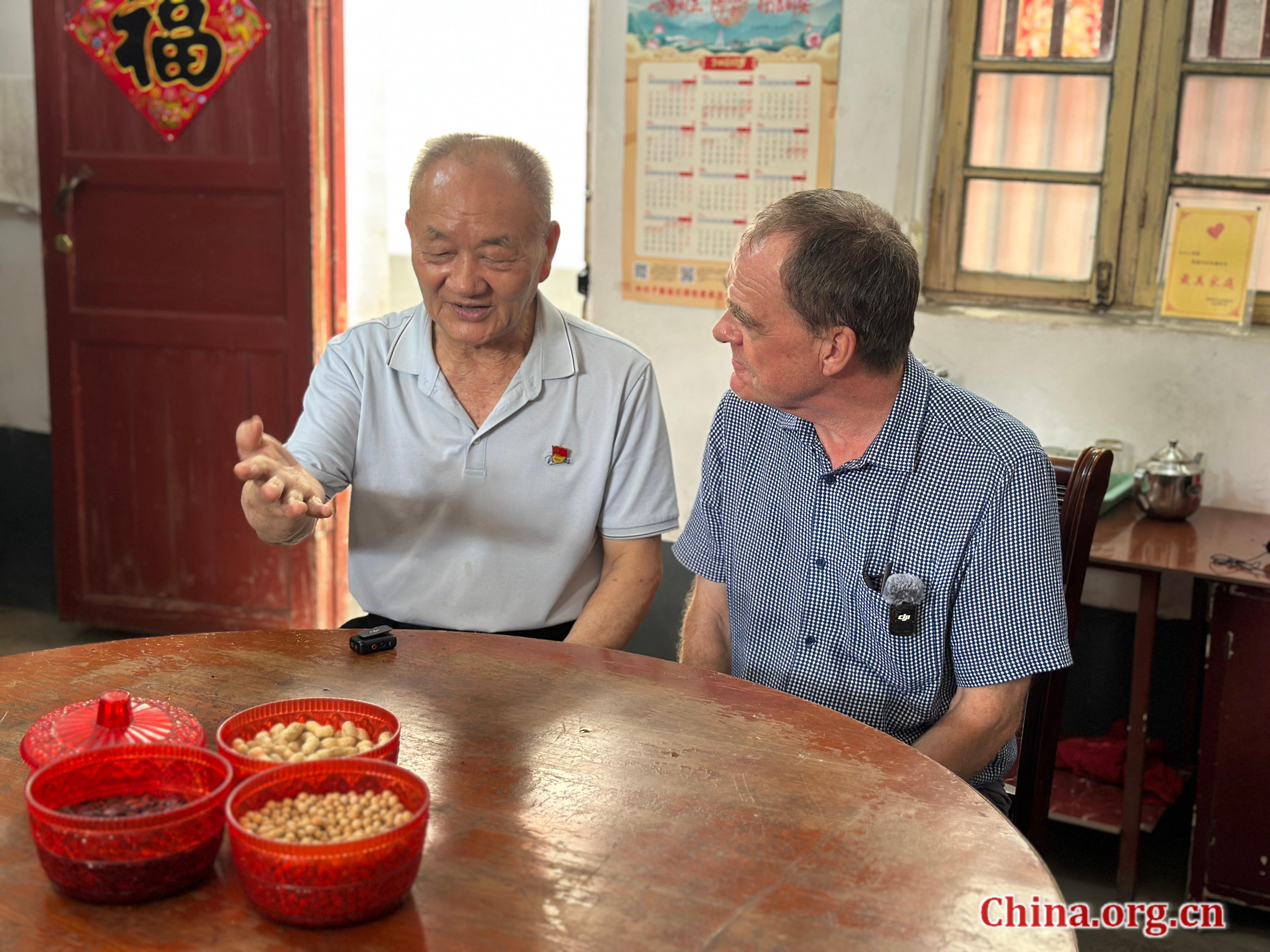
David Ferguson, honorary chief English editor of Foreign Languages Press under China International Communications Group and recipient of the 2021 Chinese Government Friendship Award, talks with a resident of Tantou village in Yudu county, Jiangxi province, June 16, 2026. [Photo by Wang Ziteng/China.org.cn]
David Ferguson, honorary chief English editor of Foreign Languages Press under China International Communications Group (CICG), said Tantou village illustrates how China's rural communities are building on their own strengths to pursue development. He noted that while each locality follows a different path, many have leveraged unique resources to support poverty alleviation and rural revitalization, creating opportunities tailored to local conditions.
Where agriculture meets tourism
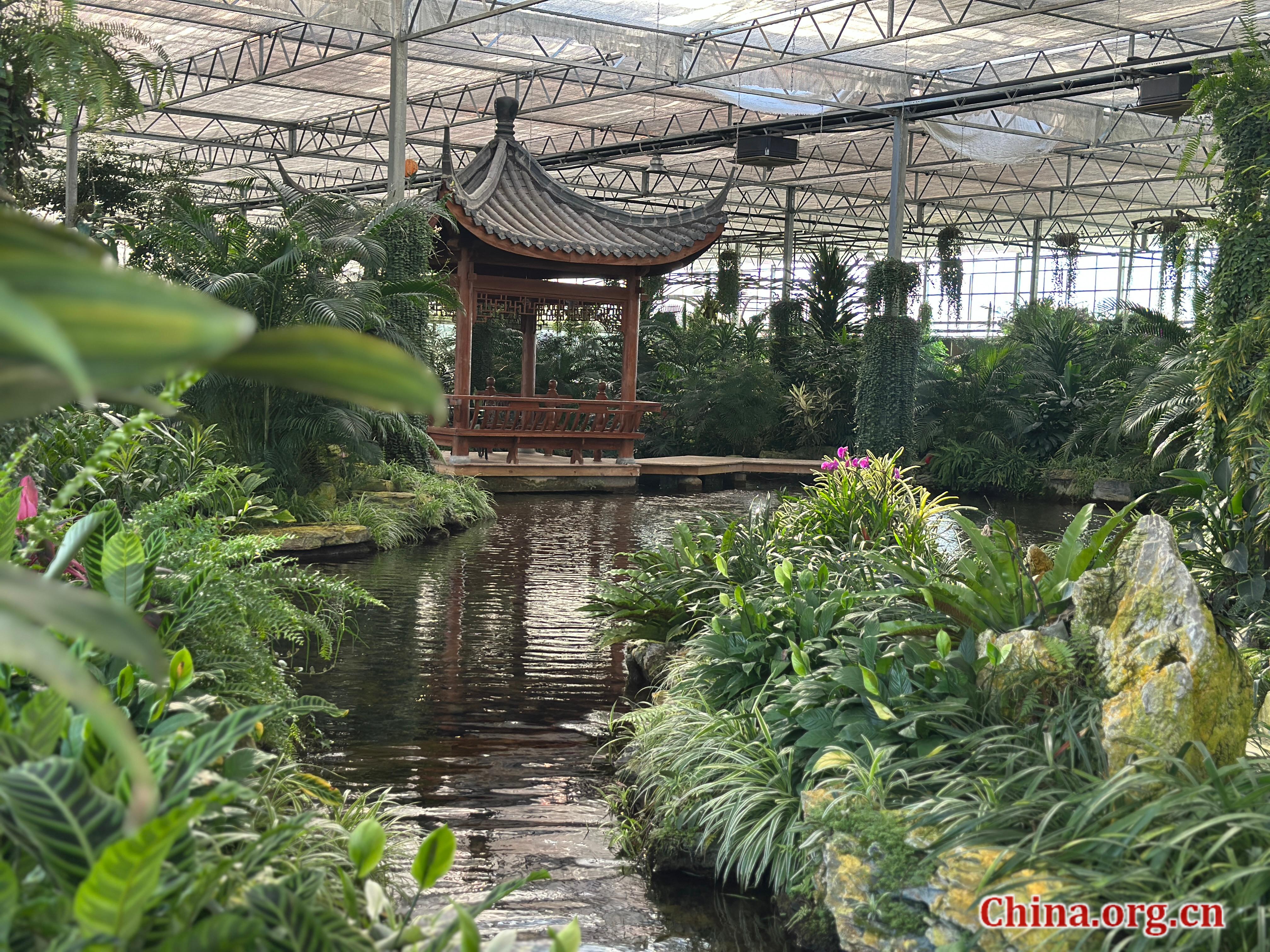
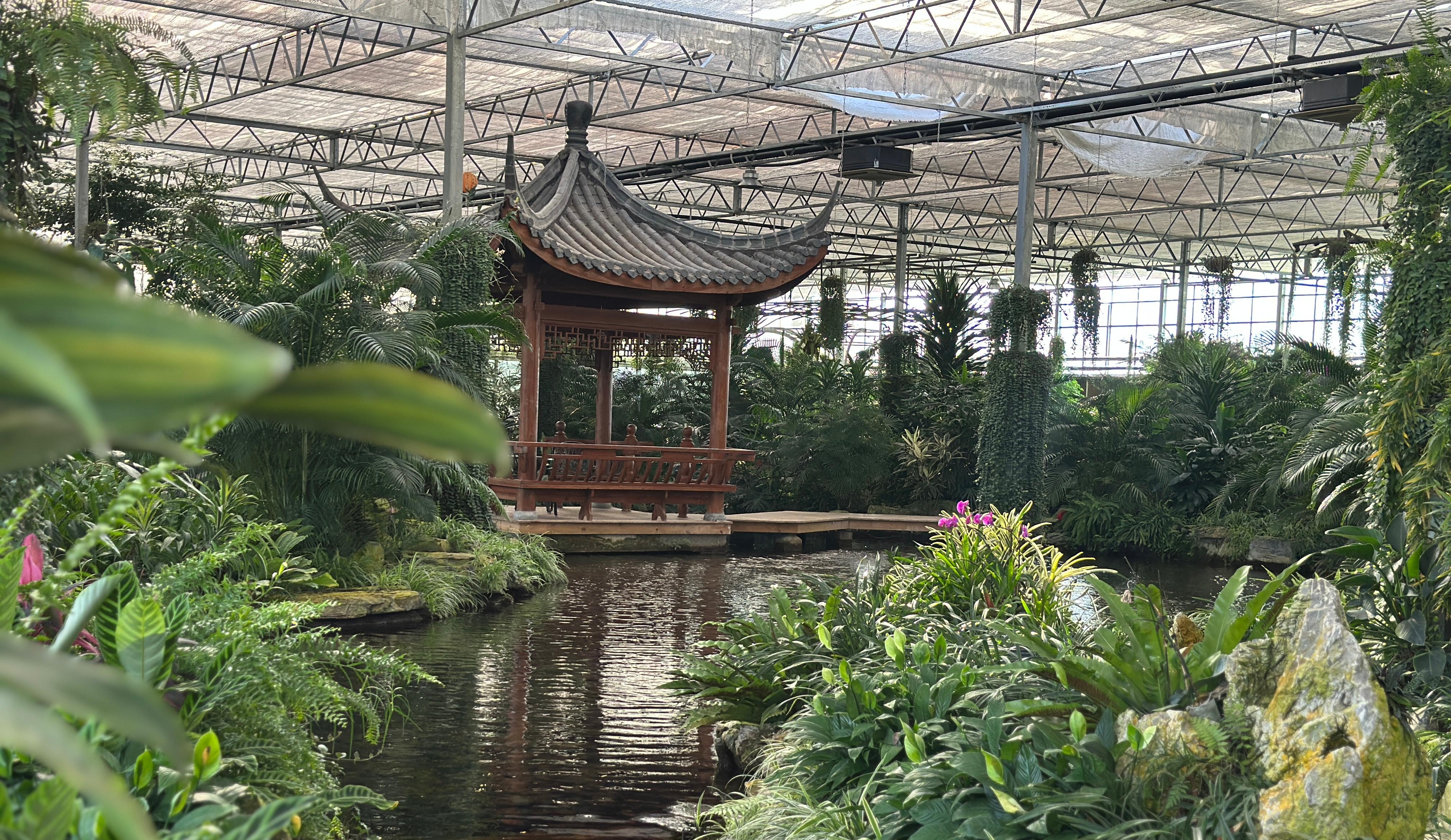
A view of the ecological park at Orchid Town in Hefeng town, Yudu county, Jiangxi province, June 16, 2026. [Photo by Wang Ziteng/China.org.cn]
In Hefeng town, another facet of Yudu's transformation is visible. A 3,000-mu Orchid Town has been established on what used to be predominantly farmland. The project, which represents a total investment of 1.2 billion yuan, produces 38 million pots of orchids annually with an output value of 300 million yuan. The project combines orchid cultivation with tourism and ecological agriculture, attracting about 600,000 visitors annually.
Liu Zhigao, general manager of Ganzhou Xinyue Ecological Agriculture Technology Development Co. Ltd., the parent company behind the Orchid Town project, said local government support had been essential to the project's development. "The government has helped build the infrastructure including roads and irrigation," Liu said. "In turn, we have brought more than 800 jobs to Yudu."
As participants in the "Together on the Long March: 90th Anniversary of an Epic Journey" CICG International Communication Project explored Yudu, they encountered not only the history of the Long March but also a county reshaped by new industries and infrastructure. The contrast underscores how a place once defined by wartime hardship is now charting a different course through development and innovation.
The project is expected to generate a wide range of content for international audiences, including commentaries, documentary interviews, short videos, social media livestreams, photo exhibitions and reports in multiple languages. Together, these efforts aim to bring the history and enduring legacy of the Long March to people around the world.